Shopping at Zara is often a thrill—the trends are fresh, the styles are chic, and the prices are accessible. But there is one hurdle that every fashion lover faces: the notoriously inconsistent Zara sizing. One minute you are a size Small in a knit top, and the next you are struggling to zip up a size Large in denim. It can be frustrating, confusing, and frankly, a little disheartening.
If you have ever found yourself standing in a fitting room surrounded by three different sizes of the same pair of pants, wondering what is going on, you are not alone. Zara’s rapid production cycle and diverse manufacturing sources mean that sizing can fluctuate significantly between garments and even between collections.
This comprehensive guide is here to demystify the process. We will decode the secret symbols on the tags, break down the differences between the main collections (Woman, TRF, and Basic), and provide actionable tips for shopping online to ensure you get the right fit, every single time.
Why is Zara Sizing So Inconsistent?
To master Zara sizing, it helps to understand why it varies so much in the first place. Zara is a fast-fashion giant that produces thousands of new designs every year. Unlike traditional retailers that might release two or three main collections annually, Zara drops new items weekly.
Diverse Manufacturing
Zara manufactures its clothing in various countries, including Spain, Portugal, Turkey, Morocco, and China. Different regions often have different standard sizing blocks. A “Medium” produced in a factory in Asia might be cut smaller than a “Medium” produced in Europe, leading to discrepancies on the rack.
Fabric and Cut
The fabric choice plays a huge role. A rigid, 100% cotton denim will fit completely differently than a pair of trousers made with 5% elastane. Zara’s trend-led approach means they experiment with many silhouettes—oversized, bodycon, tailored—which further complicates the idea of a “standard” size.
Decoding the Zara Tag Symbols
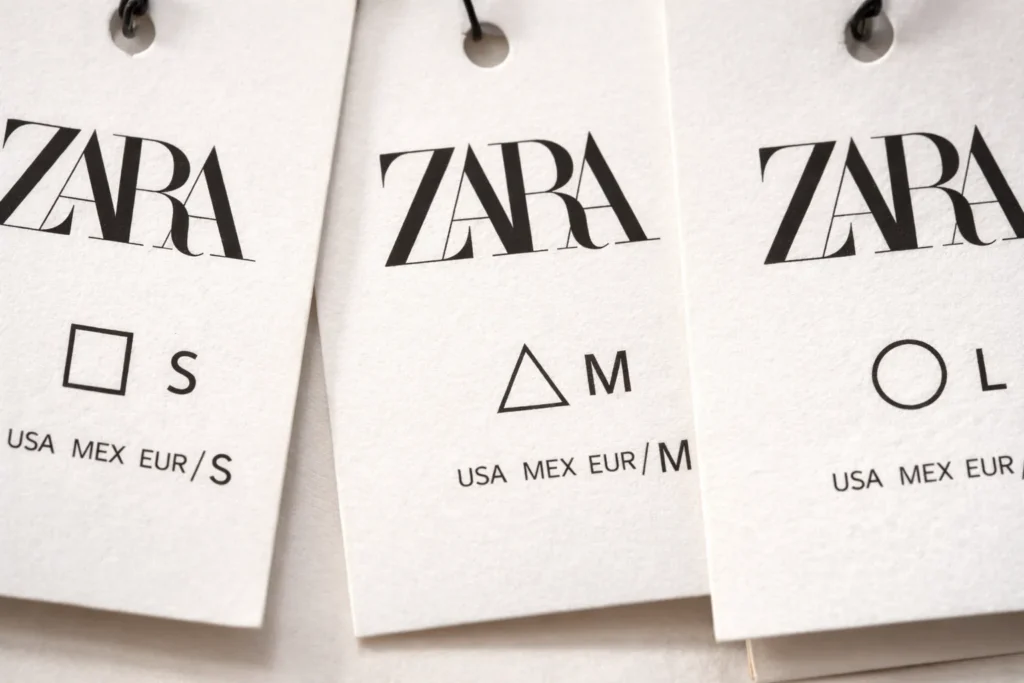
You may have seen the viral TikTok videos about the geometric shapes found on Zara’s price tags. For years, shoppers have speculated about what the square, triangle, and circle symbols mean. While Zara hasn’t officially confirmed this “code,” employees and fashion insiders have widely accepted the following guide as a reliable rule of thumb.
The Triangle (▼)
- What it means: The garment runs small.
- The Strategy: If you see a triangle on the tag, size up. This is common in the TRF collection or in garments with little to no stretch. If you are usually a Medium, grab a Large.
The Circle (●)
- What it means: The garment runs large.
- The Strategy: If you see a circle, size down. These items tend to be oversized, boxy, or cut with a generous amount of fabric. Buying your usual size might result in a fit that drowns your frame.
The Square (■)
- What it means: The garment runs true to size.
- The Strategy: Stick to your usual size. A square indicates that the item adheres to Zara’s standard sizing measurements.
Note: While these symbols are helpful indicators, they are primarily internal codes for employees regarding where to hang items in the store (Woman, Basic, or TRF sections). However, the correlation between the collection and the fit is strong enough that the symbol trick works surprisingly well.
Zara separates its clothing into three main lines, and knowing the difference is the key to predicting how an item will fit.
Zara Woman
This is the brand’s premium line. The designs are more sophisticated, the fabrics are generally higher quality, and the cuts are tailored for an adult woman’s body.
- The Fit: Generally runs true to size or slightly generous.
- Who it’s for: Shoppers looking for workwear, elegant dresses, and tailored coats. The sizing is more forgiving in the hips and bust compared to other lines.
Zara TRF (Trafaluc)
TRF is the younger, edgier, and more affordable line. It is aimed at teenagers and young adults.
- The Fit: Runs small and narrow.
- Who it’s for: If you have a petite frame or are very slender, TRF is great. If you have curves or a larger bust, you will almost certainly need to size up. The pants are often cut straight with less room for hips, and tops are shorter.
Zara Basic
As the name suggests, this line focuses on everyday staples like t-shirts, sweaters, and simple trousers.
- The Fit: A mix, but generally true to size.
- Who it’s for: Everyone. However, be wary of the fabric. Basic items often use synthetic blends or cotton jersey. Knitwear in this collection can run large, while fitted basics like ribbed tanks might run tight.
Category-Specific Sizing Tips
A size Medium in a coat is not the same as a size Medium in a skirt. Here is a breakdown of how Zara sizing behaves across different categories.
Denim and Jeans
Zara jeans are notoriously difficult.
- Rigid Denim (100% Cotton): These have zero stretch. They will feel incredibly tight at first but will mold to your body over time. Size up one or even two sizes if you have wider hips or thighs.
- Stretch Denim: These are more forgiving. Stick to your usual size, or size down if you want a super-snatched fit, as they may bag out with wear.
- Waist Gapping: Many shoppers experience a gap at the waist in Zara jeans. Look for “Curve” or “Mom Fit” styles which are cut with a smaller waist-to-hip ratio.
Blazers and Coats
Zara outerwear is generally excellent quality for the price.
- Oversized Blazers: These are meant to look big. If you want the trendy, boxy look, buy your normal size. If you want it to look tailored, size down.
- Fitted Coats: Wool coats or trench coats with a structured shoulder tend to run true to size or slightly small in the arms. If you plan to wear chunky sweaters underneath, size up.
Dresses
- Mini Dresses: Often run very short. If you are tall (over 5’7″), size up for extra length, not width.
- Slip Dresses: These are usually cut on the bias (diagonal grain), which means they cling to curves. Stick to your normal size unless you want a looser drape.
- Smocked/Shirred Dresses: Dresses with elasticated bodices are very forgiving and flexible. You can often size down in these.
Shoes
Zara shoes are stylish but fit varies.
- Boots: Generally run true to size.
- Sandals/Heels: Can run narrow. If you have wide feet, Zara shoes might be uncomfortable or require sizing up. Note that they do not offer half sizes, which can make finding the perfect fit tricky.
Mastering Online Shopping at Zara
Shopping online removes the ability to try things on, but Zara has implemented tools to help.
The “Find My Size” Tool
On every product page, there is a “Find My Size” link.
- How it works: You input your height, weight, and fit preference (tight, perfect, loose). The algorithm compares your data with thousands of other customers who bought that item and didn’t return it.
- Accuracy: It is surprisingly accurate because it is based on return data, not just a static size chart. Trust the recommendation.
Analyze the Model
- Check the Height: Zara models are usually tall (around 5’9″ to 5’11”). If a dress is a mini on the model, it might be knee-length on you. If trousers are cropped on the model, they might be full length on you.
- Look at the Fabric Composition: Always check the “Materials” tab. High elastane (spandex) content means stretch and a forgiving fit. Polyester or 100% cotton usually means little to no give.
Read the “Measurements” Section
Recently, Zara has started adding specific garment measurements for some items. This is different from a generic body size chart. It tells you the actual length of the inseam or the width of the chest for that specific piece. Grab a tape measure and compare these numbers to a piece of clothing you already own that fits well.
Returns and Exchanges
Because Zara sizing is a gamble, knowing the return policy is part of the strategy.
- In-Store Returns: Free. You can return online orders to any store.
- Drop-Off Points: There is usually a fee deducted from your refund for returning via mail/drop-off point (check your local region’s policy, as this changed recently in many countries).
- The Strategy: If you are unsure, buy two sizes. Return the one that doesn’t fit in-store to avoid return shipping fees.
Conclusion
Cracking the code of Zara sizing takes a bit of patience and know-how, but it is a skill worth mastering. By paying attention to the collection (Woman vs. TRF), looking for the hidden tag symbols, and understanding how different fabrics behave, you can save yourself time and frustration.
Remember, the size on the tag is just a number (or a shape!). It does not define your worth or your body. If you have to size up to get the perfect fit, do it without hesitation. The goal is to have clothes that look and feel amazing on you, regardless of what the label says. Armed with this guide, you are now ready to navigate the racks and the website like a pro.
Frequently Asked Questions (FAQs)
Q: Is Zara sizing small compared to other brands?
A: generally, yes. Compared to American brands like Gap or Old Navy, Zara runs small. It is closer to European designer sizing. However, their oversized items can run very large. It is all about the specific item style.
Q: Does Zara have a plus-size section?
A: Zara does not have a dedicated “Plus Size” line in the traditional sense. However, they have expanded their main range sizing, often going up to XXL in selected items. The fit of the XXL varies; in oversized knits or dresses, it can be quite generous, but in rigid denim, it may run smaller than a standard US 14/16.
Q: Do Zara shoes run true to size?
A: They tend to run true to size for length but narrow for width. If you have wide feet, you may find them uncomfortable. Since they don’t offer half sizes, it is usually safer to size up if you are in between.
Q: What does “Join Life” mean on the tag? Does it affect sizing?
A: “Join Life” is Zara’s sustainability label, indicating the garment is made with more sustainable raw materials or processes. It does not directly affect sizing, but these items often use natural fibers like organic cotton or lyocell, which may have different shrink/stretch properties than synthetics.
Q: How do I know if pants will be long enough?
A: Check the model’s height in the description. If she is 5’10” and the pants are pooling at her ankles, they are very long. If they are ankle-length on her, they will be full-length on someone of average height (5’4″-5’6″).

Sofia Bennett is a fashion writer and style observer known for her clean sense of aesthetics and trend analysis. She has covered fashion shows, reviewed designer collections, and interviewed independent creators. Sofia specializes in connecting fashion with real-life lifestyle choices, helping readers understand what looks good — and why.