
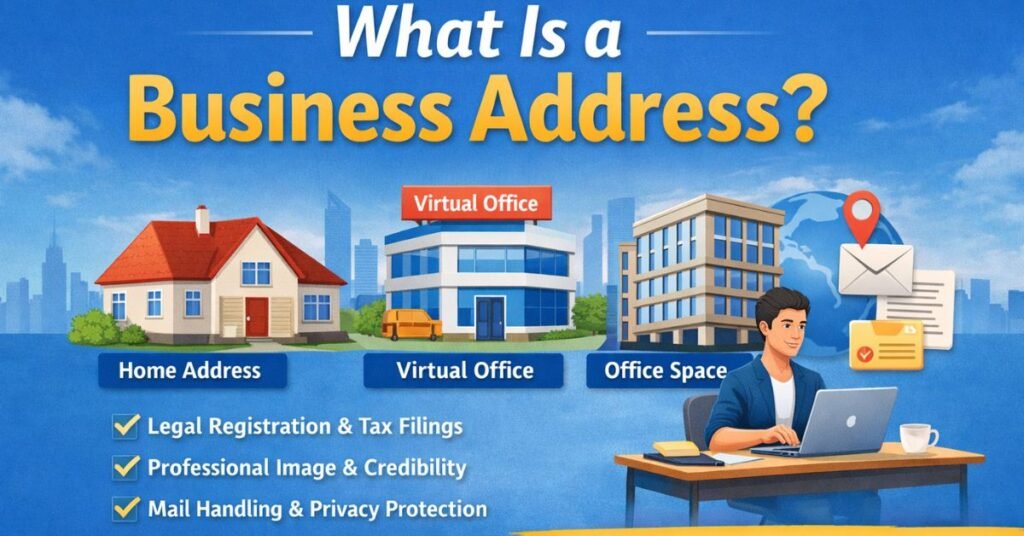
Starting a business often begins with big ideas—products to launch, services to offer, and customers to serve. But one simple question surprises many new entrepreneurs early in the process: what is a business address, and why does it matter so much?
If you’re launching a company, registering an LLC, opening an online store, or even freelancing, you’ll quickly discover that a business address is one of the foundational pieces of your business identity. It appears on legal registrations, tax forms, invoices, websites, business cards, and customer communications.
Think of it this way: a business address is like the official home base for your company. It’s where your business “lives” in the eyes of the government, clients, and search engines.
Yet many new business owners struggle with questions such as:
- Do I need a physical business address?
- Can I use my home address?
- What about a virtual office or PO box?
- Does a business address affect credibility or SEO?
In this comprehensive guide, you’ll learn:
- Exactly what a business address is
- Why every business needs one
- The different types of business addresses
- How to choose the right address for your company
- Mistakes entrepreneurs often make
- Tools and services that provide professional addresses
- FAQs and expert tips from real-world experience
Whether you’re starting an online business, registering an LLC, or scaling a company internationally, understanding the role of a business address can save you legal headaches, improve credibility, and even help with marketing.
Let’s dive in.
What Is a Business Address?

A business address is the official location associated with a company for legal, operational, and communication purposes. It is the address used on government registrations, business licenses, tax filings, websites, and correspondence.
In simple terms, a business address tells the world:
“This is where my company exists.”
It doesn’t necessarily mean that’s where all the work happens. Many modern businesses operate remotely, yet they still need a business address for official records.
Here’s an easy analogy.
Think about how every person has a home address for identification and communication. Businesses work the same way. Governments, banks, suppliers, and customers all need a place connected to your company.
A business address is used for:
- Business registration
- Receiving official mail
- Tax documentation
- Legal notices
- Client communication
- Marketing materials
- Online listings
For example, if someone starts a graphic design agency, they might use:
- Their home address
- A virtual office
- A co-working space
- A commercial office location
All of these can function as a business address depending on the situation.
Key Characteristics of a Business Address
A legitimate business address typically:
- Exists as a physical mailing location
- Can receive mail and legal documents
- Is listed on official company records
- Appears in government databases
- May appear on your website or invoices
Many people assume a business address must be a traditional office building, but that’s no longer true. Today’s entrepreneurs use a variety of address solutions.
Business Address vs Mailing Address
Sometimes these terms overlap, but they aren’t always identical.
A business may have:
- A registered address (legal address for government filings)
- A mailing address (where letters and packages are sent)
- A physical address (actual operational location)
For example:
An eCommerce store might:
- Register the company in Wyoming
- Use a virtual office in New York
- Operate from a home studio in Texas
Each address plays a different role.
Understanding these distinctions is essential when structuring a modern business.
Why Every Business Needs a Business Address
A business address is more than just a line on a form. It plays a crucial role in how your company operates, builds trust, and complies with legal requirements.
In fact, one of the first things required when forming an LLC or corporation is an official business address.
Let’s explore why it matters.
Legal and Regulatory Compliance
Government agencies require a business address for:
- Business registration
- Tax reporting
- Licensing
- Legal notifications
Without an official address, authorities have no reliable way to contact your company.
For example, if your business faces a legal issue or receives tax documentation, those notices must go somewhere.
Using a valid business address ensures you remain compliant with regulations.
Professional Credibility
Customers often judge businesses based on small signals of legitimacy.
A professional business address can increase trust by showing that your company is real and established.
Compare these two scenarios:
Business A lists a professional office address in a recognized business district.
Business B lists no address at all.
Which one feels more trustworthy?
Most customers naturally trust businesses that provide clear contact information.
Privacy Protection
Many entrepreneurs start businesses from home.
But listing your home address publicly can create privacy concerns.
A business address solution such as a virtual office allows you to:
- Protect personal privacy
- Separate business from personal life
- Avoid strangers knowing where you live
This is especially valuable for online businesses.
Mail Handling and Communication
Businesses receive various types of mail, including:
- Legal documents
- Government notices
- Banking correspondence
- Client letters
- Supplier invoices
Having a dedicated address ensures important communications don’t get lost.
Local SEO and Online Presence
A business address can also impact local search rankings.
Search engines like Google use location signals when displaying local business results.
For example, if someone searches:
“marketing agency near me”
Businesses with a verified address in that area are more likely to appear.
This is why many companies choose addresses in major cities.
Banking and Financial Requirements
Opening a business bank account often requires proof of a business address.
Banks may ask for:
- Business registration documents
- Utility bills
- Lease agreements
- Address verification
Without an address, financial operations become difficult.
Types of Business Addresses (And How They Work)
Not all business addresses are the same. Entrepreneurs today have several options depending on their budget, business model, and privacy needs.
Let’s explore the most common types.
Home Address
Many small businesses start with a home address.
Freelancers, consultants, and online sellers often use their residence when registering a business.
Advantages:
- Free
- Easy to set up
- Immediate access to mail
Disadvantages:
- Privacy concerns
- Less professional image
- May violate zoning rules in some locations
- Address becomes public in business records
For side hustles or early-stage businesses, a home address can work fine.
But many founders eventually upgrade.
Physical Office Address
A traditional office space is the classic business address.
This is common for:
- Law firms
- Agencies
- consulting companies
- retail businesses
- medical practices
Benefits include:
- Professional credibility
- Meeting space for clients
- Full operational facilities
However, offices can be expensive.
Costs include:
- Rent
- Utilities
- Furniture
- maintenance
- security deposits
For startups, this may not be practical.
Virtual Business Address
A virtual business address provides a real street address without requiring a physical office.
Companies offering these services receive mail on your behalf and may forward or scan it.
Typical services include:
- Mail forwarding
- Digital mail scanning
- package handling
- business address use for registration
This option is popular with:
- remote businesses
- freelancers
- digital agencies
- eCommerce companies
- international founders
Virtual addresses combine professionalism with affordability.
Co-Working Space Address
Co-working spaces often provide business addresses as part of membership.
These shared offices give entrepreneurs:
- mailing addresses
- workspace access
- meeting rooms
- networking opportunities
Popular among:
- startups
- freelancers
- small teams
Co-working addresses provide a middle ground between virtual offices and full office leases.
Registered Office Address
Some countries require businesses to list a registered office address.
This is the official location where legal documents are served.
It may differ from the operational address.
Many entrepreneurs hire services that provide registered office addresses specifically for legal compliance.
PO Box Address
A PO Box is a mailbox rented from a postal service.
While useful for receiving mail, PO boxes often cannot be used for business registration in many jurisdictions.
Limitations include:
- Not considered a physical address
- Not accepted by some banks
- Cannot receive courier deliveries easily
Because of these restrictions, PO boxes are typically used only for mailing purposes.
Real-World Benefits of Having the Right Business Address
Choosing the right business address can significantly influence how your company operates and grows.
Let’s look at practical scenarios where a strategic address makes a difference.
Building Brand Authority
Imagine launching a consulting firm.
If your address is listed in a well-known financial district, it automatically signals credibility.
Many companies use business addresses in cities like:
- New York
- London
- Singapore
- Dubai
This creates the impression of a global presence.
Supporting Remote Work
Modern businesses often operate with distributed teams.
A centralized address allows companies to:
- maintain a professional identity
- manage correspondence
- avoid geographic limitations
This is common among SaaS startups and digital agencies.
Expanding Into New Markets
Businesses sometimes use additional addresses to expand into new cities.
For example:
A marketing agency in Texas may open a virtual address in California to target West Coast clients.
This strategy helps companies appear local in multiple markets.
Protecting Founder Privacy
Entrepreneurs who operate online often receive significant public attention.
Using a business address protects founders from:
- unwanted visitors
- identity exposure
- public records revealing personal homes
Improving Customer Confidence
Customers appreciate transparency.
Displaying a clear address on your website shows that your business is legitimate.
This is especially important for:
- eCommerce stores
- consulting services
- agencies
- professional services
Trust signals can increase conversions.
How to Get a Business Address (Step-by-Step Guide)
Setting up a business address is easier than most people expect. However, choosing the right option requires careful planning.
Here’s a practical step-by-step process.
Step 1: Decide Your Business Structure
Before choosing an address, determine your business structure.
Examples include:
- sole proprietorship
- LLC
- corporation
- partnership
Different structures may have different requirements for business addresses.
Step 2: Choose the Type of Address
Decide which address type fits your needs.
Ask yourself:
- Do I need privacy?
- Will clients visit the location?
- Do I need meeting rooms?
- What is my budget?
Common choices include:
- home address
- virtual address
- co-working address
- office address
Step 3: Verify Local Legal Requirements
Some states or countries require a physical registered address.
Check rules related to:
- business registration
- zoning laws
- registered agents
Skipping this step can cause registration delays.
Step 4: Register the Address With Authorities
Once you choose an address, include it in your official filings.
Common registrations include:
- LLC formation documents
- business licenses
- tax registrations
- government permits
Make sure the address matches across all records.
Step 5: Update Your Business Materials
Your business address should appear consistently on:
- your website
- invoices
- email signatures
- contracts
- marketing materials
Consistency strengthens brand trust.
Step 6: Set Up Mail Management
Ensure your business mail is properly handled.
Options include:
- mail forwarding
- scanning services
- digital mailbox tools
Never ignore official mail—it can include critical legal notices.
Best Tools and Services for Business Addresses
Several services provide professional business addresses without requiring a physical office.
Below are commonly used options.
Virtual Office Providers
These companies offer business addresses along with mail services.
Popular features include:
- digital mail scanning
- mail forwarding
- phone answering
- meeting room access
Pros:
- affordable
- professional addresses
- flexible plans
Cons:
- limited physical access
- not ideal for customer visits
Digital Mailbox Services
Digital mailbox platforms scan incoming mail and allow you to manage it online.
Benefits include:
- remote access
- document storage
- easy forwarding
- international availability
These services are ideal for location-independent entrepreneurs.
Co-Working Memberships
Co-working companies often provide addresses with workspace access.
Advantages:
- professional environment
- networking opportunities
- meeting rooms
Drawbacks:
- higher monthly cost
- limited privacy compared to virtual offices
Free vs Paid Address Solutions
Free options:
- home address
- PO box
Paid options:
- virtual office
- co-working address
- office lease
While free solutions save money initially, paid addresses often deliver stronger credibility and privacy.
Common Business Address Mistakes (And How to Avoid Them)
Many entrepreneurs underestimate the importance of choosing the right address.
Here are common mistakes and how to avoid them.
Using an Address That Violates Local Laws
Some residential areas restrict commercial activity.
Always verify local zoning regulations before using a home address.
Listing Inconsistent Addresses
If your website, bank records, and government filings list different addresses, it can create confusion.
Always keep your address consistent across all documents.
Using Only a PO Box
PO boxes are convenient but often not accepted for legal registrations.
Use them only as secondary mailing addresses.
Ignoring Mail Notifications
Business owners sometimes forget to check mail regularly.
This can lead to missed:
- legal notices
- tax documents
- government communications
Use digital mailbox services if you’re frequently traveling.
Choosing an Address That Hurts Brand Image
An unprofessional address may impact how customers perceive your company.
For example:
Using a residential address for a luxury brand might feel mismatched.
Always consider brand positioning.
Conclusion
Understanding what a business address is might seem like a small detail when starting a company, but it plays a massive role in how your business operates and is perceived.
A business address functions as your company’s official home—used for legal registrations, tax filings, client communication, and professional credibility.
The good news is that modern entrepreneurs have more options than ever before.
From home addresses to virtual offices, co-working spaces, and registered office services, you can choose an address that fits your business model, budget, and privacy needs.
The key is to think strategically.
Ask yourself:
- Does this address protect my privacy?
- Does it strengthen my brand credibility?
- Does it meet legal requirements?
Choosing the right business address early can help you avoid compliance issues, improve customer trust, and create a professional foundation for growth.
If you’re starting a business today, treat your business address not just as an administrative requirement—but as a strategic asset.
FAQs
What is a business address used for?
A business address is used for legal registration, tax filings, receiving official mail, customer communication, and listing your company’s official location.
Can I use my home address as a business address?
Yes, many entrepreneurs use their home address when starting a business. However, this may expose your personal address publicly and may not look as professional.
Is a virtual business address legal?
Yes, virtual business addresses are legal in most jurisdictions as long as they meet registration requirements and can receive official mail.
Do online businesses need a business address?
Yes. Even online businesses must provide an address for legal registration, tax purposes, and customer contact information.
Can I change my business address later?
Yes, businesses can update their address by filing a change with relevant government agencies and updating records with banks and clients.

Michael Grant is a business writer with professional experience in small-business consulting and online entrepreneurship. Over the past decade, he has helped brands improve their digital strategy, customer engagement, and revenue planning. Michael simplifies business concepts and gives readers practical insights they can use immediately.