
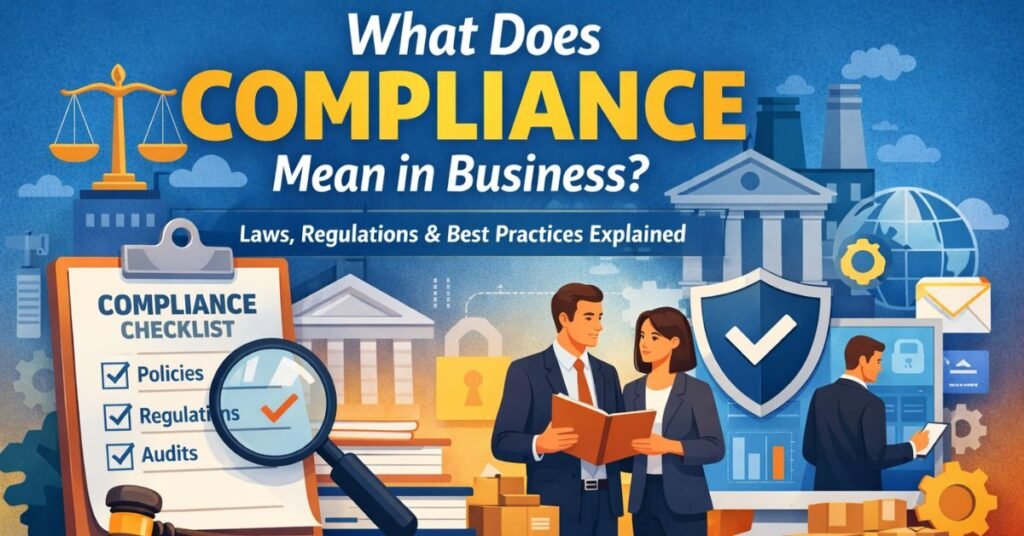
If you’ve ever signed a contract, hired an employee, handled customer data, or paid taxes, you’ve already touched the world of compliance — whether you realized it or not.
So what does compliance mean in business, really?
Is it just about following the law? Avoiding fines? Passing audits? Or is it something deeper — something that shapes trust, culture, and long-term growth?
In my experience working with founders, managers, and corporate teams, compliance is one of the most misunderstood pillars of business. Many see it as a boring legal necessity. The smartest companies see it as protection, leverage, and competitive advantage.
In this guide, we’ll break down:
- A simple, beginner-friendly definition of business compliance
- Why compliance matters more than ever in 2026 and beyond
- Real-world examples across industries
- A step-by-step compliance framework you can implement
- Tools, systems, and comparisons
- Common compliance mistakes (and how to fix them)
- FAQs and practical takeaways
By the end, you’ll not only understand what compliance means in business — you’ll know how to use it to strengthen your organization.
What Does Compliance Mean in Business? (Clear Definition)
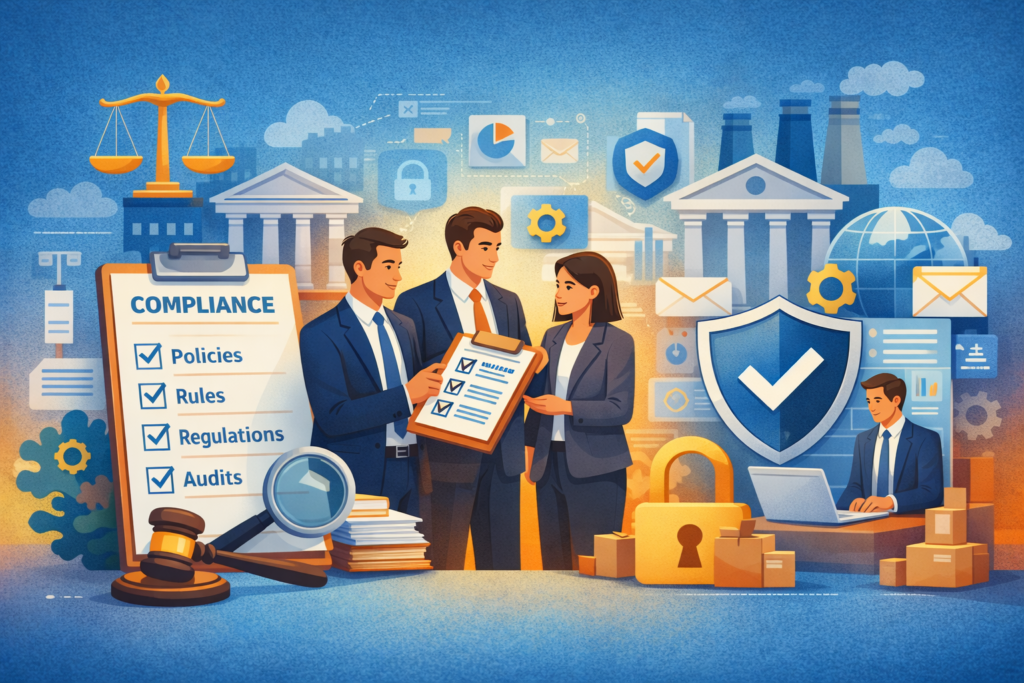
At its core, compliance in business means adhering to laws, regulations, standards, and internal policies that apply to your organization.
That’s the textbook version.
But let’s make it human.
Imagine running a restaurant. You must follow food safety regulations, health inspections, labor laws, tax rules, and fire safety standards. If you ignore them, you risk fines, lawsuits, or closure.
Now scale that idea to:
- Data privacy regulations
- Financial reporting standards
- Employment laws
- Environmental rules
- Industry-specific requirements
Compliance is the system that ensures your business operates legally, ethically, and responsibly.
In simple terms:
Business compliance = Following the rules that govern your industry and protecting your company from legal, financial, and reputational harm.
There are typically three layers:
- Regulatory compliance – Government laws and regulations.
- Corporate compliance – Internal company policies and codes of conduct.
- Industry compliance – Sector-specific standards (healthcare, finance, tech, etc.).
Compliance isn’t just about avoiding trouble. It’s about building a stable foundation where growth can happen safely.
Why Compliance Matters More Than Ever
There was a time when small businesses could operate loosely and “figure it out later.” That era is gone.
Today’s environment is defined by:
- Strict data privacy laws
- Increased consumer awareness
- Digital transparency
- Social media accountability
- Global operations
One compliance failure can:
- Trigger lawsuits
- Destroy customer trust
- Lead to regulatory investigations
- Shut down operations
But beyond fear, here’s the bigger truth: compliance builds credibility.
When customers see:
- Secure payment systems
- Transparent policies
- Ethical labor practices
- Proper certifications
They feel safer doing business with you.
Investors, partners, and enterprise clients also demand strong compliance frameworks before signing deals. In many industries, you simply won’t get contracts without documented compliance processes.
So while many ask what does compliance mean in business, the more powerful question is:
What does non-compliance cost?
The answer is often far more than prevention ever would.
Types of Business Compliance Explained
Compliance isn’t one-size-fits-all. Different industries and company sizes face different regulatory landscapes. Let’s break down the main categories.
Regulatory Compliance
This includes government-mandated laws such as:
- Tax compliance
- Labor laws
- Health and safety regulations
- Anti-corruption laws
- Data protection laws
These are non-negotiable. Violations can result in fines or criminal penalties.
Corporate Compliance
These are internal rules businesses create to ensure ethical behavior and consistent standards.
Examples:
- Code of conduct
- Anti-harassment policies
- Conflict of interest policies
- Whistleblower protections
Corporate compliance strengthens culture and reduces internal risk.
Industry-Specific Compliance
Some industries operate under strict regulatory oversight.
For example:
- Healthcare: patient data protection
- Finance: anti-money laundering
- Construction: safety standards
- Technology: cybersecurity regulations
The complexity increases with scale and geography. A global company may face overlapping regulations across countries.
Understanding which category applies to you is the first step toward effective compliance management.
Benefits of Compliance in Business
When implemented properly, compliance offers tangible benefits beyond “staying out of trouble.”
1. Risk Reduction
Strong compliance programs reduce:
- Legal exposure
- Financial penalties
- Fraud
- Operational disruptions
Think of compliance as insurance for your operations.
2. Stronger Brand Reputation
Customers prefer businesses they trust.
Compliance signals:
- Professionalism
- Responsibility
- Accountability
In competitive markets, trust becomes your differentiator.
3. Easier Investor & Partner Relationships
Investors often conduct due diligence. If your compliance documentation is weak, funding may stall.
Strong compliance shows maturity and lowers perceived risk.
4. Operational Efficiency
Clear policies reduce confusion. Employees know:
- What’s allowed
- What’s prohibited
- How to report issues
That clarity increases productivity and lowers internal conflict.
5. Long-Term Sustainability
Businesses that ignore compliance may grow fast — but often collapse quickly.
Companies with strong compliance frameworks build stable, long-term foundations.
Real-World Use Cases of Compliance
Let’s make this practical.
Example 1: A Growing E-Commerce Store
As sales increase, customer data grows. Without proper data protection compliance:
- Payment breaches occur
- Customer information leaks
- Trust evaporates
Implementing secure data handling policies protects both revenue and reputation.
Example 2: A Startup Hiring International Employees
Labor laws differ across countries. Non-compliance can lead to:
- Penalties
- Legal disputes
- Payroll complications
Proper compliance management ensures smooth scaling.
Example 3: A Manufacturing Company
Safety compliance reduces workplace injuries and legal claims. It also improves morale and insurance costs.
Compliance isn’t theoretical — it directly impacts everyday operations.
Step-by-Step Guide: How to Build a Business Compliance Program
If you’re wondering how to implement compliance effectively, here’s a structured framework.
Step 1: Identify Applicable Regulations
Start by asking:
- What industry am I in?
- Where do I operate?
- What data do I collect?
- How many employees do I have?
Research national, local, and industry-specific laws.
Consult legal professionals if necessary.
Step 2: Conduct a Risk Assessment
Identify vulnerabilities:
- Data storage risks
- Financial reporting gaps
- HR policy inconsistencies
- Vendor management weaknesses
Rank risks by severity and likelihood.
Step 3: Develop Written Policies
Create clear documentation covering:
- Code of conduct
- Data privacy policy
- Anti-discrimination policy
- Reporting procedures
Policies should be understandable — not legal jargon no one reads.
Step 4: Train Employees
Compliance fails when employees don’t understand expectations.
Provide:
- Onboarding training
- Annual refreshers
- Clear reporting channels
Encourage questions.
Step 5: Monitor & Audit
Compliance isn’t “set it and forget it.”
Schedule:
- Internal audits
- Policy reviews
- External compliance checks
Regulations evolve. Your system must evolve too.
Step 6: Enforce & Improve
If violations occur:
- Investigate
- Document findings
- Take corrective action
Use incidents as learning opportunities to strengthen systems.
Tools for Compliance Management
Technology has transformed compliance from manual paperwork to automated systems.
Here are common tool categories:
Compliance Management Software
Used for tracking regulations, documentation, and audits.
Pros:
- Centralized system
- Automated alerts
- Easier reporting
Cons:
- Subscription costs
- Learning curve
HR Compliance Tools
These ensure labor law adherence and policy tracking.
Helpful for:
- Payroll compliance
- Employee documentation
- Benefits management
Data Protection & Cybersecurity Tools
Essential for companies handling customer data.
Features:
- Encryption
- Access control
- Monitoring
Free vs Paid Tools
Free tools may work for small businesses but often lack scalability.
Paid tools offer:
- Automation
- Integrations
- Audit trails
For growing companies, investment in structured compliance software is usually worth it.
Comparing DIY Compliance vs Professional Help
Many small businesses attempt DIY compliance.
DIY Approach:
Pros:
- Lower upfront cost
- Greater control
Cons:
- Risk of missing regulations
- Limited expertise
Professional Consultants or Legal Advisors:
Pros:
- Expert knowledge
- Reduced legal risk
- Faster setup
Cons:
- Higher cost
My advice? Start with structured research. As your business grows, invest in professional guidance.
Common Compliance Mistakes (And How to Fix Them)
Mistake 1: Treating Compliance as a One-Time Task
Fix: Schedule annual reviews and quarterly check-ins.
Mistake 2: Poor Documentation
Fix: Maintain digital records with timestamps and version history.
Mistake 3: Ignoring Employee Training
Fix: Implement mandatory onboarding and refresher programs.
Mistake 4: Waiting for a Problem
Fix: Proactively audit systems before regulators do.
Mistake 5: Copy-Paste Policies
Fix: Customize policies to your actual operations.
Compliance should reflect how your business truly functions.
How Compliance Impacts Company Culture
This is often overlooked.
When compliance is handled poorly, employees see it as restrictive.
When handled well, it promotes:
- Fairness
- Transparency
- Accountability
- Psychological safety
Clear rules reduce favoritism and confusion.
Employees are more confident when expectations are documented and enforced consistently.
Compliance isn’t just legal — it’s cultural architecture.
The Cost of Non-Compliance
Let’s be blunt.
Non-compliance can lead to:
- Fines
- Lawsuits
- License suspension
- Business closure
- Reputational damage
Even minor violations can snowball.
And reputation damage often costs more than financial penalties.
Prevention is always cheaper than recovery.
Conclusion: Compliance Is a Strategic Asset
So, what does compliance mean in business?
It means building your company on solid ground.
It means protecting customers, employees, and stakeholders.
It means reducing risk while increasing credibility.
The businesses that thrive long term don’t ignore compliance — they integrate it into strategy.
If you haven’t reviewed your compliance systems recently, now is the time.
Start small. Audit one area. Improve one policy. Train one team.
Momentum builds.
And remember — compliance isn’t about fear. It’s about future-proofing your business.
FAQs
What does compliance mean in business in simple terms?
Compliance means following laws, regulations, and internal policies that apply to your business operations.
Why is compliance important for small businesses?
Small businesses face fines and legal risks just like large corporations. Compliance protects against costly penalties and builds trust.
What is regulatory compliance?
Regulatory compliance refers to adhering to government laws and regulations relevant to your industry.
How do companies ensure compliance?
They implement policies, conduct training, perform audits, and use compliance management tools.
What happens if a company is not compliant?
Consequences can include fines, lawsuits, loss of licenses, reputational damage, or even shutdown.

Michael Grant is a business writer with professional experience in small-business consulting and online entrepreneurship. Over the past decade, he has helped brands improve their digital strategy, customer engagement, and revenue planning. Michael simplifies business concepts and gives readers practical insights they can use immediately.