For decades, the golden rule of hair styling has been simple: never, ever apply hot plates to wet hair. We’ve all heard the horror stories of sizzling strands and “bubble hair.” But technology evolves, and the modern wet to dry straightener promises to break this rule safely. It offers the holy grail of hair styling—cutting your routine in half by skipping the blow-dry stage entirely.
But does it really work? Is it actually safe for your precious locks? And how do you choose the right tool for your hair type?
In this comprehensive guide, we will dive deep into the world of wet-to-dry technology. We will debunk common myths, explain the science behind the steam venting systems, and provide you with actionable tips to achieve a sleek, salon-quality finish directly from the shower. Whether you have fine, fragile hair or thick, unruly curls, understanding this tool could revolutionize your morning routine.
What is a Wet to Dry Straightener?
A wet to dry straightener is a specialized styling tool designed to straighten damp hair, effectively drying and styling it simultaneously. Unlike traditional flat irons, which can boil the water inside the hair shaft and cause severe damage, these innovative devices use unique venting systems.
How It Works
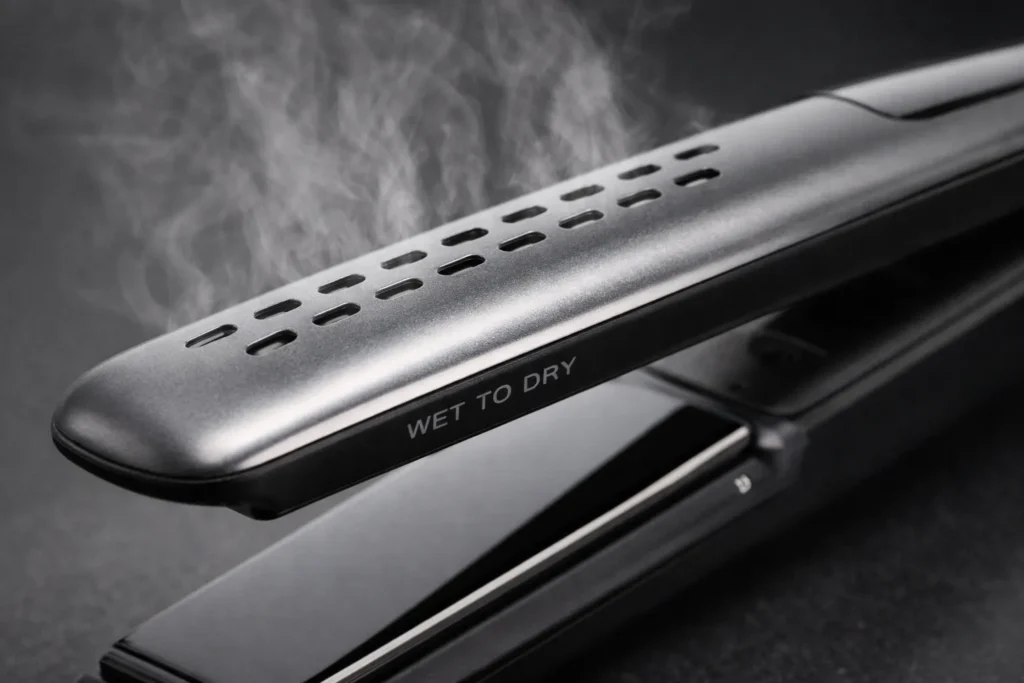
The magic lies in the vents. As you clamp the iron down on damp hair, the water turns into steam.
- Venting System: Instead of trapping the steam against the hair cuticle (which causes damage), the vents channel the steam away from the hair.
- Evaporation: This process allows the water to evaporate safely and quickly.
- Result: The hair is dried and straightened in one pass, locking in a smooth style.
It is important to note that “wet to dry” usually means “damp to dry.” Most manufacturers recommend towel-drying hair first to remove excess water before using the tool.
The Evolution of Wet-to-Dry Technology
Early versions of these tools in the early 2000s had a bad reputation. They were often just standard irons with holes drilled in them, and they still caused significant heat damage. However, 2026 styling technology is vastly different.
Modern Features
Today’s top-tier wet to dry straightener models include:
- Smart Sensors: These monitor the moisture level of the hair and adjust the temperature automatically to prevent burning.
- Air-Style Technology: Some newer models, like the Dyson Airstrait, use high-velocity focused air rather than hot plates to dry and straighten, eliminating heat damage almost entirely.
- Tourmaline and Ceramic Plates: These materials distribute heat evenly and emit negative ions to combat frizz, which is essential when styling damp hair.
Benefits of Using a Wet to Dry Straightener
Why should you consider switching from your trusty blow-dryer and flat iron combo?
1. Massive Time Savings
This is the number one selling point. By combining the drying and straightening steps, you can cut your styling time by 50% or more. For those with thick or long hair, this can mean gaining back 20 to 30 minutes every morning.
2. Less Heat Exposure
It sounds counterintuitive, but using one tool might be better than using two.
- Traditional Method: You blast hair with a hot hair dryer for 15 minutes, then go over it again with a 400°F flat iron. That is a double dose of heat.
- Wet-to-Dry Method: You pass the tool over the section once. The steam evaporation process also consumes some of the heat energy, meaning the hair itself might reach a lower peak temperature than with a dry iron.
3. Longer Lasting Style
Hair is most malleable when it is wet. As it dries, hydrogen bonds reform to hold the shape. By drying the hair into a straight shape, the style is often more resistant to humidity and reversion than hair that was rough-dried and then ironed.
4. Reduced Frizz
The steam generated during the process can actually help to hydrate the hair cuticle before it is sealed shut, leading to a glossier, less frizzy finish.
Is It Safe for All Hair Types?
While modern tools are safer, they aren’t a one-size-fits-all solution.
Fine or Damaged Hair
If your hair is bleached, chemically treated, or naturally very fine, proceed with caution.
- Risk: Wet hair is more elastic and prone to breakage. Tension from the plates combined with heat can snap fragile strands.
- Solution: Look for air-based wet-to-dry stylers rather than hot plates. If using plates, use the lowest heat setting.
Thick, Coarse, or Curly Hair
This hair type often benefits the most.
- Benefit: Thick hair holds a lot of water. The steam styling can help soften coarse textures, making them more manageable and silky.
- Tip: You may need to do slower passes to ensure the hair is fully dry.
How to Use a Wet to Dry Straightener Correctly
Using a wet to dry straightener requires a slightly different technique than a standard iron. Follow these steps for the best results.
Step 1: Preparation is Key
Never use the iron on soaking wet, dripping hair.
- Towel Dry: Squeeze (don’t rub) your hair with a microfiber towel to remove dripping water.
- Detangle: Use a wide-tooth comb to remove all knots. Wet hair snaps easily, so be gentle.
Step 2: Heat Protection
This is non-negotiable. Apply a high-quality heat protectant serum or spray. Look for one specifically designed for wet styling or blowouts.
Step 3: Sectioning
Divide your hair into clean, manageable sections.
- Why? You need the steam to escape efficiently. If the section is too thick, the hair in the middle will stay damp, leading to frizz and uneven texture.
Step 4: The Hissing Sound
As you clamp the iron, you will hear a hissing sound.
- Don’t Panic: This is the sound of water evaporating into steam and escaping through the vents. It is normal. However, if you smell burning hair, stop immediately—your temperature is too high.
Step 5: Slow and Steady
Move the iron slowly down the hair shaft. You want to give the water time to evaporate. A slow, steady pass is better than going over the same section five times quickly.
Step 6: Cool Shot (If Available)
Some air-based stylers have a cool shot button. Use this at the end to seal the cuticle and lock in the shine.
Top Features to Look For
When shopping for a new wet to dry straightener, keep an eye out for these specifications.
1. Venting Channels
Ensure the plates have visible holes or channels. Without these, the steam has nowhere to go, which effectively boils your hair.
2. Adjustable Temperature
Avoid tools with a single “On/Off” switch. You need to be able to control the heat based on your hair’s texture and dampness level.
- Fine Hair: 300°F – 340°F
- Thick Hair: 350°F – 400°F
3. Plate Material
- Titanium: Heats up fast and maintains high heat. Great for thick, coarse hair.
- Ceramic: Provides gentle, even heat. Better for fine or damaged hair.
- Tourmaline: Emits negative ions. Excellent for fighting frizz.
4. Plate Width
- 1 inch: Good for short to medium hair and for creating waves.
- 1.5 – 2 inches: Better for long, thick hair as it covers more surface area.
Common Mistakes to Avoid
Even with the best tool, user error can lead to damage.
- Using on Soaking Wet Hair: We cannot stress this enough. If water is dripping, it’s too wet.
- Applying Oils Before Heat: Do not apply heavy oils (like coconut or olive oil) before straightening wet hair. The oil can heat up rapidly and “fry” the hair. Stick to formulated heat protectants.
- Ignoring the Ends: The ends of your hair dry fastest. Move the iron quickly over the last inch to avoid frying your split ends.
- Skipping the Clean: Product buildup on wet-to-dry irons can block the steam vents. Clean your tool regularly with a damp cloth (when cool) to keep the vents clear.
Wet-to-Dry vs. Air Stylers: What’s the Difference?
In recent years, a new category has emerged: the wet-to-dry air styler (like the Dyson Airstrait or ghd Duet Style).
Hot Plate Wet-to-Dry
- Mechanism: Heated ceramic/titanium plates.
- Finish: Super sleek, flat, and shiny.
- Best For: Those who want a pin-straight “glass hair” look.
Air Styler Wet-to-Dry
- Mechanism: High-speed hot air focused between two arms. No hot plates touch the hair.
- Finish: Voluminous, bouncy, and straight (like a professional blowout).
- Best For: Those prioritizing hair health and volume over pin-straight flatness.
Expert Tips for a Salon Finish
- Root Lift: To avoid flat roots, lift the straightener upwards towards the ceiling as you glide through the root area, then curve it down.
- The Chase Method: For extra smoothness, run a fine-tooth comb through the hair section just ahead of the straightener. This aligns the strands perfectly before the heat hits them.
- Finish with Oil: Once the hair is completely dry and styled, apply a tiny drop of Argan oil to the ends to seal in moisture and add shine.
Conclusion
The modern wet to dry straightener is a far cry from the damaging tools of the past. When chosen wisely and used correctly, it is a legitimate time-saver that can simplify your beauty routine without compromising the health of your hair. By understanding the technology—specifically the importance of steam venting and moisture monitoring—you can achieve sleek, frizz-free results in half the time.
Whether you opt for a classic vented ceramic iron or splurge on the latest air-styling technology, the key remains the same: respect your hair, use heat protection, and never straighten dripping wet strands. With these rules in mind, you are ready to master the art of wet-to-dry styling.
Frequently Asked Questions (FAQs)
Q: Can a wet to dry straightener damage my hair?
A: Any heat tool carries a risk of damage. However, if used correctly on damp (not soaking) hair with a heat protectant, high-quality wet-to-dry straighteners are generally safe. They can be less damaging than the combination of blow-drying and flat ironing because the hair is exposed to heat for less time.
Q: Can I use a regular straightener on wet hair?
A: No! Absolutely not. Regular straighteners do not have the venting systems required to release steam. Using them on wet hair will boil the water inside the hair shaft, causing the cortex to explode (bubble hair), leading to irreversible damage and breakage.
Q: Does it take longer to straighten wet hair?
A: The actual pass of the straightener might be slower than on dry hair because you need to allow time for evaporation. However, because you are skipping the entire blow-drying step, the total styling time is significantly reduced.
Q: Can I use a wet to dry straightener on dry hair?
A: Yes, most wet-to-dry models function perfectly well as standard flat irons on dry hair. You may want to lower the temperature slightly since there is no moisture to evaporate.
Q: What is the hissing noise?
A: The hissing noise is the sound of water turning into steam and escaping through the vents. It is a normal part of the wet-to-dry process. However, if you see smoke (which hangs in the air) rather than steam (which dissipates quickly) or smell burning, stop immediately.

Sofia Bennett is a fashion writer and style observer known for her clean sense of aesthetics and trend analysis. She has covered fashion shows, reviewed designer collections, and interviewed independent creators. Sofia specializes in connecting fashion with real-life lifestyle choices, helping readers understand what looks good — and why.