
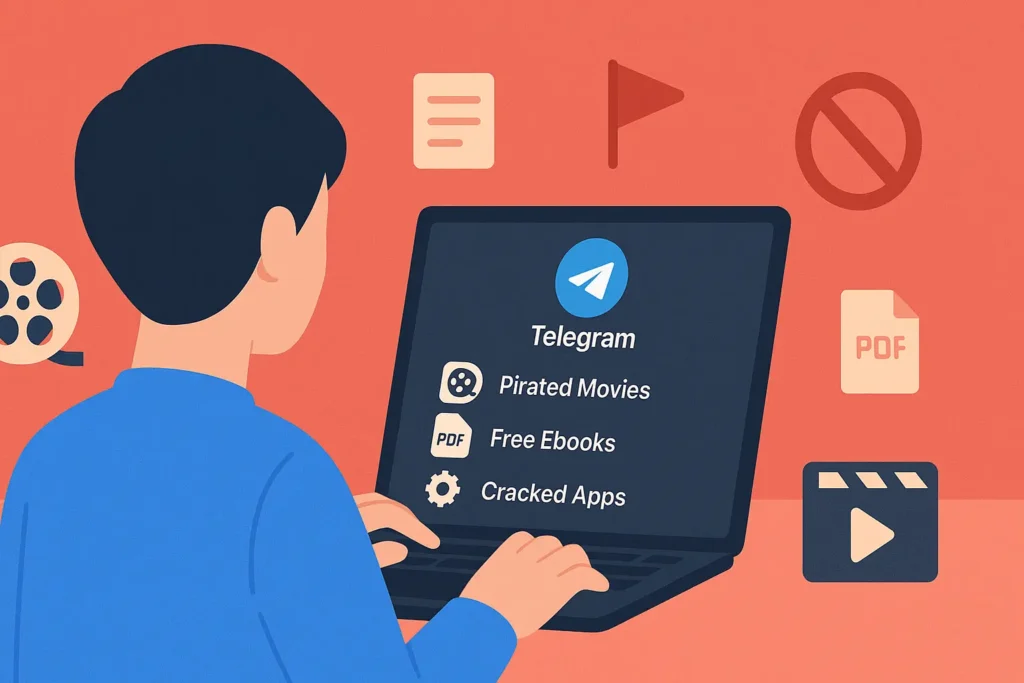
A few months ago, a friend messaged me saying she’d found a Telegram channel offering “premium courses for free.” She was thrilled… until her phone started glitching, her account was flooded with spam, and one of her saved payment cards showed an unfamiliar transaction.
What looked like a shortcut turned into a headache — and her story isn’t unique.
Welcome to the world of Telegram piracy, a growing trend that mixes curiosity, convenience, and risk in equal measure.
In this post, we’ll break down what Telegram piracy actually is, why it’s become widespread, how it affects creators and users, and—most importantly—how to stay safe while using Telegram responsibly.
What Is Telegram Piracy? (Simple Explanation)

Telegram piracy refers to the unauthorized sharing of copyrighted content—such as movies, paid courses, e-books, OTT subscriptions, apps, or software—through Telegram channels, groups, or bots.
It often appears in forms like:
- “Free Netflix Premium!” channels
- Folders of paid courses dumped into group chats
- PDF libraries of new book releases
- Pirated movie streaming bots
- Cracked software shared via file links
While it may look “free,” it’s illegal, risky, and frequently used as bait for scams or malware.
Why Telegram Became a Hotspot for Pirated Content
Telegram wasn’t created for piracy, but several features make it attractive to pirates:
1. Large Group & Channel Limits
One channel can broadcast to millions of users—perfect for spreading files quickly.
2. Fast, Encrypted File Sharing
Users can upload high-quality videos, documents, and zips up to several gigabytes.
3. Relative Anonymity
Users don’t need to reveal phone numbers or identities publicly.
4. Bot Automations
Bots can organize files, scrape links, or deliver entire libraries instantly.
Combined, these features make Telegram an efficient distribution platform — but also a risky one.
The Real Risks of Telegram Piracy
Even if something looks harmless, pirated channels come with hidden dangers:
1. Malware & Compromised Files
Cracked software and movie files frequently contain spyware or trojans.
2. Identity Theft & Data Harvesting
Some groups require signups or redirect you to phishing websites.
3. Account Hijacking
Unauthorized bots may attempt to access your Telegram login or contacts.
4. Financial Fraud
Fake “premium subscription unlockers” are often just scams.
5. Legal Consequences
Consuming or distributing copyrighted material without permission is illegal in many regions.
The risks almost always outweigh any perceived benefit.
Telegram Piracy vs. Legal Alternatives (A Quick Comparison)
| Feature | Pirated Channels | Legal Platforms |
|---|---|---|
| Safety | ❌ High risk of malware, scams | ✔️ Secure, trusted |
| Quality | ❌ Often low or inconsistent | ✔️ HD/4K, reliable |
| Support | ❌ No help if something breaks | ✔️ Customer support |
| Ethics | ❌ Hurts creators | ✔️ Supports creators & innovation |
| Cost | “Free” but risky | Varies, often affordable |
Legal alternatives are safer, cleaner, and usually more cost-effective in the long run.
How to Stay Safe on Telegram (A Practical, Step-by-Step Guide)
Even if you never engage with pirated channels, Telegram users should be aware of digital safety.
Step 1: Avoid Joining “Free Premium” or “Cracked” Groups
If it seems too good to be true… it usually is.
Step 2: Disable Auto-Download for Unknown Chats
Go to:
Settings → Data and Storage → Automatic Media Download
Step 3: Review App Permissions
Ensure Telegram doesn’t have unnecessary access to files, camera, or microphone.
Step 4: Don’t Install Files from Unknown Senders or Bots
Most malware spreads through disguised apps or zips.
Step 5: Enable Two-Step Verification
Adds a password layer to protect your account.
Step 6: Stick to Official or Verified Channels
Brands, creators, and news organizations usually have verified checkmarks.
Recommended Tools for Safer Telegram Use
These don’t promote piracy—they simply enhance digital safety:
- Antivirus / Anti-malware tools (e.g., Bitdefender, Malwarebytes)
- Password managers (1Password, Bitwarden)
- VPNs for privacy, not piracy (ProtonVPN, Mullvad)
- Telegram’s built-in security settings like Secret Chats, locked folders, and 2FA
Common Mistakes to Avoid
- Downloading zipped files or APKs from unknown channels
- Joining “course warehouse” or “free movies” groups
- Trusting verification codes sent by bots
- Clicking shortened, suspicious links
- Storing sensitive data inside Telegram without enabling security features
Real-World Examples of Telegram Piracy Impact
Case 1: Course Creators Losing Revenue
Educators report entire paid programs uploaded to Telegram hours after launch—hurting small creators the most.
Case 2: Movie Leaks Before Release
Film studios sometimes track piracy back to Telegram channels during investigations.
Case 3: Students Targeted by Malware in “Free Course” Groups
Some cracked “course downloads” were actually trojans stealing browser sessions and passwords.
Telegram’s piracy ecosystem doesn’t just affect companies—it hurts individual people, too.
Key Takeaway
Telegram is a powerful, versatile platform, but like any online space, it has a darker side.
Pirated content may look convenient, but the risks—legal, financial, and personal—far outweigh the quick win.
Use Telegram wisely, protect your data, and support creators by choosing legal alternatives whenever possible.
FAQs
Is it illegal to download pirated files on Telegram?
Yes. Downloading or distributing copyrighted content without permission violates copyright laws in most countries.
Can you get banned from Telegram for piracy?
Telegram has removed many large piracy channels in response to legal complaints. Users who share illegal files may also face account restrictions.
Why do people still use pirated channels?
Usually convenience or cost—but most users underestimate the security and legal risks.
How can I report a piracy channel?
You can use Telegram’s Report feature inside any channel or message.
Are all Telegram bots unsafe?
No. Many are official or trustworthy—but avoid bots associated with illegal downloads or cracked content.

Adrian Cole is a technology researcher and AI content specialist with more than seven years of experience studying automation, machine learning models, and digital innovation. He has worked with multiple tech startups as a consultant, helping them adopt smarter tools and build data-driven systems. Adrian writes simple, clear, and practical explanations of complex tech topics so readers can easily understand the future of AI.