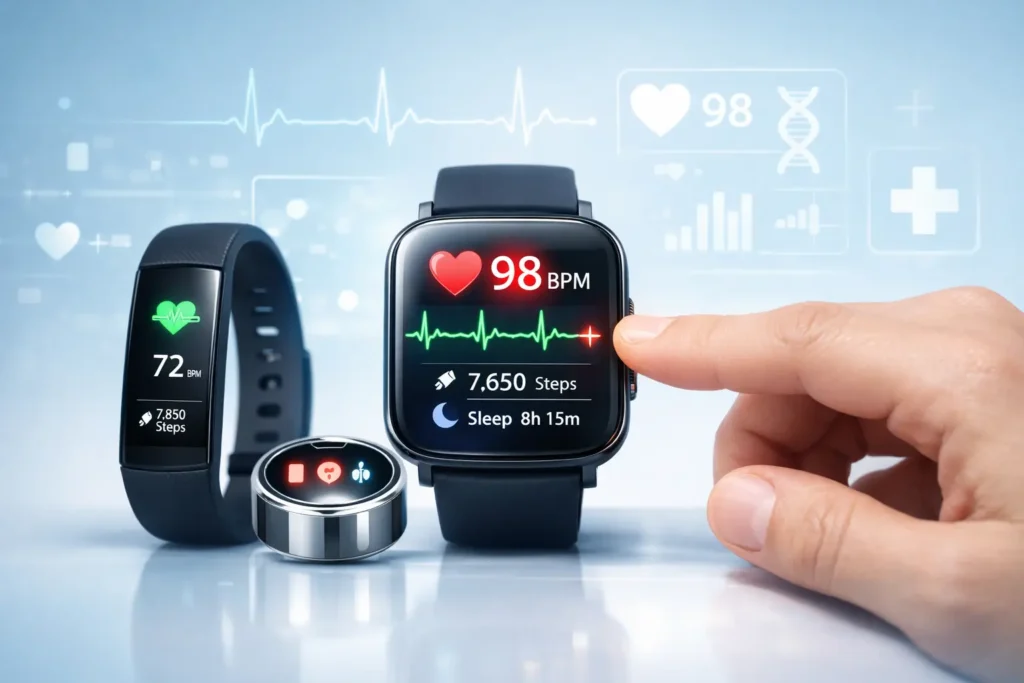
You glance at your wrist and your heart rate is 62 bpm. Your sleep score last night was 84. You’ve already hit 4,200 steps by 9 a.m. Without visiting a clinic, picking up a phone, or logging into an app, your body’s story is being told in real time — courtesy of a device you barely notice you’re wearing. That’s the quiet revolution of Technology Wearables.
This guide is your definitive resource for understanding, choosing, and getting the most out of wearables. Whether you’re a curious newcomer, a fitness enthusiast shopping for your first tracker, a caregiver exploring remote health monitoring, or a tech professional following the cutting edge — you’ll find everything you need here. We cover the history, the science, the key device categories, the top brands, the real-world health applications, the privacy considerations, and a clear, practical buying framework.
What you’ll gain: A comprehensive understanding of every wearable category, the ability to compare leading brands intelligently, and the knowledge to make a confident, informed purchase.
What Is Technology Wearables? A Clear Definition
Wearable technology (also called wearables) refers to electronic devices designed to be worn on or in the human body, either as accessories, embedded in clothing, or attached directly to the skin. These devices incorporate sensors, processors, and wireless communication capabilities to collect data, provide feedback, and connect to other digital systems in real time.
What distinguishes wearables from other consumer electronics is their intimate relationship with the user’s body and their ability to gather continuous, contextual data — not just a snapshot, but an ongoing stream of physiological and behavioral information. This makes them uniquely powerful tools for health, productivity, safety, and communication.
Key Characteristics That Define a Wearable
- Body-worn form factor: Designed to be comfortably carried or attached to the body during everyday activities.
- Integrated sensors: Optical heart rate sensors, accelerometers, gyroscopes, GPS/GNSS receivers, temperature probes, and more.
- Wireless connectivity: Bluetooth, Wi-Fi, NFC, and cellular (eSIM) for syncing data and receiving notifications.
- Real-time data processing: Onboard microprocessors analyze data locally, with deeper analysis offloaded to companion apps or the cloud.
- User interface: Touchscreens (AMOLED, LCD), haptic feedback, voice commands, or button-based navigation depending on device class.
- Continuous operation: Unlike smartphones that are picked up and put down, wearables operate passively in the background throughout the day — and often at night.
A Brief History of Wearable Technology
Wearable technology is far older than Silicon Valley. The concept of carrying computation and measurement on the body has deep historical roots.
The Early Foundations (1500s–1970s)
The pocket watch (circa 1510) was arguably humanity’s first mass-adopted wearable — a miniaturized computation and display device worn on the body. Leonardo da Vinci’s sketches from the same era included a mechanical pedometer concept to measure walking distance. By the 19th century, wristwatches emerged as the dominant personal timekeeping device, cementing the concept of wearing technology.
In 1949, Dr. Norman Holter developed the Holter monitor — a portable electrocardiogram (ECG) worn on the chest to continuously record heart activity over 24–48 hours. This was the world’s first medical wearable in the modern sense. Meanwhile, hearing aids had been miniaturizing since the 1950s, becoming the first widely adopted health wearables.
The 1970s introduced the calculator watch — genuinely the first “smartwatch” concept — with the Pulsar LED watch (1972) and later the Casio Databank series. These devices demonstrated public appetite for utility beyond timekeeping.
The Digital Revolution Era (1980s–2000s)
The MIT Media Lab became a crucible for wearable computing research during the 1980s and 1990s. Researchers developed early heads-up displays, wearable computers worn in backpacks, and gesture-recognition gloves. These prototypes, while far from consumer-ready, established the conceptual foundations for everything that followed.
The early 2000s saw the first commercial heart rate monitor chest straps from Polar, and GPS-enabled sports watches from Garmin. The Fitbit (launched 2009) democratized activity tracking with a small clip-on device that counted steps and estimated calories — and sparked the modern fitness wearable industry.
The Modern Era (2010s–Present)
The release of Google Glass (2013) demonstrated the potential — and the challenges — of AR headsets. The real watershed moment came in 2015 with the launch of the Apple Watch, which redefined consumer expectations: a device that combined health monitoring, smartphone notifications, payments, and app functionality in a single, fashionable package.
Today, the global wearables market is a multi-hundred-billion-dollar industry. Devices can detect atrial fibrillation, monitor blood oxygen during sleep, track menstrual cycles, and alert emergency services after a fall — all from your wrist. The line between consumer electronics and medical devices is blurring rapidly.
The Main Types of Wearable Devices
The wearable ecosystem has diversified far beyond the smartwatch. Understanding the distinct categories helps you match the right device to your specific needs.
Smartwatches: The All-Rounders
Smartwatches are the Swiss Army knives of the wearable world. They combine a rich array of health sensors with smartphone-like functionality — displaying notifications, running apps, enabling contactless payments via NFC, and supporting voice assistants such as Siri or Google Assistant.
Modern flagship smartwatches offer ECG (electrocardiogram) readings, blood oxygen (SpO2) monitoring, crash detection, and fall detection with automatic emergency SOS calls. Many include cellular connectivity via eSIM, allowing calls and data access even without a paired smartphone nearby.
Best for: Users who want one device that does everything — health tracking, communication, navigation, and payment — in a refined package.
Fitness Trackers & Activity Bands: The Specialists
Fitness trackers prioritize health and activity monitoring above all else. They tend to be smaller, lighter, and more affordable than smartwatches, with significantly longer battery life (often 7–14 days versus 18–36 hours for smartwatches). Core functions include step counting, calorie expenditure estimation, sleep stage tracking, and continuous heart rate monitoring.
Advanced fitness trackers now include built-in GPS for outdoor activity mapping, SpO2 sensors, stress tracking via heart rate variability (HRV), and even ECG capabilities. The Fitbit Charge 6, for example, packs nearly smartwatch-level health features into a slim, lightweight band form factor.
Best for: Health-conscious users who prioritize long battery life, a discreet form factor, and deep fitness and wellness data over smart features.
Smart Glasses & AR Headsets
Smart glasses superimpose digital information onto the real world — or deliver audio and information to the wearer hands-free. Enterprise applications have proven more successful than consumer deployments: surgeons use AR headsets for procedure guidance, warehouse workers use smart glasses for pick-and-pack logistics, and field technicians receive remote expert assistance.
Consumer smart glasses are experiencing renewed momentum. Meta Ray-Ban Smart Glasses have normalized AI-assisted, camera-equipped eyewear, while dedicated augmented reality (AR) headsets from companies like Apple and Magic Leap push toward immersive spatial computing.
Best for: Enterprise professionals needing hands-free workflows, early adopters interested in spatial computing, and users seeking a more discreet wearable form factor.
Smart Clothing & E-Textiles
Smart clothing (also called e-textiles or electronic textiles) integrates sensors and conductive fibers directly into fabric. A smart compression shirt might continuously monitor heart rate and respiratory rate with greater accuracy than a wrist-based device, because chest placement provides direct proximity to the heart. Posture-correcting vests use vibration alerts when the wearer slouches.
Medical applications are particularly promising: smart socks for diabetic patients monitor foot temperature to detect early signs of peripheral neuropathy, while cardiac monitoring garments allow extended Holter-equivalent monitoring without the discomfort of traditional electrode patches.
Best for: Athletes requiring clinical-grade biometric accuracy, patients needing extended medical monitoring, and rehabilitation programs.
Medical Wearables & Patches
Medical-grade wearables occupy a distinct category: designed for clinical use, many require prescriptions, and some are subject to FDA clearance. The most prominent example is the Continuous Glucose Monitor (CGM) — a small sensor patch worn on the arm or abdomen that measures interstitial glucose levels every few minutes, transmitting readings to a smartphone or dedicated display.
ECG patches (like the Zio patch from iRhythm) are worn for up to 14 days to capture intermittent arrhythmias that a brief clinical ECG would miss. Remote patient monitoring (RPM) patches transmit vital signs from patients at home to clinical teams — reducing hospital readmissions and enabling earlier intervention for high-risk patients.
Best for: Patients with chronic conditions (diabetes, heart disease, hypertension), post-surgical recovery monitoring, and clinical research participants.
Niche Wearables: Smart Rings, Hearables & More
Smart rings (such as the Oura Ring and Samsung Galaxy Ring) offer a compelling balance: discreet form factor with surprisingly robust health tracking capabilities. The Oura Ring Gen 4, for instance, tracks sleep stages, resting heart rate, HRV, body temperature, and activity — all from the finger, which provides stable blood flow readings comparable to a chest strap.
Hearables — smart earbuds and hearing devices — increasingly blur the line between audio device and health sensor. Products like Apple AirPods Pro detect in-ear temperature, offer real-time language translation, and in clinical variants (like NeuroEar), can deliver neurostimulation therapy. Advanced hearing aids from companies like Starkey now incorporate fall detection and heart rate monitoring.
At the extreme end, implantable devices — pacemakers with wireless telemetry, cochlear implants, and neurostimulation devices — represent the innermost frontier of wearable technology.
What Can Wearables Do? Key Features & Data
The sensor array inside a modern wearable is remarkable. Understanding what data is collected — and how — helps you evaluate which features genuinely matter for your lifestyle.
Health & Fitness Monitoring
This is the core value proposition of most consumer wearables, and the capabilities have expanded dramatically:
- Heart rate monitoring: Optical photoplethysmography (PPG) sensors use green or red LED light to detect blood volume changes in capillaries beneath the skin, enabling continuous, passive heart rate measurement.
- ECG / Electrocardiogram: By placing a finger on a crown or electrode, users can generate a single-lead ECG rhythm strip in 30 seconds, enabling detection of atrial fibrillation (AFib) — a common arrhythmia associated with stroke risk.
- Blood oxygen (SpO2): Red and infrared LEDs measure the proportion of oxygenated hemoglobin in the blood. Useful for monitoring sleep apnea and altitude acclimatization.
- Sleep tracking: Accelerometers detect body movement while PPG sensors track heart rate patterns, together estimating sleep stages (light, deep, and REM) and overall sleep quality scores.
- Stress & HRV: Heart rate variability (the slight variation in time between heartbeats) is a validated marker of autonomic nervous system status. Low HRV correlates with physiological stress and inadequate recovery.
- Blood pressure (emerging): Some devices (Samsung Galaxy Watch 7) offer blood pressure estimation via pulse wave analysis, though accuracy varies and medical-grade monitoring still requires cuff-based devices.
- Continuous glucose monitoring: Currently limited to medical patches, but non-invasive wrist-based glucose sensing is an active area of research and development.
- Women’s health: Wrist-based skin temperature sensors can detect the slight rise associated with ovulation, enabling cycle tracking and fertility window estimation without dedicated thermometers.
Connectivity & Smart Features
Beyond health, wearables serve as an extension of the smartphone:
- Notifications: Calls, texts, emails, calendar alerts, and third-party app notifications delivered as vibrations and screen displays — without reaching for the phone.
- Contactless payments (NFC): Tap to pay at any NFC-enabled terminal. Particularly convenient during workouts when carrying a wallet or phone is impractical.
- GPS/GNSS navigation: Built-in GPS enables accurate outdoor activity mapping, pace per kilometre, elevation gain, and post-workout route replay — no phone required.
- Voice assistants: Siri, Google Assistant, and Bixby can be invoked from the wrist for hands-free calls, reminders, and smart home control.
- Music & media control: Onboard storage (often 4–32 GB) allows offline playback via Bluetooth earbuds, and streaming services can be accessed via Wi-Fi or cellular.
Safety & Emergency Features
This category is increasingly important for older adults, outdoor adventurers, and parents:
- Fall detection: Accelerometers and gyroscopes detect the characteristic signature of a fall. If the wearer is unresponsive for ~60 seconds, the device automatically contacts emergency services and shares GPS location.
- Crash detection: Apple Watch Ultra 2 and some Pixel Watch models can detect the forces associated with a vehicle collision and initiate an SOS call.
- Emergency SOS: A single button action (or via satellite on Apple Watch Ultra) connects the user with emergency services — critical in remote environments.
- Medical ID: On-device medical information (blood type, allergies, emergency contacts) is accessible on the lock screen for first responders.
- Location sharing: Real-time GPS location can be shared with designated contacts — widely used for children’s safety and monitoring elderly relatives.
The Real-World Impact of Wearables Across Industries
Revolutionizing Healthcare & Medicine
The healthcare implications of wearable technology are profound and still unfolding. Research programs at leading institutions — including Duke University’s Digital Health program — are leveraging continuous wearable data to enable what clinicians call proactive health management: shifting from treating disease reactively to identifying risk signals before symptoms emerge.
Remote patient monitoring (RPM) is transforming chronic disease care. Patients with congestive heart failure wear sensors that track weight, heart rate, and fluid status; their care team receives alerts when parameters drift outside safe thresholds — enabling phone or telehealth interventions that prevent costly hospitalizations. Studies have shown RPM programs can reduce 30-day hospital readmission rates significantly for high-risk cardiac patients.
For the 40 million Americans with diabetes, continuous glucose monitors have been transformative. Instead of four to six fingerstick readings per day, CGMs provide a data point every 5 minutes — enabling more precise insulin dosing, reducing dangerous hypoglycemic episodes, and dramatically reducing the cognitive burden of diabetes management.
Clinical research is being accelerated by wearable-derived data. Traditional clinical trials measure outcomes at scheduled appointments; wearables provide continuous, real-world data that reveals how patients actually function between visits. Digital biomarkers — wearable-measured parameters like gait speed, sleep fragmentation, and resting heart rate trends — are increasingly used as surrogate endpoints in drug development and as early indicators of disease progression in conditions like Parkinson’s disease, multiple sclerosis, and oncology.
Key insight: Wearable data doesn’t just tell you what’s happening right now — it tells you how you’re trending over time. Longitudinal trends are often more clinically meaningful than any single measurement.
Enhancing Sports & Athletic Performance
Elite sports teams now deploy wearables for training load management — quantifying how much physiological stress an athlete has accumulated and when recovery is sufficient. GPS vests track sprint distances and accelerations; heart rate straps monitor cardiovascular strain; sleep trackers flag inadequate recovery that would compromise performance and elevate injury risk.
For amateur athletes, the accessibility of this data has democratized performance optimization. Runners can monitor VO2 max estimates (a key aerobic fitness marker), runners’ cadence and ground contact time, and recovery recommendations that were previously available only to professional athletes with access to sports science labs.
Transforming the Workplace & Enterprise
Enterprise wearable deployments are substantial and growing. In logistics and warehouse management, smart glasses from providers like Vuzix and Google guide workers through pick-and-pack operations with visual overlay instructions, increasing fulfillment accuracy and speed while reducing training time for new employees.
In manufacturing and field services, wearables monitor worker fatigue through eye-tracking headsets and biometric bands — automatically flagging when a worker’s alertness drops below safe thresholds in high-risk environments. Smart hard hats combine impact detection, GPS, and gas sensing into a single safety device. Industrial exoskeletons with embedded wearable sensors reduce musculoskeletal injury risk by monitoring posture and providing assistive force during heavy lifting.
How to Choose the Right Wearable: A Practical Buying Guide
Choosing a wearable is a personal decision that depends on your specific needs, preferred ecosystem, and budget. Use this three-step framework to cut through the noise.
Step 1: Define Your Primary Purpose & Budget
The most common mistake buyers make is choosing a device based on a feature list rather than their actual use case. Ask yourself:
- Pure health & fitness focus: A premium fitness tracker (Fitbit Charge 6, Garmin Vivosmart 5) will serve you better than a general-purpose smartwatch. More sensors, longer battery, lower cost.
- Balanced smart + health: A flagship smartwatch (Apple Watch, Samsung Galaxy Watch) is the right choice if you want notifications, apps, and payments alongside comprehensive health tracking.
- Serious athlete or outdoor adventurer: A GPS-focused sports watch (Garmin Fenix 8, Garmin Forerunner 965) offers superior GPS accuracy, multi-sport profiles, topographic mapping, and up to 29-day battery life.
- Medical monitoring need: Consult your physician first. A CGM, prescribed ECG patch, or remote patient monitoring device may be more appropriate than a consumer wearable.
- Budget: Capable fitness trackers start around $50–$80. Mid-range smartwatches run $150–$350. Premium smartwatches and GPS sports watches occupy $400–$700+.
Step 2: Compare Key Specifications
Once you know your category, evaluate these specs head-to-head:
- Battery life: A critical factor. Smartwatches average 18–40 hours; GPS sports watches can reach 20+ days. Always check GPS-on battery life separately — it drops dramatically.
- Display: AMOLED displays offer vibrant, always-on visibility in sunlight. Memory-in-pixel (MIP) displays used by Garmin consume far less power, enabling multi-week battery life.
- Water resistance: 5 ATM (50 meters) is suitable for swimming. 10 ATM or dedicated swim ratings offer more protection. The IP69K rating handles high-pressure water jets, useful in industrial contexts.
- GPS type: Multi-band (L1/L5) GPS offers dramatically better accuracy in urban canyons and dense foliage versus standard single-frequency GPS.
- Phone compatibility: Apple Watch is exclusively compatible with iPhone. Wear OS watches (Google, Samsung) work best with Android but offer limited functionality with iPhone.
- Health sensors: Confirm whether ECG, SpO2, skin temperature, and body composition features are present and available in your region — some health features are geographically restricted pending regulatory approval.
Step 3: Consider the Ecosystem & Platform
A wearable doesn’t exist in isolation — it’s part of a connected health ecosystem. The platform you choose affects data portability, app availability, and long-term utility:
- Apple (watchOS): Deepest iPhone integration, Health app as the central data hub, excellent third-party app support, ECG and AFib detection FDA-cleared. Requires iPhone.
- Google / Wear OS: Strong Android integration, Google Health as data platform, broad hardware choice from Samsung, Pixel, Fitbit. Best cross-platform compatibility with Google services.
- Garmin (Garmin OS): Sports and outdoor focused, proprietary OS, Garmin Connect as the ecosystem. Longest battery life in class, exceptional GPS accuracy, limited smart features.
- Fitbit (Google): User-friendly health coaching, 6-month Fitbit Premium trial offers personalized insights. Transitioning to Google ecosystem; long-term platform clarity improving.
- Huawei (HarmonyOS): Feature-rich hardware at competitive prices; ecosystem strength varies significantly by region. Excellent hardware specifications, best non-Apple ECG implementation in some markets.
Wearables Comparison Table: Leading Devices at a Glance
The table below compares leading wearable devices across the key specifications that matter most to buyers:
| Brand / Device | Battery Life | Heart Rate & ECG | Built-in GPS | Water Resistance | Price Range (USD) |
| Apple Watch Series 10 | Up to 18 hrs | Yes (ECG) | Yes | 50m / 5 ATM | $399–$499 |
| Samsung Galaxy Watch 7 | Up to 40 hrs | Yes (ECG) | Yes | 50m / 5 ATM | $299–$349 |
| Garmin Forerunner 965 | Up to 23 days | Yes (no ECG) | Yes (Multi-Band) | 50m / 5 ATM | $599 |
| Fitbit Charge 6 | Up to 7 days | Yes (ECG) | Built-in GPS | 50m / 5 ATM | $159 |
| Huawei Watch GT 5 Pro | Up to 14 days | Yes (ECG) | Yes | 50m / 5 ATM | $299–$399 |
| Oura Ring Gen 4 | Up to 8 days | Yes (no ECG) | No | 100m | $349+sub |
† Prices are approximate USD MSRP at time of writing. Check manufacturer websites for current pricing. Subscription fees may apply for advanced health insights (Fitbit Premium, Oura Membership).
The Future of Wearable Technology
The pace of wearable innovation shows no signs of slowing. Several technology trajectories will reshape the landscape in the coming years:
Non-Invasive Continuous Glucose Monitoring
The holy grail of consumer health wearables is a non-invasive wrist-based glucose sensor — one that measures blood sugar without needles or skin penetration. Apple has been reported to be developing optical glucose sensing technology for years. Samsung and other manufacturers are similarly invested. Success in this area would be transformative for the estimated 537 million people worldwide living with diabetes.
AI-Powered Personalized Health Insights
The transition from raw data to actionable insight requires sophisticated machine learning (ML) and artificial intelligence (AI). Future wearables will not just report your resting heart rate — they will model your personal baseline, detect statistically significant deviations, and provide contextualized guidance: “Your HRV has trended 18% below baseline for three days following high-intensity training. Consider reducing load intensity and prioritizing sleep tonight.”
AI will also enable predictive health analytics: identifying patterns that precede illness, flagging physiological signatures associated with deteriorating chronic conditions, and potentially offering personalized risk stratification for cardiovascular events.
Advanced Materials & New Form Factors
Research in flexible electronics and biocompatible materials is enabling a new generation of wearables that conform seamlessly to the body. Skin-adhesive biosensor patches no thicker than a bandage can monitor multiple parameters continuously for weeks. Smart contact lenses with embedded glucose sensors have been demonstrated in research settings. Energy harvesting — converting body heat, motion, or ambient radio frequencies into electrical power — promises wearables that never need charging.
Deeper Healthcare Integration
The regulatory environment is gradually evolving to accommodate consumer-grade health data in clinical contexts. Digital prescriptions for wearable-based monitoring are becoming more common. Electronic health record (EHR) integration — allowing wearable data to flow directly into a patient’s clinical record — is expanding, enabling physicians to review longitudinal physiological trends rather than relying solely on brief in-office measurements.
Critical Challenges: Privacy, Security & Accuracy
Wearable technology’s benefits come with important considerations that every user should understand.
Data Privacy & Ownership
Health data is among the most sensitive categories of personal information. When a wearable continuously monitors your heart rate, sleep patterns, menstrual cycle, location, and physical activity, it generates an extraordinarily detailed profile of your life. Key questions every wearable user should ask:
- Who owns my data? (You should — check the privacy policy carefully.)
- Can the manufacturer sell or share anonymized data with third parties, including insurers or employers?
- How long is data retained, and can I request deletion?
- Is data encrypted in transit and at rest?
- Does the companion app access more device permissions than necessary?
Users in the EU benefit from GDPR protections that grant significant rights over personal data. In the US, HIPAA protections generally apply only to data handled by healthcare providers — consumer wearable data often falls outside this framework, meaning users must rely on voluntary company policies and app store privacy labels.
Cybersecurity Risks
Wearables are potential attack surfaces in the Internet of Things ecosystem. Bluetooth-connected devices can theoretically be exploited to expose location data or serve as entry points into paired smartphones. Responsible manufacturers implement TLS encryption, certificate pinning, and regular security patch cadences. When evaluating a wearable brand, check whether the company has a published security vulnerability disclosure policy and a history of promptly addressing reported flaws.
Accuracy & Clinical Validity
Not all health data from wearables is created equal. The accuracy of consumer wearables varies significantly by measurement type, device, and individual physiology. Heart rate monitoring is generally accurate to within ±3–5 bpm under resting conditions but degrades during high-intensity exercise or when the watch fits loosely. SpO2 sensors are less accurate in individuals with darker skin tones — a limitation that manufacturers are actively working to address. ECG readings from smartwatches are single-lead recordings, versus the diagnostic gold standard 12-lead ECG.
Wearable sleep staging, stress scores, and readiness metrics are algorithmically derived estimates, not clinical diagnoses. They are useful directional indicators, but should not replace professional medical evaluation. If a wearable flags an irregular heart rhythm, that is an invitation to discuss with your physician — not a diagnosis.
Interoperability & Data Silos
One frustrating reality of the current wearable landscape is fragmentation: each platform (Apple Health, Google Health, Garmin Connect, Fitbit) operates as a walled garden. Migrating from one ecosystem to another often means losing historical data. Open health data standards (such as FHIR — Fast Healthcare Interoperability Resources) are gradually being adopted, but seamless cross-platform data portability remains an unresolved challenge for the industry.
faqs
What is wearable technology in simple words?
Wearable technology refers to electronic devices you wear on your body — like a smartwatch, fitness band, or smart glasses — that collect information about you (health data, location, activity) and connect to your smartphone or the internet.
What are the most common types of wearable technology?
The most widely used categories are: smartwatches (Apple Watch, Samsung Galaxy Watch), fitness trackers (Fitbit), GPS sports watches (Garmin), wireless earbuds (hearables), and medical patches (CGM devices for diabetes). Smart rings and smart glasses are growing in popularity.
How do fitness trackers measure heart rate?
Most fitness trackers use optical photoplethysmography (PPG). Green LED light shines into the skin, and a sensor measures how much light is reflected back. Blood absorbs green light, so variations in reflection correspond to the pulse — the sensor counts these variations to calculate beats per minute.
Can a smartwatch detect a heart attack or AFib?
Smartwatches with ECG capability (Apple Watch Series 4+, Samsung Galaxy Watch, Fitbit Sense) can detect atrial fibrillation (AFib) — an irregular heart rhythm associated with elevated stroke risk. They cannot detect heart attacks (myocardial infarction), which require a multi-lead ECG and blood biomarker tests. If you experience chest pain or other heart attack symptoms, call emergency services immediately.
Is wearable technology safe for children?
GPS tracking wearables designed for children (like Garmin Bounce) can provide valuable location awareness for parents. However, parents should evaluate screen time implications, data privacy policies (especially COPPA compliance in the US), and whether constant monitoring affects a child’s sense of autonomy. Wearables with always-on cellular connectivity also introduce cybersecurity considerations worth assessing.
How accurate are sleep trackers on wearables?
Consumer wearable sleep tracking estimates sleep stages with moderate accuracy — research comparisons against clinical polysomnography (PSG, the gold standard) show wrist-worn devices can identify sleep vs. wake with around 85–90% accuracy, but distinguishing specific stages (light, deep, REM) is less reliable. They are useful for identifying trends and patterns over time rather than as precise clinical measurements.
What is the difference between a fitness tracker and a smartwatch?
Fitness trackers are purpose-built health and activity monitors emphasizing long battery life (7–14 days), discreet design, and health sensors. Smartwatches add smartphone-like functionality: running apps, processing notifications, enabling payments, and supporting voice assistants — at the cost of shorter battery life (typically 1–2 days) and higher price.
What are the privacy risks of using a wearable device?
Key risks include: continuous collection of sensitive health and location data; potential for data to be shared with advertisers, insurers, or employers (depending on company policy); Bluetooth security vulnerabilities; and lack of comprehensive regulatory protection for consumer health data in many jurisdictions. Read privacy policies carefully and enable device-level privacy protections.
What is the future of wearable tech in healthcare?
The trajectory points toward: non-invasive continuous glucose monitoring on the wrist, AI-driven predictive health analytics, deeper integration with electronic health records, regulatory acceptance of wearable-derived digital biomarkers in clinical trials, and new form factors (skin patches, smart contact lenses) that are less obtrusive and more clinically capable.
Can wearables help manage chronic diseases like diabetes?
Yes, significantly. Continuous glucose monitors (CGMs) have transformed diabetes management by providing real-time glucose readings every few minutes, enabling precise insulin dosing and reducing dangerous hypoglycemic episodes. For hypertension, blood pressure monitoring wearables provide trend data between clinical visits. Remote patient monitoring programs for heart failure use wearables to detect early decompensation signals.
How long does the battery last on a typical smartwatch?
Most flagship smartwatches (Apple Watch, Samsung Galaxy Watch, Google Pixel Watch) deliver 18–40 hours on a charge with typical use. Garmin sports watches extend to 7–18 days in smartwatch mode, and up to 29 days in GPS + solar mode (Fenix 8 Solar). Fitness trackers typically last 5–10 days. GPS-intensive activities (outdoor runs, cycling) drain batteries significantly faster.
Are smart glasses making a comeback?
Yes, with more pragmatic ambitions than the original Google Glass. Meta Ray-Ban Smart Glasses have achieved mainstream consumer adoption by focusing on audio, AI assistant integration, and a discreet form factor that looks like regular eyewear. Enterprise AR remains robust. Fully transparent AR glasses remain technically challenging, but multiple companies are targeting practical mass-market versions within the next few years.
Do I need a smartphone for a wearable to work?
For initial setup and most advanced features, yes — almost all consumer wearables require a paired smartphone. However, many devices offer standalone functionality: GPS sports watches can record activities offline; LTE/cellular-equipped smartwatches make calls and stream music independently; and some medical wearables operate entirely autonomously with their own cellular connection for remote monitoring.
Conclusion: Your Body, Continuously Understood
Wearable technology has moved from novelty to necessity for millions of people around the world. It has done so by earning the most intimate of privileges: a permanent place on the body. That privilege comes with enormous responsibility — for manufacturers to protect the sensitive data they collect, for regulators to create frameworks that reflect the clinical relevance of these devices, and for users to engage thoughtfully with what the data means and what it doesn’t.
The fundamental promise of wearable technology is time: time to act before a health condition becomes a crisis, time saved through seamless connectivity, and time returned to the things that matter because managing your health is less effortful. As sensors become more capable, AI more sophisticated, and form factors more invisible, wearables will become less like devices you use and more like extensions of your own awareness.
Whether you’re taking your first steps into the wearable world with a fitness band, optimizing your athletic training with a GPS sports watch, managing a chronic condition with a CGM, or simply curious about where this technology is headed — the era of the quantified, connected, empowered self is here. And it’s still just getting started.

Adrian Cole is a technology researcher and AI content specialist with more than seven years of experience studying automation, machine learning models, and digital innovation. He has worked with multiple tech startups as a consultant, helping them adopt smarter tools and build data-driven systems. Adrian writes simple, clear, and practical explanations of complex tech topics so readers can easily understand the future of AI.