
Introduction
If you’ve ever wondered how a gaming console turned into a multi-billion-dollar digital empire, the Sony PlayStation platform business is the textbook case. What began in the mid-1990s as a bold experiment by Sony has evolved into one of the most influential platform businesses on the planet—one that shapes how games are made, sold, played, monetized, and even culturally experienced.
This topic matters far beyond gaming fans. Platform businesses dominate modern economics, from streaming to smartphones, and PlayStation offers a rare, clear example of how hardware, software, services, creators, and consumers can be woven into a single, durable ecosystem. Whether you’re a gamer, an investor, a startup founder, a product manager, or a content strategist, understanding Sony’s PlayStation strategy offers practical lessons you can apply elsewhere.
In this guide, you’ll learn:
- What the Sony PlayStation platform business really is (in simple, human terms)
- How Sony makes money across hardware, games, subscriptions, and services
- Why PlayStation’s ecosystem design keeps users loyal for years
- The tools, partnerships, and strategic choices that fuel its growth
- Common misconceptions and mistakes people make when analyzing PlayStation
- Clear takeaways you can use in business, marketing, or product strategy
Let’s unpack how Sony turned PlayStation into far more than a console—and why that distinction is everything.
Understanding the Sony PlayStation Platform Business

At its core, the Sony PlayStation platform business is not about selling consoles. That’s the first mental shift most people need to make. Consoles are the gateway, not the destination.
Think of PlayStation like a modern city. The console is the road infrastructure—necessary, expensive, and often sold at slim margins. The real economy happens on top of it: games, digital storefronts, subscriptions, in-game purchases, social features, cloud services, and developer ecosystems.
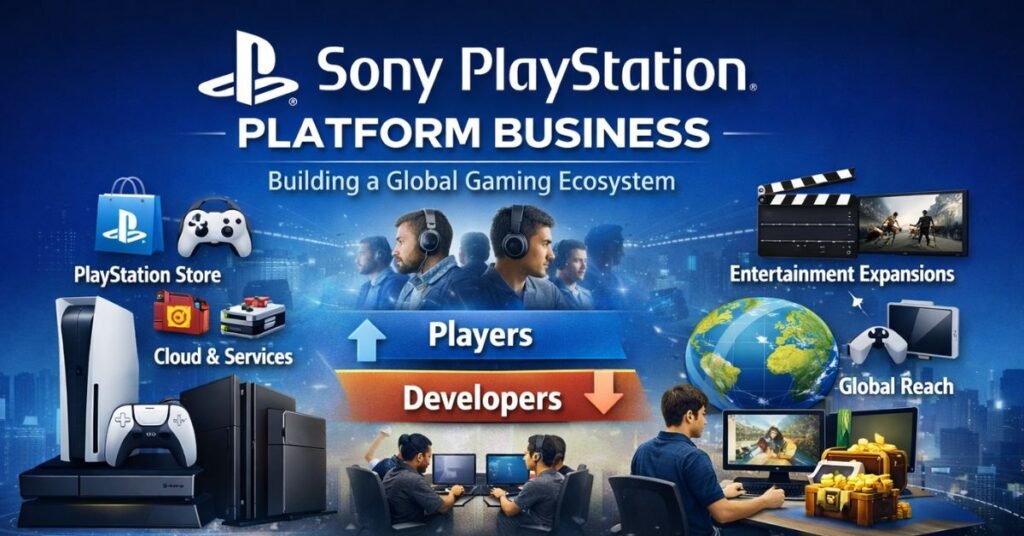
Sony operates PlayStation as a two-sided (and increasingly multi-sided) platform:
- On one side: players who want entertainment, community, and convenience
- On the other side: developers and publishers who want distribution, monetization, and audience access
Sony’s job is to make the platform irresistible to both sides at the same time.
When a player buys a PlayStation console, they don’t just buy hardware. They buy access to:
- The PlayStation Store
- PlayStation Network services
- Exclusive first-party titles
- Social and multiplayer infrastructure
- A digital identity that persists across generations
Meanwhile, developers gain:
- A massive, global install base
- Monetization tools (digital sales, DLC, microtransactions)
- Marketing exposure
- Development support through Sony studios and programs
The magic of the Sony PlayStation platform business lies in network effects. More players attract more developers. Better games attract more players. This feedback loop compounds over time, making the platform stronger with each console generation.
This is why PlayStation is better understood as a long-term ecosystem play, not a short-term hardware business.
How Sony’s PlayStation Platform Makes Money
One of the most misunderstood aspects of the Sony PlayStation platform business is its revenue model. Many assume Sony’s profits come primarily from console sales. In reality, hardware is often the least profitable part of the equation.
Sony’s PlayStation revenue streams can be broken down into five major pillars.
First is hardware sales. Consoles like the PlayStation 4 and PlayStation 5 generate massive revenue, but margins are thin—especially early in a generation. Sony often sells consoles at or near cost to accelerate adoption. The strategic goal isn’t profit; it’s scale.
Second is first-party software. Sony owns PlayStation Studios, which produces exclusive titles that define the brand and drive platform loyalty. These games typically carry higher margins and long-tail sales, especially in digital form.
Third is third-party software and digital distribution. Every time a game is sold on the PlayStation Store—whether from a major publisher or an indie studio—Sony takes a platform fee. This is one of the most reliable and scalable revenue engines in the ecosystem.
Fourth is subscriptions and services. PlayStation Plus and other network services generate recurring revenue, stabilizing cash flow and increasing lifetime customer value. Subscriptions also reduce churn by keeping players engaged month after month.
Fifth is add-ons and in-game monetization. Downloadable content, cosmetics, expansions, and virtual currencies contribute significantly to platform earnings. Sony benefits even when these purchases are made inside third-party games.
The brilliance of this model is diversification. Even when hardware sales slow, digital revenue and subscriptions can continue to grow, cushioning Sony against market volatility.
Why the Sony PlayStation Platform Business Is So Powerful
What truly sets the Sony PlayStation platform business apart is how deeply it integrates emotional loyalty with economic logic.
Sony doesn’t just sell access; it sells identity.
For many players, PlayStation isn’t a device—it’s a personal history. Saved games, trophies, friend lists, digital libraries, and subscriptions create switching costs that go far beyond money. Leaving the platform feels like leaving years of memories behind.
Sony reinforces this loyalty through:
- Consistent user experience across generations
- Backward compatibility strategies
- Strong narrative-driven exclusives
- A recognizable brand voice and design language
From a business perspective, this creates exceptional customer lifetime value. A player who enters the ecosystem at age 15 may still be buying games, subscriptions, and services at 35.
Compare this to transactional businesses that must constantly reacquire customers. PlayStation doesn’t start from zero each generation—it carries its audience forward.
This long-term thinking is one of Sony’s greatest competitive advantages.
Real-World Use Cases of the Sony PlayStation Platform Business
The Sony PlayStation platform business isn’t just a success story for Sony—it’s a working blueprint used by different stakeholders in very practical ways.
For independent game developers, PlayStation offers access to a global audience without needing physical distribution. A small studio can launch digitally and reach millions, leveraging Sony’s storefront and promotional tools.
For large publishers, PlayStation provides predictable revenue streams and marketing muscle. Exclusive deals, timed releases, and featured placements can significantly impact sales performance.
For content creators and streamers, PlayStation’s ecosystem feeds discoverability. Integrated sharing tools and social features make gameplay part of a larger media loop.
For investors and analysts, PlayStation represents a mature platform business with recurring revenue, strong IP ownership, and global reach—traits that often signal long-term resilience.
For business strategists, the platform demonstrates how to balance hardware loss leaders with high-margin digital services.
In short, PlayStation functions as infrastructure for an entire creative economy, not just a gaming device.
Step-by-Step: How the Sony PlayStation Platform Business Works in Practice
Understanding the Sony PlayStation platform business becomes much clearer when you walk through the lifecycle of a typical user and developer interaction.
Step one is hardware entry. A user buys a PlayStation console, often attracted by brand reputation, exclusives, or peer influence.
Step two is account creation. The user creates a PlayStation Network ID, which becomes their persistent digital identity. This step is crucial—it anchors all future value.
Step three is content acquisition. The user purchases digital or physical games, subscribes to services, and begins building a library.
Step four is engagement and retention. Multiplayer, trophies, social features, and regular content updates keep the user active. Subscriptions reinforce habitual usage.
Step five is monetization expansion. Over time, users spend on DLC, seasonal content, cosmetics, and renewals. Their average revenue per user increases without needing new hardware.
On the developer side:
- Sony provides SDKs and development tools
- Developers build games optimized for the platform
- Sony distributes and markets the games
- Revenue is shared via platform fees
This closed-loop system ensures Sony benefits from nearly every transaction while continuously improving the platform’s value.
Tools, Comparisons, and Strategic Positioning
When analyzing the Sony PlayStation platform business, comparisons are inevitable. The most common benchmarks are other major console ecosystems.
Microsoft approaches gaming as part of a broader services ecosystem, integrating consoles with cloud computing and subscriptions. Nintendo focuses on hardware-software integration and family-friendly IP.
Sony’s differentiator lies in:
- Premium, story-driven first-party content
- Strong third-party relationships
- A balance between exclusivity and openness
- Deep emotional branding
Sony also invests heavily in developer tools, analytics, and platform optimization, ensuring that PlayStation remains attractive to creators despite increasing competition.
The key takeaway: PlayStation isn’t trying to be everything. It’s trying to be the best home for high-quality interactive entertainment.
Common Mistakes When Evaluating the Sony PlayStation Platform Business
One frequent mistake is judging PlayStation purely on console sales. Hardware numbers matter, but they don’t tell the full story. Engagement, digital revenue, and subscription retention are far more revealing metrics.
Another mistake is assuming exclusives are just marketing tools. In reality, exclusives are ecosystem anchors. They define brand identity and reduce platform churn.
A third error is underestimating Sony’s patience. The company often sacrifices short-term margins to protect long-term platform health. This can look conservative or slow—until the compounding effects become visible.
Finally, many overlook how cultural impact feeds business success. PlayStation’s role in shaping gaming culture directly influences its economic power.
Avoiding these misunderstandings leads to a much clearer picture of why Sony’s strategy works.
The Future of the Sony PlayStation Platform Business
Looking ahead, the Sony PlayStation platform business is evolving in three major directions.
First is services expansion. Subscriptions, cloud streaming, and cross-platform access will continue to grow in importance.
Second is IP leverage beyond consoles. Sony increasingly adapts PlayStation franchises into films, TV, and transmedia experiences, extending platform value into new industries.
Third is global ecosystem reach. Emerging markets, mobile integration, and new distribution models will bring PlayStation to audiences who may never own a console.
Despite industry shifts, the core philosophy remains unchanged: build a platform people want to stay in, not just buy into.
Conclusion
The Sony PlayStation platform business is a masterclass in long-term ecosystem thinking. By treating hardware as an entry point rather than a product endpoint, Sony has built a platform that thrives on loyalty, creativity, and recurring value.
Its success comes from understanding human behavior as much as technology—how people play, connect, and identify with experiences. For anyone studying platform economics, digital strategy, or brand building, PlayStation isn’t just relevant. It’s essential.
If you’re analyzing platforms, building products, or simply curious about how modern digital empires are constructed, Sony’s PlayStation story is one worth revisiting again and again.
FAQs
What is the Sony PlayStation platform business?
It’s Sony’s ecosystem that combines consoles, games, digital services, subscriptions, and developer partnerships into a unified platform.
How does Sony make money from PlayStation?
Through a mix of hardware sales, first-party games, third-party platform fees, subscriptions, and in-game purchases.
Why are PlayStation exclusives so important?
They drive brand identity, platform loyalty, and long-term user retention.
Is PlayStation profitable without hardware sales?
Yes. Digital content, subscriptions, and services generate significant recurring revenue.
How does PlayStation compare to other gaming platforms?
It emphasizes premium content and emotional brand loyalty more than broad service integration or casual accessibility.

Michael Grant is a business writer with professional experience in small-business consulting and online entrepreneurship. Over the past decade, he has helped brands improve their digital strategy, customer engagement, and revenue planning. Michael simplifies business concepts and gives readers practical insights they can use immediately.