
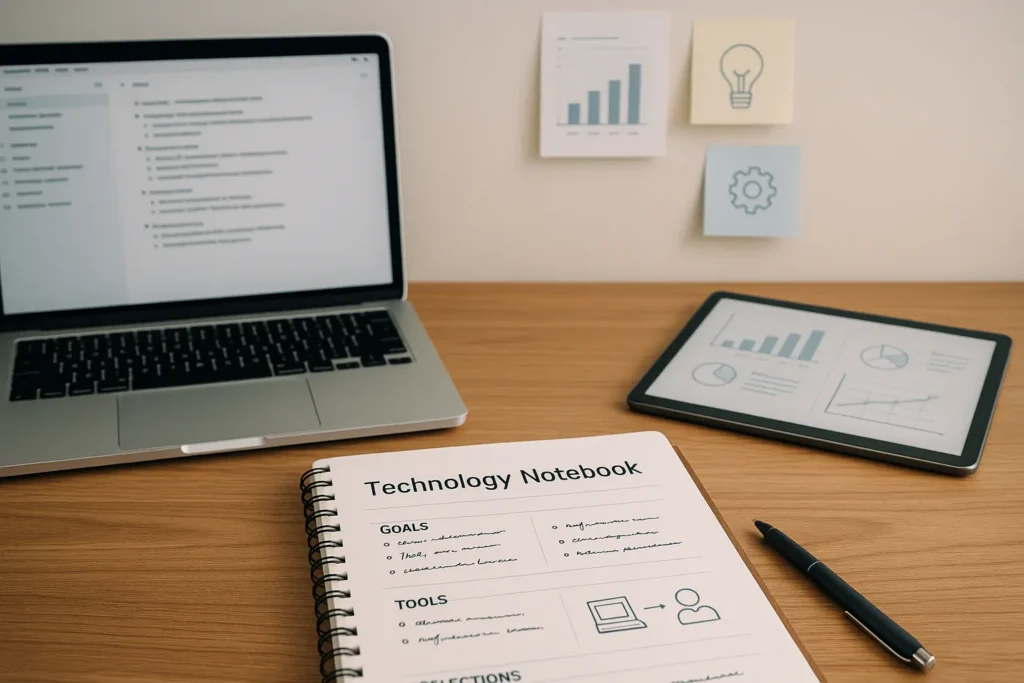
If you have ever watched a classroom grind to a halt because technology felt like more of a distraction than a tool, you already understand why the idea behind the Parsons Technology Notebook matters so much. In my early years working with educators and digital learning systems, I saw countless teachers juggling loose worksheets, half-finished Google Docs, and platforms that promised “innovation” but delivered confusion. That is exactly where the Parsons Technology Notebook enters the conversation, not as another flashy app, but as a practical framework for organizing, documenting, and applying technology-driven learning in a way that actually sticks.
The phrase parsons technology notebook often sparks curiosity because it sounds deceptively simple. A notebook? In an age of AI tools and cloud platforms? Yet that simplicity is its power. At its core, the Parsons Technology Notebook is about creating a structured, reflective, and repeatable system for using technology intentionally, whether in classrooms, training programs, or personal skill development. In this article, you will learn what the Parsons Technology Notebook really is, how it works, why it is gaining traction, and how you can apply it effectively without feeling overwhelmed or underprepared.
By the end, you will walk away with a clear understanding of the concept, practical use cases, a step-by-step approach to implementation, tool recommendations, and hard-earned insights into what to avoid. This is not theory for theory’s sake. It is a grounded, experience-driven guide designed to help you make technology work for you instead of the other way around.
Understanding the Parsons Technology Notebook

The Parsons Technology Notebook is best understood as a living system rather than a static product. Think of it as a bridge between traditional note-taking and modern digital workflows. Instead of scattered files and forgotten links, the notebook acts as a centralized record of how technology is used, why it is used, and what results it produces over time. This makes it especially powerful in educational and professional development settings where reflection and iteration matter.
To put it in everyday terms, imagine a chef who keeps a recipe notebook. They do not just write down ingredients. They note adjustments, timing, substitutions, and results. Over time, that notebook becomes a personal playbook. The Parsons Technology Notebook works the same way for technology integration. It captures tools, processes, lessons learned, and outcomes in a structured narrative format.
What sets it apart is its emphasis on intentionality. Rather than chasing every new app or platform, users document goals first, then align tools to those goals. This creates clarity and reduces cognitive overload. For beginners, it offers a safe entry point into technology use. For experienced users, it becomes a strategic asset that supports continuous improvement.
In many implementations, the notebook combines digital entries, reflections, screenshots, and annotated examples. It is flexible enough to live in a physical notebook, a cloud-based document, or a dedicated note-taking app. The defining characteristic is not the medium but the mindset. The Parsons Technology Notebook encourages users to slow down, reflect, and build a meaningful relationship with technology rather than reacting to it.
Benefits and Real-World Use Cases
One of the strongest benefits of the Parsons Technology Notebook is clarity. When technology feels chaotic, productivity suffers. By documenting tools, workflows, and outcomes in one place, users gain a clear picture of what actually works. This is particularly valuable for teachers designing lessons, trainers developing programs, or professionals managing ongoing learning projects.
In classrooms, the notebook helps educators align technology with learning objectives. Instead of using a tool because it is trendy, teachers record why it was chosen, how it was used, and what students gained from it. Over time, this creates a personal knowledge base that improves lesson quality and consistency. It also becomes a powerful artifact for evaluations, collaboration, and curriculum planning.
In corporate training environments, the Parsons Technology Notebook supports continuous improvement. Trainers can track which platforms engage learners, where friction occurs, and how outcomes change across cohorts. This transforms training from guesswork into evidence-based practice. Managers also benefit because they can see documented rationale and results instead of vague reports.
For individual learners, the notebook becomes a personal learning journal. It captures not just what tools were used, but how confidence, efficiency, and understanding evolved. This reflective practice reinforces learning and builds long-term skill retention. Over time, users develop a sense of ownership over their technology choices, which is far more empowering than following generic tutorials.
Another often-overlooked benefit is communication. When technology decisions are documented clearly, collaboration improves. Colleagues can understand context quickly, replicate successful approaches, and avoid repeating mistakes. The Parsons Technology Notebook turns individual experience into shared knowledge without losing the human narrative behind it.
How to Create and Use a Parsons Technology Notebook Step by Step
Creating a Parsons Technology Notebook does not require expensive software or advanced technical skills. What it does require is consistency and a clear structure. The first step is defining your purpose. Are you using the notebook for teaching, training, project management, or personal learning? Clarifying this upfront shapes every entry that follows.
Once the purpose is clear, establish a simple entry format. Each entry should document the context, the technology used, the goal, the process, and the outcome. Writing in full sentences rather than fragments encourages reflection and deeper understanding. Over time, patterns begin to emerge that reveal what truly adds value.
The next step is choosing a medium. Some users prefer digital notebooks because they allow easy search, multimedia integration, and sharing. Others find that a hybrid approach works best, combining handwritten notes with digital archives. The key is accessibility. If the notebook is difficult to access, it will not be used consistently.
As you begin documenting, focus on honesty rather than perfection. Record what worked and what did not. Include screenshots, links, or examples where relevant, but always add personal commentary. This transforms raw data into insight. Set aside regular time, even just ten minutes, to update entries while experiences are fresh.
Finally, revisit and review past entries regularly. Reflection is where the real value emerges. By looking back, you can refine strategies, retire ineffective tools, and double down on approaches that deliver results. Over time, the Parsons Technology Notebook becomes less of a task and more of a trusted companion in your technology journey.
Tools, Comparisons, and Practical Recommendations
Choosing the right tools to support a Parsons Technology Notebook depends on your context and comfort level. For beginners, simple tools often work best. Cloud-based documents allow easy editing, sharing, and organization without a steep learning curve. They are free or low-cost and integrate well with existing workflows.
More advanced users may prefer dedicated note-taking platforms that support tagging, backlinks, and multimedia embedding. These tools excel at building interconnected knowledge systems, which aligns well with the reflective nature of the notebook. The trade-off is a learning curve and, in some cases, subscription costs.
Physical notebooks still have a place, especially for those who think best on paper. Writing by hand can deepen reflection and focus. Many users adopt a hybrid model, using paper for initial reflection and digital tools for archiving and sharing. This balance often delivers the best of both worlds.
When comparing free versus paid options, consider longevity and scalability. Free tools are excellent for starting out, but paid tools may offer advanced features that save time and enhance organization as your notebook grows. The most important recommendation is to avoid overengineering. The tool should serve the process, not overshadow it.
From experience, the most successful implementations are those where users commit to one primary tool and use it consistently for several months before evaluating alternatives. Constantly switching platforms disrupts reflection and fragments knowledge. Stability builds momentum, and momentum builds insight.
Common Mistakes and How to Fix Them
One of the most common mistakes with the Parsons Technology Notebook is treating it like a storage dump rather than a reflective system. When entries become lists of tools without context, the notebook loses its purpose. The fix is simple but intentional. Always include the why behind each tool and decision.
Another frequent issue is inconsistency. Many users start strong but stop updating the notebook when schedules get busy. This usually happens because the process feels too time-consuming. Streamlining entries and setting a realistic cadence can restore sustainability. Short, honest reflections are better than long, sporadic ones.
Some users fall into the trap of chasing novelty. They document every new tool they encounter, hoping to stay current. This leads to clutter and shallow insight. The solution is prioritization. Focus on tools that align with your goals and document depth over breadth.
There is also a tendency to avoid documenting failures. This undermines learning. The Parsons Technology Notebook is most powerful when it captures missteps and lessons learned. Reframing failure as data rather than judgment encourages openness and growth.
Finally, neglecting review limits long-term value. A notebook that is never revisited becomes an archive, not a guide. Scheduling periodic reviews transforms past experiences into future strategy. This is where reflection turns into wisdom.
Conclusion
The Parsons Technology Notebook is not about technology for its own sake. It is about reclaiming control, building clarity, and turning everyday experiences into lasting knowledge. Whether you are an educator, trainer, or lifelong learner, this approach offers a grounded way to engage with technology intentionally and effectively.
By understanding the concept, applying it step by step, choosing supportive tools, and avoiding common pitfalls, you can transform how you document and reflect on technology use. Over time, the notebook becomes more than a record. It becomes a mirror, showing growth, confidence, and informed decision-making.
If you are looking for a way to make technology feel less overwhelming and more meaningful, the Parsons Technology Notebook is worth exploring. Start small, stay consistent, and let reflection do the heavy lifting. If you have experiences or questions, share them, experiment, and keep building your own system of insight.
FAQs
What is a Parsons Technology Notebook used for?
A Parsons Technology Notebook is used to document, reflect on, and improve how technology is applied in learning or professional contexts, focusing on intentional use and outcomes.
Is the Parsons Technology Notebook a physical product or a method?
It is primarily a method or framework that can be implemented using physical notebooks, digital tools, or a hybrid approach.
Who benefits most from using a Parsons Technology Notebook?
Educators, trainers, students, and professionals who want to use technology more strategically and reflectively benefit the most.
How often should entries be updated?
Consistency matters more than frequency, but weekly or biweekly updates tend to balance reflection with practicality.
Can beginners use a Parsons Technology Notebook?
Yes, it is especially useful for beginners because it provides structure and reduces overwhelm when learning new tools.

Adrian Cole is a technology researcher and AI content specialist with more than seven years of experience studying automation, machine learning models, and digital innovation. He has worked with multiple tech startups as a consultant, helping them adopt smarter tools and build data-driven systems. Adrian writes simple, clear, and practical explanations of complex tech topics so readers can easily understand the future of AI.