
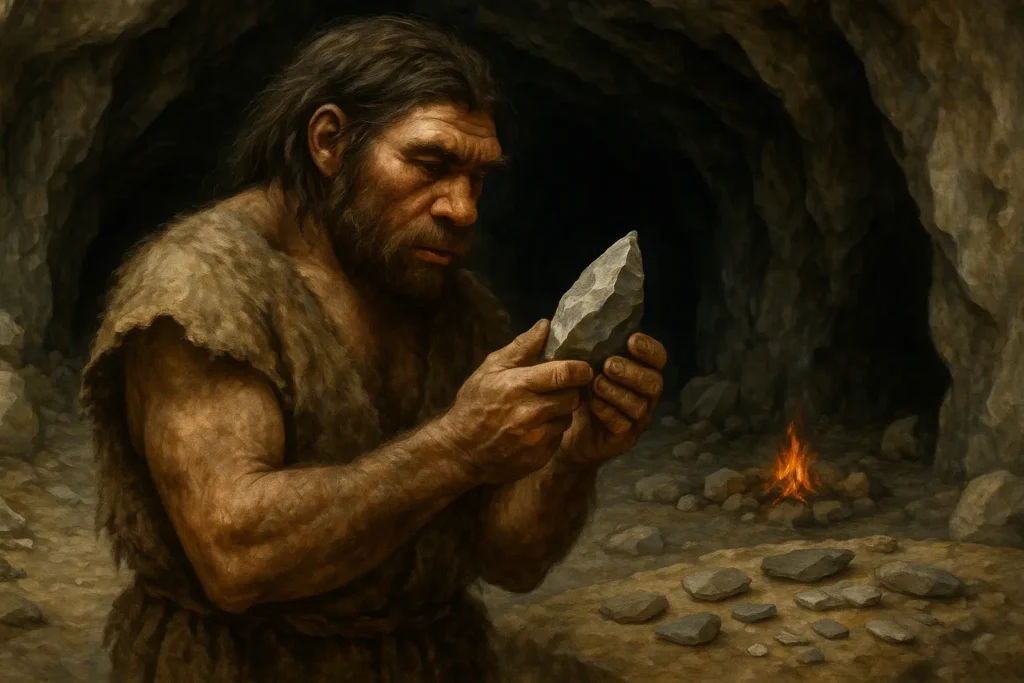
On a rainy afternoon not too long ago, I found myself staring at a replica of a Neanderthal hand axe in a small museum gift shop. It wasn’t flashy — just chipped stone, rough on the edges, and heavy in the palm. But I couldn’t stop thinking about what it took to make it. Patience. Planning. Skill. It was a small window into a big question:
How Intelligent Were Neanderthals?, really?
Were they brutish cavemen… or something far more impressive?
Let’s take a walk back through time and explore what science now tells us.
Neanderthal Intelligence: More Than Muscle and Stone

For decades, Neanderthals were painted as slow, primitive, and intellectually inferior to early Homo sapiens. But modern research has turned that stereotype on its head.
What We Know Now
- Neanderthals crafted tools with precision and purpose.
- They controlled fire, built shelters, and organized hunting strategies.
- Evidence shows they cared for sick family members and buried their dead.
These aren’t signs of a simple mind — they’re signs of social intelligence, planning, and empathy.
How Do We Know how Intelligent Were Neanderthals?
Scientists piece together Neanderthal intelligence like detectives — through fossils, artifacts, and genetic evidence. Here are some of the biggest clues:
1. Toolmaking Skills
Neanderthal tools weren’t random rocks. They refined materials intentionally and even taught techniques across generations. This suggests:
- Long-term planning
- Knowledge transfer
- Hands-on problem solving
2. Hunting Strategy
Neanderthals hunted mammoths, deer, and bison — animals that required teamwork and strategy, not just strength.
3. Art & Symbolism
We now have possible evidence of cave art and personal ornaments. Creativity and symbolism hint at something deeply human — imagination.
Step-by-Step: How Researchers Study Neanderthal Intelligence
If you’ve ever wondered how scientists uncover ancient behavior, here’s the process in simple steps:
- Excavate fossils and artifacts carefully using brushes, grids, and mapping tools.
- Analyze marks on bones or stone tools to understand how they were made.
- Use dating methods to determine when and where behaviors occurred.
- Compare findings with human and modern animal behavior.
- Run experiments (like recreating tools) to test how hard they were to make.
No time machine needed — just patience, science, and creativity.
Neanderthals vs. Modern Humans
Were we smarter? Yes — but the gap isn’t as wide as once believed.
| Trait | Neanderthals | Modern Humans |
|---|---|---|
| Brain Size | Equal or larger on average | Slightly smaller but more complex organization |
| Tools | Advanced stone tools | Tools evolved rapidly in variety & materials |
| Creativity | Some evidence of art | Art, language, culture exploded |
| Adaptability | Cold climates, harsh conditions | Adapted globally, invented agriculture |
Instead of thinking superior vs inferior, imagine cousins with different strengths.
Practical Takeaways (Surprising but True)
Even though Neanderthals lived 40,000+ years ago, we can learn from them:
- Skill matters. Mastering a craft takes patience — even for ancient humans.
- Teamwork is powerful. Big hunts needed cooperation and trust.
- Creativity evolves. We didn’t start with paintings; intelligence grows over time.
Common Myths — Busted
❌ They grunted and couldn’t speak.
➡️ Their vocal structure suggests they likely had speech.
❌ They didn’t invent anything new.
➡️ They refined tools for thousands of years — consistency is innovation.
❌ They disappeared because they were stupid.
➡️ Climate shifts, small population size, and mixing with humans all played a role.
Final Thought
Next time someone uses “Neanderthal” as an insult, you might smile a little. These ancient humans were skilled hunters, careful toolmakers, and social beings with intelligence that’s finally being recognized. They weren’t mindless brutes — they were thinkers.
And in a way, they still live in us.
FAQs
Did Neanderthals have language?
Likely yes — evidence points to speech capability.
Were they as smart as us?
Not identical, but much closer than once believed.
Do humans carry Neanderthal DNA?
Yes! Most people outside Africa have 1–4%.

Adrian Cole is a technology researcher and AI content specialist with more than seven years of experience studying automation, machine learning models, and digital innovation. He has worked with multiple tech startups as a consultant, helping them adopt smarter tools and build data-driven systems. Adrian writes simple, clear, and practical explanations of complex tech topics so readers can easily understand the future of AI.