
Washington, United States
News Desk | Politics
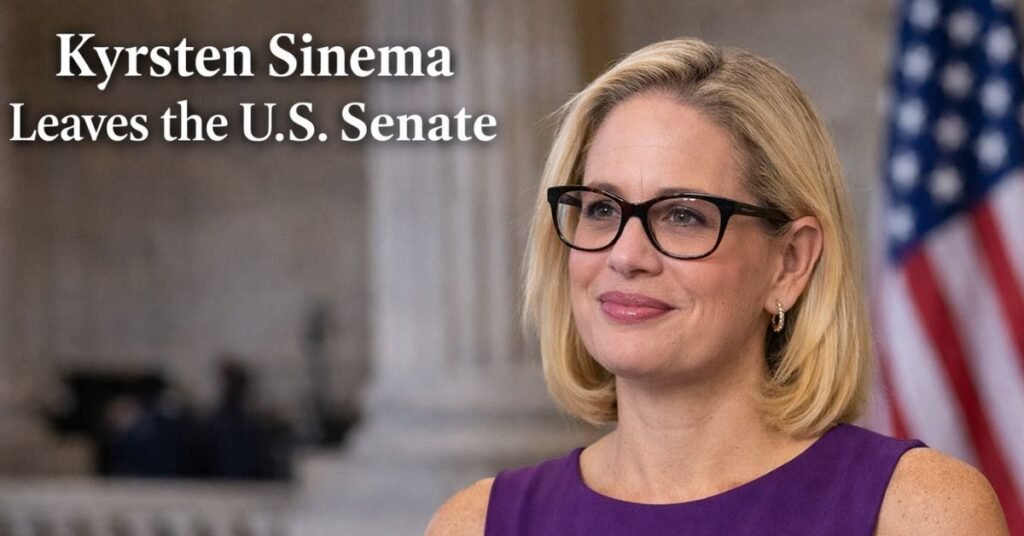
Kyrsten Sinema, the former independent U.S. senator from Arizona, has formally transitioned out of public office following the end of her Senate term, concluding a tenure marked by closely divided votes and high-profile negotiations in Washington. Sinema left office earlier this month after opting not to seek reelection, according to Senate records.
Sinema, first elected to the Senate in 2018 as a Democrat and later re-registering as an independent in 2022, played a pivotal role in several major bipartisan agreements, including infrastructure legislation and fiscal policy negotiations. Her departure follows a term defined by her centrist positioning in an evenly split Senate, where her votes frequently proved decisive.
In statements made near the close of the 118th Congress, Sinema said she planned to remain active in public policy and civic life outside elected office. Since leaving the Senate, she has begun private-sector and advisory work focused on policy, governance, and institutional reform, according to people familiar with her plans.
Arizona officials said the state’s new Senate delegation was sworn in as scheduled, marking a transition after years in which Sinema was one of the chamber’s most closely watched swing votes. Political analysts noted that her exit reflects broader shifts in party alignment and voter dynamics within the state.
Sinema’s Senate career followed earlier service in the U.S. House of Representatives and the Arizona Legislature, making her one of the state’s most prominent national political figures of the past decade. She was also the first openly bisexual person elected to the U.S. Senate.
No future electoral plans have been announced.

Hannah Price is a digital journalist who covers breaking news, global events, and trending stories with accuracy and speed. She has previously contributed to several online magazines and has built a reputation for verifying facts before publishing. Hannah believes in responsible reporting and aims to present stories in a way that readers can trust.