
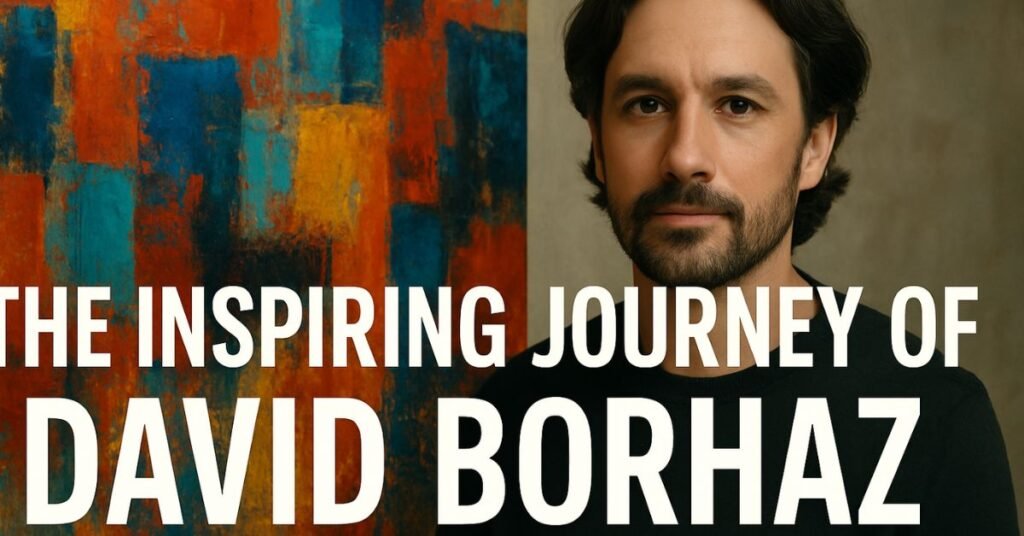
A Story to Start — From Curiosity in a Small Town to Global Influence
Imagine a quiet, modest town where a young person spends evenings sketching with charcoal under a dim light, watching the interplay of shadows and imagination. That curiosity — mixed with a hunger to create, explore, and improve — becomes a spark. Over time, that spark evolves into a fire that changes not only the artist’s life, but resonates across communities. That’s the story of David Borhaz: someone whose journey blends creativity, technology, and purpose in a way that reminds us how far vision and heart can take you.
Though his beginnings were modest, Borhaz’s persistent curiosity, passion for art and innovation, and commitment to social good helped him build a legacy that spans art, tech, and social impact.
Who Is David Borhaz — At a Glance
- David Borhaz is primarily known as a contemporary artist, celebrated for his bold use of color, mixed-media works, and art that challenges norms.
- But his identity goes beyond “just an artist.” In many narratives, he’s depicted as a visionary: someone who merges art, technology, ethics, and social impact into a unified mission.
- His works — and his larger philosophy — emphasize human-centric innovation, empathy, cultural conversation, and sustainability.
Because of this hybrid of artistry and forward-thinking, Borhaz often emerges in conversations about modern design, ethical technology, and socially conscious creativity.
The Path: Early Life, Growth, and Turning Points
Humble Origins & Artistic Roots
- Borhaz grew up in a small town — an environment far from flashy galleries or modern tech hubs — yet this setting gave him a rare advantage: a clean slate to imagine, experiment, and observe.
- Early exposure to nature, everyday life, and simple surroundings inspired him: the textures of the land, the rhythm of daily routines, the interplay of light and shadow — all influenced his aesthetic sensibilities.
ALSO READ: How Does AI Work? A Friendly Guide to Understanding the Technology Behind the Magic
Formal Education & Expansion of Perspective
- Later, as he pursued formal training, Borhaz immersed himself in visual arts, design principles, and modern artistic techniques. This training helped him refine his skills while keeping alive the raw emotional power that shaped his early days.
- But rather than limiting himself to traditional painting or sculpture, he experimented: mixed media, unconventional materials, and even blending digital elements with classical artistry.
The Rise: Recognition, Exhibitions & Influence
- Over time, his distinctive style — marked by bold color palettes, dynamic forms, and emotionally layered themes — began to attract attention. Critics, galleries, and art lovers took notice.
- His works started being exhibited more widely. Some became known for inviting viewers into a dialogue: about identity, memory, cultural displacement, societal norms — art that doesn’t just decorate a wall, but stirs thought.

What Sets Borhaz Apart — His Philosophy & Approach
1. Art + Purpose, Not Just Aesthetics
Unlike artists who create solely for aesthetic appeal, Borhaz’s works often carry deeper meanings. Themes like identity, memory, displacement, social commentary, and the tension between chaos and harmony recur.
He uses art as a medium to convey emotions, provoke thought, and challenge conventional perspectives.
2. Mixing Mediums — Traditional Meets Modern
He refuses to be boxed in. Paint meets mixed media, classical textures meet digital influences, raw materials meet refined composition. This hybridization creates a visual language that feels both familiar and futuristic.
3. Innovation That Respects Humanity
Borhaz believes creativity and innovation should serve people — not just chase trends or commercial success. Whether through art, design, or other ventures, his philosophy leans on empathy, integrity, and mindful expression.
In this sense, he stands out among many contemporaries: as someone who values social impact as much as personal voice.
4. Sustainability, Ethics & Inclusivity
In modern project-based works — especially those that blend technology or design — Borhaz emphasizes eco-friendliness, ethical practices, and culturally sensitive design. This reflects a broader vision of art and innovation as tools for progress, not just consumption.
How You Can Learn from David Borhaz — Practical Takeaways
Whether you’re an aspiring artist, a creative thinker, or simply someone looking for inspiration, Borhaz’s journey offers valuable lessons. Here are step-by-step guidelines you can take from his example.
Step-by-Step: Applying Borhaz’s Principles in Your Own Work
- Start with curiosity
- Observe the world around you. Don’t wait for “great resources.” Use what you have — nature, daily life, local textures, memories — as fuel for creativity.
- Keep a sketchbook or journal to record observations and ideas.
- Learn the fundamentals — but stay open to experimentation
- Study traditional techniques (drawing, painting, design fundamentals), but don’t treat them as limits.
- Try blending different mediums: paint with texture, drawing with found objects, digital with analog — even if initially it feels “wrong.”
- Think about meaning, not just appearance
- Ask yourself: What story do I want to tell? What emotion or idea do I want to evoke?
- Use symbolism, contrast, and themes that reflect something personal or socially relevant.
- Design with empathy, ethics, and purpose
- For creative work that reaches an audience — art, design, social projects — consider the impact of what you create.
- Try to prioritize inclusivity, accessibility, and sustainability whenever possible.
- Be consistent, not perfect
- Don’t wait for the “perfect” moment or resources. Keep creating regularly. Some works will resonate, others might fail — both are part of growth.
- Use feedback (from yourself or others) to refine your voice. Over time, patterns will emerge.
- Collaborate, share, and stay humble
- Engage with other artists, creators, or communities. Creative synergy often leads to innovation.
- Be open to critique, different perspectives, and cultural influences.
Common Mistakes to Avoid
- Chasing trends over authenticity — Borrowing style just because it’s “in” can lead to shallow work. Borhaz’s strength comes from authenticity, not trendiness.
- Neglecting fundamentals — Radical experimentation without grounding can feel chaotic rather than meaningful. Learning basics helps anchor creativity.
- Ignoring purpose or impact — Art for mere decoration rarely evolves into something memorable. Thoughtful art that resonates tends to endure.
- Expecting instant recognition — Growth takes time. Patience and persistence beat instant fame.
Real-World Use Cases: How Borhaz’s Approach Applies Beyond Art
- Graphic design & branding: The mixed-media + emotionally expressive style can inspire brands that want to stand out — not just visually, but through story and values.
- Social campaigns & activism: Art that deals with identity, culture, memory — when used in community awareness or advocacy — carries power beyond galleries.
- Digital media & UX design: Borhaz’s fusion of traditional and digital sensibilities suggests a user-centric, empathetic design philosophy that can influence web/app design, educational tools, or inclusive tech.
- Personal creative practice: Even if you’re not a “pro artist,” adopting a mindset that blends curiosity, meaning, and consistency can help you explore creativity in everyday life — journaling, content creation, photography, etc.
Why It Matters — The Broader Impact of David Borhaz’s Work
In a world drowning in mass-produced content and fleeting trends, Borhaz stands as a reminder that creativity can be deeply human, thoughtful, and transformative. His fusion of art, ethics, and innovation shows us that:
- Creativity doesn’t have to choose between beauty and meaning.
- Innovation — even in tech or design — can and should be empathetic, socially aware, and responsible.
- True influence isn’t about fame or wealth; it’s about inspiring change, cultivating culture, and touching human minds.
In short: Borhaz isn’t just creating art. He’s offering a blueprint for conscious creativity — one that values humanity as much as vision.
What’s Next — The Future According to Borhaz
From what we see so far, Borhaz’s future likely involves deeper exploration at the intersection of art, technology, and social responsibility. Expect more:
- Mixed-media works that incorporate digital, interactive or immersive elements.
- Collaborations with socially conscious organizations or tech-based projects focusing on sustainability, community uplift, or cultural dialogue.
- Mentorship or platforms aimed at encouraging new creators to think beyond profit and aesthetics — toward impact, purpose, and authenticity.
Takeaway
David Borhaz’s story isn’t just the story of an artist. It’s the story of someone who looked beyond boundaries, who believed that art could hold deeper meaning, and who understood that innovation without empathy can never be truly impactful.
If you take anything away from his journey, let it be this: creativity rooted in purpose, values, and authenticity lasts far longer than trends — and touches hearts far beyond the canvas.
Frequently Asked Questions
1. Is David Borhaz only an artist?
No — while he is widely recognized for his art and mixed-media works, Borhaz is also regarded as a visionary thinker who merges innovation, ethics, design, and social impact.
2. What themes does he usually explore?
Common themes include identity, memory, cultural displacement, societal issues, and the contrasts between chaos and harmony.
3. Do you need expensive materials or formal training to follow his style?
Not necessarily. While training helps, the heart of his style lies in observation, experiment, meaning, and emotion. Even simple materials — sketchbooks, found objects, everyday textures — can become powerful when used thoughtfully.
4. Can his approach be applied outside art — e.g. in business or tech?
Absolutely. His emphasis on human-centric design, empathy, sustainability, and purpose-driven creativity can benefit designers, entrepreneurs, content creators, and anyone working at the intersection of innovation and impact.
5. How to start if I want to be inspired by Borhaz’s journey?
Begin by observing your surroundings. Sketch, note, reflect. Experiment with different mediums or ideas. Think about what you want to express or change. And most importantly — stay consistent, curious, and courageous.

Michael Grant is a business writer with professional experience in small-business consulting and online entrepreneurship. Over the past decade, he has helped brands improve their digital strategy, customer engagement, and revenue planning. Michael simplifies business concepts and gives readers practical insights they can use immediately.