
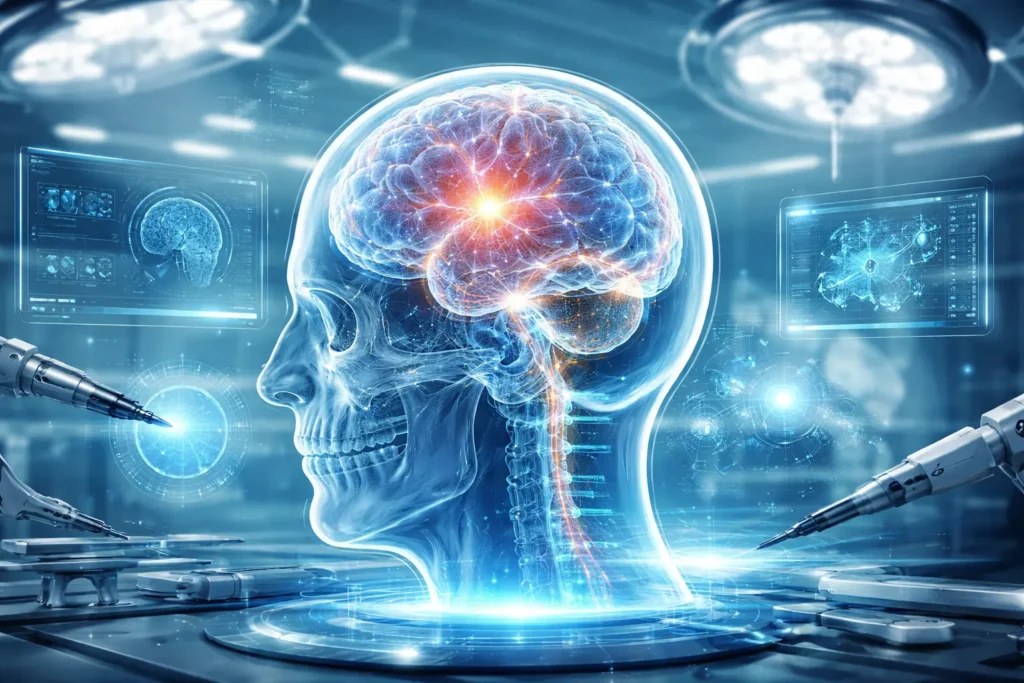
Cranial technology isn’t a buzzword, and it’s not some distant sci-fi concept waiting for the next century. It’s already here—quietly transforming neurosurgery, diagnostics, rehabilitation, and even how we think about the limits of human capability. If you’ve ever wondered how surgeons operate on the brain with millimeter precision, how damaged skulls are reconstructed, or how computers are beginning to interface directly with neural signals, you’re already standing at the edge of cranial technology.
What makes this moment especially important is timing. Advances in imaging, materials science, artificial intelligence, and biomedical engineering have converged. Ten or fifteen years ago, many of today’s cranial tools were experimental, expensive, or simply unreliable. Today, they are being used in operating rooms, trauma centers, and research labs worldwide—often with life-changing results.
This article is for clinicians, healthcare decision-makers, biomedical engineers, students, and curious professionals who want a clear, experience-based understanding of cranial technology without marketing hype or academic fog. You’ll learn what cranial technology really is, where it’s used, what problems it solves, and how to evaluate tools and systems intelligently.
By the end, you’ll have a grounded, practical understanding of this field—one that goes beyond surface-level definitions and into real-world impact, limitations, and future direction.
Understanding Cranial Technology: From Basic Concept to Advanced Systems
At its core, cranial technology refers to medical and engineering technologies designed to interact with, repair, protect, or enhance the human skull and brain. That sounds simple, but the scope is surprisingly broad. It spans hardware, software, surgical techniques, diagnostic systems, and implanted or external devices that work in or around the cranial region.
Think of the skull as both armor and interface. It protects the brain, yet it must also allow access for life-saving interventions. Cranial technology lives in that tension—maximizing protection while enabling precision access and control.
On the simpler end, this includes cranial fixation devices, surgical drills, navigation systems, and cranial implants used after trauma or tumor removal. On the advanced end, it includes neural interfaces, smart implants, and brain-computer interface platforms that interpret electrical signals directly from neural tissue.
A helpful analogy is modern aviation. Early planes were mechanical systems with limited instrumentation. Today’s aircraft are flying computers with layered safety, navigation, and control systems. Cranial technology has followed a similar trajectory—moving from mechanical tools toward digitally guided, data-driven systems.
What often gets overlooked is how interdisciplinary this field is. Neurosurgeons, radiologists, materials scientists, AI researchers, and regulatory specialists all contribute. That complexity is also why outcomes vary widely depending on how well systems are chosen, integrated, and used.
The Evolution of Cranial Technology: How We Got Here
Modern cranial technology didn’t appear overnight. Early cranial procedures date back thousands of years, with evidence of trepanation found in ancient skulls. Those early interventions were crude but reveal a timeless human instinct: when the brain is threatened, intervention is necessary—even risky intervention.
Fast-forward to the 20th century, and the introduction of X-ray imaging and sterile surgical environments transformed neurosurgery. The real acceleration, however, began in the late 1990s and early 2000s with high-resolution CT and MRI scans, followed by computer-assisted surgical navigation.
The last decade has been especially transformative. Three forces drove this shift:
First, imaging precision improved dramatically. Surgeons can now visualize structures in real time, layered with functional data. Second, materials science advanced, enabling biocompatible implants that integrate with bone and tissue. Third, computing power and AI allowed real-time analysis and guidance during procedures.
Regulatory frameworks from organizations like Food and Drug Administration and the European Medicines Agency helped standardize safety and accelerate responsible adoption. While regulation can feel slow, it played a key role in making cranial technology reliable enough for widespread clinical use.
Benefits and Real-World Use Cases of Cranial Technology
Cranial technology delivers benefits that are tangible, measurable, and often life-saving. The most obvious advantage is surgical precision. Modern navigation systems allow surgeons to operate with sub-millimeter accuracy, reducing collateral damage and recovery time.
In trauma care, cranial reconstruction technologies restore both function and appearance after severe injury. Patients who once faced permanent deformity now receive custom implants that match their anatomy precisely.
In neurology and rehabilitation, cranial technology enables new approaches to treating epilepsy, Parkinson’s disease, and spinal cord injuries. Brain-computer interface systems, such as those pioneered by research programs like BrainGate, allow patients to communicate or control devices using neural signals alone.
Before cranial technology, many of these patients faced limited options: medication management with side effects, invasive exploratory surgery, or permanent disability. After adopting modern cranial systems, outcomes often include reduced symptoms, improved independence, and better quality of life.
Hospitals and healthcare systems benefit too. Shorter operating times, fewer complications, and reduced revision surgeries translate into lower costs and improved patient satisfaction—metrics that matter in today’s value-based care environment.
A Practical, Step-by-Step Guide to Implementing Cranial Technology
Implementing cranial technology—whether in a hospital, clinic, or research setting—requires more than purchasing equipment. The process begins with clearly defining the clinical or operational problem you’re trying to solve.
The first step is needs assessment. Are you addressing trauma reconstruction, tumor resection, functional neurosurgery, or research-grade neural monitoring? Each use case demands different tools and expertise.
Next comes imaging and data integration. High-quality imaging is the foundation of effective cranial technology. Without accurate data, even the most advanced tools become guesswork. Integration with existing hospital systems is critical here.
Training follows. One of the most underestimated factors is the learning curve. Teams that invest in simulation training and vendor-supported onboarding consistently achieve better outcomes than those who rush into live procedures.
Finally, continuous evaluation matters. Post-operative data, complication rates, and patient feedback should inform adjustments. Cranial technology is not “set and forget”—it evolves with practice.
Experienced teams often emphasize one lesson: the technology should support clinical judgment, not replace it. When used as an extension of expertise rather than a substitute, results improve dramatically.
Tools, Platforms, and Expert Recommendations in Cranial Technology


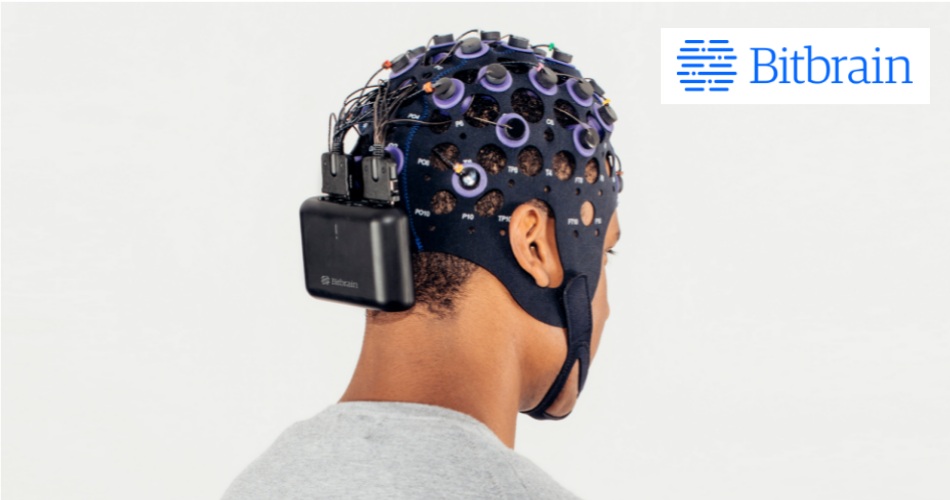
Cranial technology tools fall into several broad categories: imaging systems, surgical navigation platforms, implant technologies, and neural interface devices.
For imaging, advanced MRI and CT platforms remain foundational. Vendors differ in workflow efficiency, software flexibility, and support quality. High-volume centers often prefer systems with open data standards for interoperability.
Navigation systems vary from entry-level optical trackers to advanced AI-assisted platforms. Beginners benefit from systems with strong visualization and error-checking features. Advanced teams may prioritize customization and research integration.
Implants range from standard titanium plates to fully customized, 3D-printed cranial prosthetics. Custom implants offer superior cosmetic and functional outcomes but require reliable imaging and manufacturing partners.
Neural interface systems represent the frontier. While still largely confined to research and specialized clinical trials, they offer a glimpse into future therapeutic possibilities. These systems demand rigorous ethical oversight and patient selection.
Experts consistently recommend matching tool complexity to team maturity. Overbuying advanced systems without the expertise to use them effectively leads to frustration and underutilization.
Common Mistakes in Cranial Technology—and How to Avoid Them
One of the most common mistakes is assuming that newer technology automatically means better outcomes. In reality, poorly integrated systems can increase risk.
Another frequent error is underestimating training requirements. Even intuitive systems require repetition and familiarity, especially under surgical stress.
Data silos also cause problems. When imaging, navigation, and patient records don’t communicate seamlessly, errors increase. Integration planning should happen early, not after installation.
Finally, ethical and patient-communication missteps can undermine trust. Patients must understand what technology will—and won’t—do. Overpromising outcomes damages credibility and can lead to legal exposure.
Avoiding these pitfalls requires realistic expectations, staged implementation, and continuous learning.
The Future of Cranial Technology: Where the Field Is Heading
Cranial technology is moving toward personalization and intelligence. AI-assisted planning, adaptive implants, and closed-loop neural systems are already in development.
We’re also seeing a shift toward minimally invasive and hybrid approaches—combining surgical, pharmaceutical, and digital interventions. As regulatory frameworks evolve, responsible innovation will remain the key constraint and enabler.
One particularly promising area is patient-specific modeling. Virtual simulations of individual skulls and brains allow surgeons to rehearse procedures before entering the operating room.
The long-term vision isn’t about replacing clinicians with machines. It’s about extending human capability—making complex interventions safer, more precise, and more humane.
Conclusion: Why Cranial Technology Deserves Serious Attention
Cranial technology represents one of the most consequential intersections of medicine and engineering today. It solves real problems, improves outcomes, and opens doors that were previously closed.
For professionals willing to approach it thoughtfully—balancing innovation with experience—it offers powerful tools for better care and deeper understanding. Whether you’re evaluating systems, planning adoption, or simply learning the landscape, the key is informed engagement.
The future of cranial technology will be shaped not just by what’s possible, but by how responsibly and skillfully it’s applied.
FAQs
What is cranial technology used for?
Cranial technology is used in neurosurgery, trauma care, diagnostics, rehabilitation, and neural research to protect, access, or interface with the brain and skull.
Is cranial technology safe?
When properly regulated, trained, and implemented, cranial technology is considered safe and often improves outcomes compared to traditional methods.
How expensive is cranial technology?
Costs vary widely, from relatively affordable fixation devices to high-cost imaging and neural interface systems.
Who should consider investing in cranial technology?
Hospitals, research institutions, and specialized clinics treating neurological conditions benefit most.
Does cranial technology include brain-computer interfaces?
Yes, advanced cranial technology includes brain-computer interface systems, though most remain in research or limited clinical use.

Adrian Cole is a technology researcher and AI content specialist with more than seven years of experience studying automation, machine learning models, and digital innovation. He has worked with multiple tech startups as a consultant, helping them adopt smarter tools and build data-driven systems. Adrian writes simple, clear, and practical explanations of complex tech topics so readers can easily understand the future of AI.