
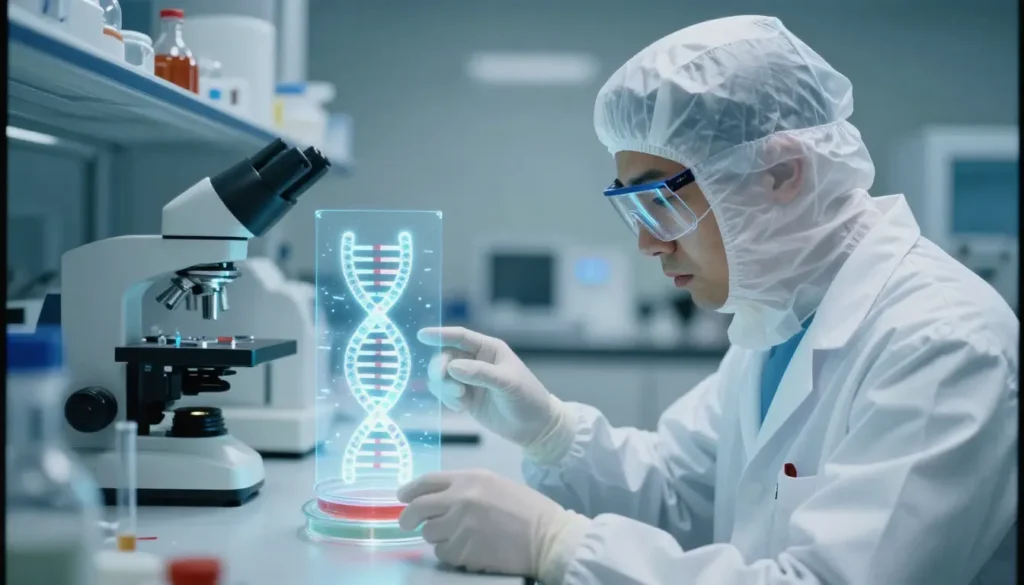
Cloning technology has a way of sparking instant curiosity—and controversy. For some people, it conjures up sci-fi images of identical humans stepping out of futuristic pods. For others, it represents lifesaving medical breakthroughs, hardier crops, or the chance to preserve endangered species. The truth, as usual, lives somewhere in the middle.
When I first encountered cloning technology in a real research setting, what struck me most wasn’t how futuristic it felt—but how methodical and grounded it actually was. Cloning isn’t magic. It’s careful biology, built on decades of experimentation, failure, ethical debate, and gradual progress.
Today, cloning technology matters more than ever. It influences medicine, agriculture, conservation, and even data science analogies used in tech and AI discussions. Whether you’re a student, researcher, policymaker, entrepreneur, or simply a curious reader, understanding how cloning works—and where it realistically fits into our world—is essential.
In this in-depth guide, you’ll learn what cloning technology really is, how it works step by step, where it’s already being used, what tools and methods scientists rely on, common mistakes and misconceptions, and what the future realistically holds. No hype. No fear-mongering. Just clear, experience-driven insight.
Cloning Technology Explained Simply (Without the Sci-Fi)
At its core, cloning technology is about creating a genetically identical copy of a biological entity. That entity could be a gene, a cell, a tissue, or in some cases, an entire organism. Think of it like copying a document on your computer: the information remains the same, but the context—how and where it’s used—can differ.
There are three main types of cloning technology used today:
- Gene cloning – copying specific DNA segments
- Reproductive cloning – creating a whole organism
- Therapeutic cloning – producing cells for medical treatment
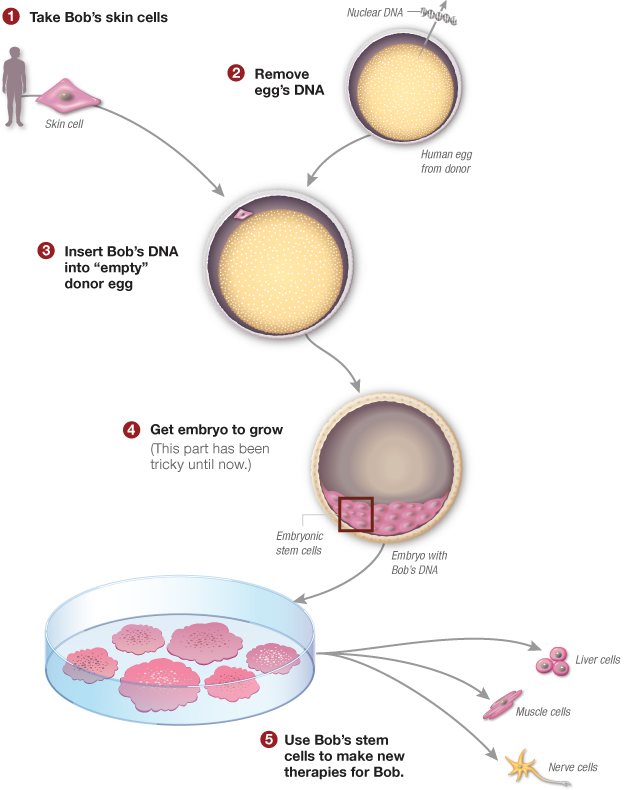
The most famous real-world example is Dolly the Sheep, created in 1996 using a method called somatic cell nuclear transfer (SCNT). Her creation proved something scientists had debated for decades: that a fully differentiated adult cell still contains all the genetic instructions needed to create an entire organism.
To make this relatable, imagine every cell in your body as a library. Even though one room (say, a skin cell) only “uses” a few books, the entire library still exists inside. Cloning technology is about unlocking access to the full collection again.
Importantly, cloning does not create carbon-copy lives or personalities. Genetics set the blueprint, but environment, experience, and chance shape the final outcome. Two clones may share DNA, but they will never be the same person—or even the same animal—in behavior or life path.
A Brief History of Cloning Technology (And Why It Took So Long)
Cloning technology didn’t appear overnight. Its roots stretch back to the early 20th century, when scientists first realized cells could be coaxed into dividing in controlled ways.
The real turning point came in the 1950s with nuclear transfer experiments in frogs. These early trials were messy, inefficient, and controversial—but they laid the foundation for modern cloning. For decades, researchers struggled with failed embryos, genetic abnormalities, and ethical roadblocks.
When Dolly was successfully cloned at the Roslin Institute, it wasn’t luck. It was the result of over 250 failed attempts and years of refinement. That context matters, because cloning technology is often portrayed as fast and easy. In reality, it’s painstaking, expensive, and highly regulated.
Since then, scientists have cloned animals such as cows, pigs, dogs, horses, and even endangered species. Each success has expanded our understanding of cellular reprogramming—but also revealed limitations, such as shortened telomeres, higher failure rates, and health risks in clones.
This slow, cautious progress is actually a strength. It ensures cloning technology evolves alongside ethical frameworks, not ahead of them.
Real-World Benefits and Use Cases of Cloning Technology
Cloning technology isn’t about novelty—it’s about solving real problems where traditional methods fall short.
Medical and Therapeutic Applications
Therapeutic cloning focuses on creating genetically identical cells or tissues for patients. Because these cells match the patient’s DNA, the risk of immune rejection drops dramatically. Potential use cases include:
- Regenerating damaged heart tissue after heart attacks
- Treating neurodegenerative diseases like Parkinson’s
- Producing insulin-generating cells for diabetes
While many of these applications are still in clinical research phases, the promise is substantial. Instead of managing symptoms, cloning technology opens the door to actual biological repair.
Agriculture and Food Security
In agriculture, cloning technology helps replicate animals with ideal traits—disease resistance, high milk yield, or superior meat quality. This isn’t about replacing natural breeding, but supplementing it where consistency matters.
Farmers use cloning to:
- Preserve elite livestock genetics
- Reduce disease outbreaks
- Improve food supply predictability
The result is not “factory farming on steroids,” as critics sometimes claim, but rather controlled genetic preservation.
Wildlife Conservation
One of the most emotionally compelling uses of cloning technology is conservation. When a species is reduced to a few individuals, natural breeding may not be enough to preserve genetic diversity.
Cloning has been used to:
- Revive genetic lines of endangered animals
- Preserve DNA from extinct or near-extinct species
- Support breeding programs in zoos and sanctuaries
While cloning alone can’t save ecosystems, it’s becoming a powerful support tool when combined with habitat protection.
How Cloning Technology Works: A Step-by-Step Breakdown
Let’s walk through the most widely used method: somatic cell nuclear transfer.


Step 1: Donor Cell Selection
Scientists select a somatic (body) cell from the organism being cloned—often skin or muscle cells.
Step 2: Egg Cell Preparation
An egg cell is harvested from a donor and its nucleus (which contains DNA) is removed.
Step 3: Nuclear Transfer
The donor cell’s nucleus is inserted into the enucleated egg cell.
Step 4: Cellular Reprogramming
Electrical or chemical stimulation triggers the egg cell to begin dividing as if it were fertilized.
Step 5: Embryo Development
The embryo is cultured until it reaches a suitable stage for implantation.
Step 6: Implantation and Growth
The embryo is implanted into a surrogate, where normal development may—or may not—occur.
Even with modern techniques, success rates are low. Many embryos fail to develop, and not all clones survive infancy. This is why cloning technology remains tightly regulated and selectively applied.
Tools, Methods, and Technologies Behind Modern Cloning
Cloning technology relies on a combination of biological tools, precision instruments, and computational analysis.
Core Laboratory Tools
- Micromanipulators for nuclear transfer
- High-resolution microscopes
- Cell culture incubators
- Genetic sequencing platforms
Software and Data Tools
- Genomic mapping software
- Cell viability modeling
- AI-assisted embryo screening
Free academic tools are widely used in universities, while private labs rely on advanced proprietary platforms. Paid systems offer higher automation and accuracy, but the fundamentals remain the same.
The real differentiator isn’t the tools—it’s the expertise of the team using them.
Ethical Considerations and Legal Realities
No discussion of cloning technology is complete without ethics. The science may be neutral, but its applications are not.
Most countries:
- Ban human reproductive cloning
- Allow limited therapeutic cloning
- Regulate animal cloning strictly
Ethical concerns include:
- Animal welfare
- Genetic diversity reduction
- Slippery slopes toward human cloning
Responsible researchers don’t dismiss these concerns—they integrate them into their work. Ethical review boards, transparency, and public dialogue are not obstacles; they are safeguards.
Common Mistakes and Misconceptions About Cloning Technology
Cloning technology is often misunderstood, even by educated audiences.
Mistake 1: Assuming Clones Are Exact Copies
Genetics are identical, but life outcomes aren’t. Environment matters enormously.
Mistake 2: Believing Cloning Is Efficient
It isn’t. Failure rates are high, costs are significant, and results are unpredictable.
Mistake 3: Confusing Cloning with Genetic Engineering
Cloning copies existing DNA. Genetic engineering modifies DNA. They’re related but distinct.
Mistake 4: Thinking Human Cloning Is Imminent
It isn’t. Scientific, ethical, and legal barriers are substantial.
Understanding these distinctions helps ground conversations in reality rather than fear or hype.
The Future of Cloning Technology: What’s Realistic?

The future of cloning technology is quieter—and more impactful—than movies suggest. Expect advances in:
- Regenerative medicine
- Personalized cell therapies
- Conservation biology
- Disease modeling
What you likely won’t see is mass human cloning or identity duplication. The science simply doesn’t support it, and society doesn’t want it.
Instead, cloning technology will continue doing what it does best: solving niche but critical biological problems where no better alternative exists.
Conclusion: Why Cloning Technology Deserves a Balanced View
Cloning technology is neither a miracle nor a menace. It’s a powerful scientific tool—one that requires expertise, humility, and responsibility.
When used wisely, it can heal, preserve, and protect. When misunderstood, it becomes a magnet for fear and misinformation. The key is education, transparency, and ethical restraint.
If this guide clarified misconceptions or sparked new curiosity, consider exploring related biotech topics, engaging in informed discussions, or following reputable research institutions. Progress doesn’t come from blind acceptance or fear—it comes from understanding.
FAQS
Is cloning technology legal?
It depends on the country and the type of cloning. Human reproductive cloning is widely banned.
Can cloning bring back extinct species?
Not fully. DNA degradation and missing ecological context make true revival extremely difficult.
Are clones healthy?
Some are, some aren’t. Health outcomes vary, which is why cloning is carefully controlled.
Is cloning used in medicine today?
Yes, mainly in research and therapeutic development, not full organism creation.
Does cloning affect genetic diversity?
If overused, it can. That’s why it’s applied selectively.

Adrian Cole is a technology researcher and AI content specialist with more than seven years of experience studying automation, machine learning models, and digital innovation. He has worked with multiple tech startups as a consultant, helping them adopt smarter tools and build data-driven systems. Adrian writes simple, clear, and practical explanations of complex tech topics so readers can easily understand the future of AI.