
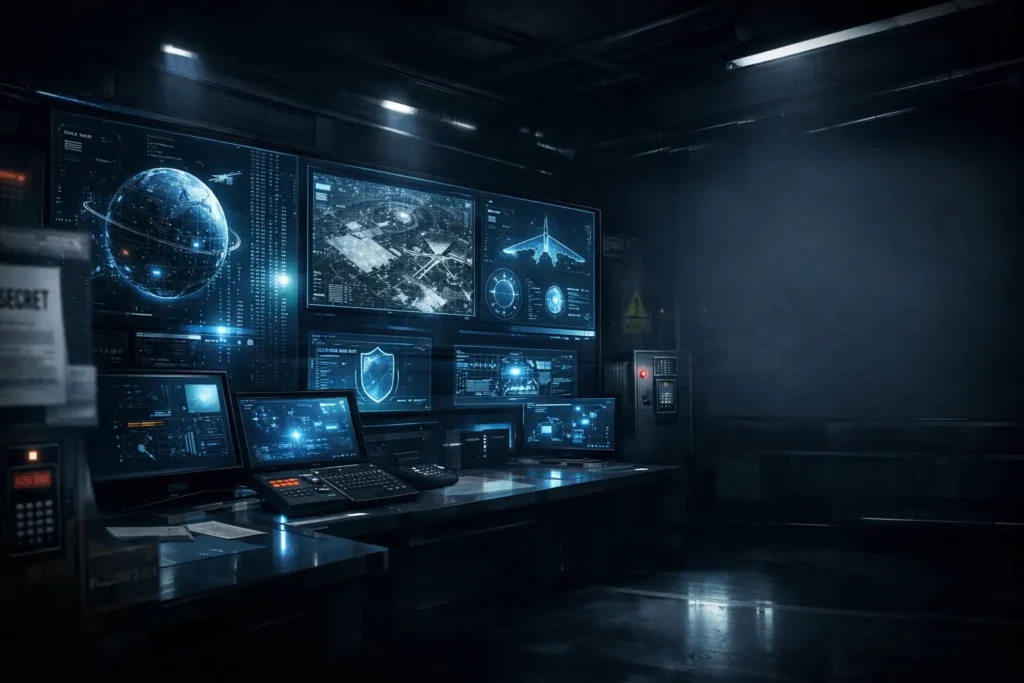
If you’ve ever watched a spy movie and wondered how much of it is fantasy versus reality, you’re already brushing up against the idea of classified technologies. These are the tools, systems, and innovations that operate quietly behind locked doors—often funded by governments, protected by law, and hidden from public view for years or even decades.
The term “classified technologies” sparks curiosity for a reason. It sits at the intersection of innovation, national security, ethics, and power. From encrypted communication systems and stealth aircraft to cyber warfare platforms and advanced surveillance tools, these technologies influence global politics, military strength, and even the consumer tech we use every day—often without us realizing it.
This topic matters because classified technologies don’t stay classified forever. Many of today’s everyday tools—GPS, the internet, voice recognition—started as secret government projects. Understanding how classified technologies work, why they’re protected, and how they eventually shape civilian life gives you a rare behind-the-curtain look at how progress actually happens.
In this guide, we’ll break down classified technologies in plain English, explore real-world use cases, walk through how these technologies are developed and protected, compare tools and systems where possible, and highlight common misconceptions. Whether you’re a tech enthusiast, policy student, defense contractor, or simply curious, you’ll leave with a grounded, practical understanding of a world most people only see hinted at in headlines.
What Are Classified Technologies? A Clear, Beginner-Friendly Explanation

At its core, classified technologies are technologies that are restricted from public access because their disclosure could pose a risk to national security, public safety, or strategic advantage. Governments assign classification levels—such as Confidential, Secret, or Top Secret—to control who can access specific information and systems.
A helpful analogy is to think of classified technologies like the recipe for a famous soft drink. The product itself might be widely consumed, but the exact formula is locked away because it’s strategically valuable. In the case of classified technologies, the stakes are much higher. Revealing the wrong detail could compromise military operations, expose vulnerabilities, or give adversaries a competitive edge.
These technologies exist across multiple domains:
- Military hardware like stealth aircraft, missile defense systems, and autonomous drones
- Cyber and information systems including encryption algorithms, offensive cyber tools, and intelligence platforms
- Surveillance and reconnaissance technologies such as satellite imaging, signal interception, and biometric systems
- Energy and propulsion research, including nuclear technologies and advanced power systems
What makes classified technologies unique isn’t just what they do, but how they’re handled. Access is limited to individuals with proper security clearance, development is compartmentalized, and even documentation is tightly controlled. Engineers working on one component may have no visibility into the full system.
It’s also important to understand that “classified” doesn’t always mean futuristic or alien-level advanced. Sometimes it’s a small improvement to an existing system that, if known, would reveal a strategic weakness or capability. In many cases, the innovation is incremental, not cinematic—but still incredibly valuable.
Benefits and Real-World Use Cases of Classified Technologies
While secrecy often dominates the conversation, classified technologies exist for very practical reasons. Their benefits extend far beyond espionage narratives and into tangible outcomes that affect global stability, economic growth, and even everyday life.
One of the most significant benefits is national defense and deterrence. Advanced classified technologies allow nations to protect their borders, detect threats early, and deter aggression without direct conflict. For example, stealth technology reduces the likelihood of detection, which can prevent escalation simply by existing as a credible capability.
Another major benefit is intelligence and situational awareness. Classified surveillance and data analysis tools help governments anticipate risks such as terrorism, cyberattacks, or foreign interference. When used responsibly, these technologies can prevent loss of life and protect critical infrastructure.
There’s also a strong innovation spillover effect. Many civilian technologies originate in classified research environments:
- GPS began as a military navigation system
- The internet evolved from ARPANET, a defense research project
- Advanced materials used in aerospace often find their way into consumer products
Industries that commonly interact with classified technologies include defense contracting, aerospace, cybersecurity, telecommunications, and energy. Professionals in these fields often work on projects where only a fraction of their work can ever be discussed publicly.
For policymakers and strategists, classified technologies provide leverage. They inform diplomatic negotiations, alliance structures, and long-term planning. Simply knowing what is possible—even if it’s never deployed—shapes global behavior.
It’s worth noting that these benefits come with responsibility. Classified technologies must be governed carefully to avoid misuse, overreach, or ethical violations. When handled correctly, they serve as stabilizing forces rather than threats.
How Classified Technologies Are Developed: A Step-by-Step Look
Despite the secrecy, the development of classified technologies follows a structured and surprisingly methodical process. Understanding this lifecycle helps demystify how these systems come into existence and why they take so long to reach the public eye—if they ever do.
The process typically begins with a strategic need. This could be a new threat, a technological gap, or an opportunity identified through intelligence analysis. Military branches, intelligence agencies, or government research bodies define requirements that outline what the technology must achieve.
Next comes research and feasibility testing. This phase often involves government-funded labs, universities, and private contractors. At this stage, multiple concepts may be explored in parallel, with only a handful advancing. Security protocols are already in place, including background checks and compartmentalized access.
Once a viable concept emerges, development and prototyping begin. This is where classified technologies start to take tangible form. Engineers build prototypes, test components, and refine designs under controlled conditions. Documentation is classified, and communication is tightly monitored.
After successful testing, deployment planning takes place. This includes training authorized personnel, integrating the technology into existing systems, and establishing operational procedures. In many cases, only a limited number of units are produced.
Finally, long-term evaluation and adaptation occur. Classified technologies are constantly assessed for effectiveness, vulnerabilities, and relevance. Some are eventually declassified, either partially or fully, when the strategic risk diminishes.
Best practices in this process include:
- Strict access control and auditing
- Redundant security measures
- Clear ethical and legal oversight
- Ongoing risk assessment
This structured approach ensures that classified technologies are not just innovative, but reliable, secure, and aligned with broader strategic goals.
Tools, Systems, and Comparisons Within Classified Technology Development
While specific tools used in classified environments are rarely named publicly, we can still discuss categories of tools and how they compare in principle. Understanding these distinctions is useful for professionals who may one day work in or alongside secure projects.
Simulation and modeling tools are foundational. These allow engineers to test scenarios without physical deployment. Government-grade simulation platforms often far exceed commercial tools in accuracy and scale, but they come with higher costs and steeper learning curves.
Encryption and secure communication systems are another critical category. Classified environments use proprietary or heavily modified encryption tools rather than off-the-shelf solutions. Compared to civilian options, these systems prioritize resilience against state-level adversaries rather than convenience.
Project management and documentation tools in classified settings differ significantly from commercial SaaS platforms. Air-gapped systems, on-premise servers, and custom workflows are the norm. While this reduces flexibility, it dramatically improves control.
In terms of free versus paid options, classified work almost always relies on paid, custom-developed solutions. Free tools may be used in early research phases, but anything that touches sensitive data is replaced with hardened systems.
Pros of classified-grade tools include:
- Extreme reliability and security
- Customization for specific missions
- Long-term support and oversight
Cons include:
- High cost
- Slower iteration cycles
- Limited interoperability with civilian systems
For organizations transitioning between civilian and classified projects, understanding these trade-offs is essential to setting realistic expectations.
Common Mistakes and Misconceptions About Classified Technologies
One of the most common mistakes people make is assuming classified technologies are always decades ahead of public tech. In reality, many classified systems are more conservative, prioritizing reliability over novelty. Cutting-edge consumer tech often moves faster because it doesn’t carry the same risks.
Another frequent misconception is that classification exists solely to hide wrongdoing. While abuses can occur, classification is primarily about risk management. Revealing certain details can expose methods, not just outcomes, which is often more dangerous.
People also underestimate the human factor. Classified technologies are developed and operated by people, and human error remains one of the biggest risks. This is why training, oversight, and compartmentalization are so strict.
A practical mistake professionals make is failing to understand clearance boundaries. Discussing or documenting information outside approved channels—even unintentionally—can have serious legal consequences. Awareness and discipline are just as important as technical skill.
To avoid these issues:
- Separate fact from fiction when learning about classified tech
- Respect the limits of publicly available information
- Focus on principles rather than specifics
- Understand ethical and legal responsibilities
Correcting these misunderstandings leads to more informed discussions and better decision-making.
The Broader Impact of Classified Technologies on Society
Although classified technologies operate in secrecy, their influence on society is profound and often indirect. Over time, declassified innovations reshape industries, economies, and daily life.
One major impact is technological diffusion. When classified systems are eventually declassified or adapted for civilian use, they often spark new markets. Satellite imaging, for example, now supports agriculture, climate science, and urban planning.
There’s also a cultural impact. Public awareness of classified technologies—however vague—shapes how people think about privacy, security, and government power. Debates around surveillance and encryption are rooted in the existence of these hidden capabilities.
Economically, classified technology programs create highly skilled jobs and drive investment in STEM fields. Regions with defense research hubs often become innovation clusters, benefiting even non-defense industries.
At the same time, ethical concerns remain. Balancing security with civil liberties is an ongoing challenge. Transparency, oversight, and public discourse play critical roles in ensuring classified technologies serve the public good.
Understanding this broader context helps move the conversation beyond secrecy and into responsibility, impact, and long-term value.
Conclusion: Why Classified Technologies Deserve Informed Attention
Classified technologies may be hidden from view, but they are far from irrelevant. They protect nations, drive innovation, and quietly shape the future of technology as we know it. By understanding what they are, how they’re developed, and why they matter, you gain a more realistic picture of how progress actually unfolds.
These technologies aren’t just about power or secrecy—they’re about preparation, prevention, and possibility. Many of the tools we rely on today began as classified experiments, and many of tomorrow’s breakthroughs are likely being developed right now behind secure doors.
If this topic sparked your curiosity, keep exploring. Read declassified reports, follow credible defense and technology publications, and engage in thoughtful discussions. The more informed the public conversation becomes, the better we can navigate the balance between security and innovation.
Feel free to share your thoughts, ask questions, or explore related topics—you’re now better equipped to understand a world most people never see.
FAQs
What qualifies a technology as classified?
A technology is classified when its disclosure could pose a risk to national security, strategic advantage, or public safety. Classification levels determine who can access it.
No. While many are military-focused, classified technologies also exist in intelligence, cybersecurity, energy, and communications.
Do classified technologies eventually become public?
Some do. When the strategic risk decreases, technologies may be partially or fully declassified and adapted for civilian use.
Can civilians work on classified technology projects?
Yes, but only with proper security clearance and authorization. Many private contractors employ civilians on classified projects.
Is classified technology more advanced than consumer technology?
Not always. Classified systems prioritize reliability and security, while consumer tech often adopts cutting-edge features faster.
How long does a technology stay classified?
It varies. Some remain classified indefinitely, while others are declassified after years or decades.

Adrian Cole is a technology researcher and AI content specialist with more than seven years of experience studying automation, machine learning models, and digital innovation. He has worked with multiple tech startups as a consultant, helping them adopt smarter tools and build data-driven systems. Adrian writes simple, clear, and practical explanations of complex tech topics so readers can easily understand the future of AI.