
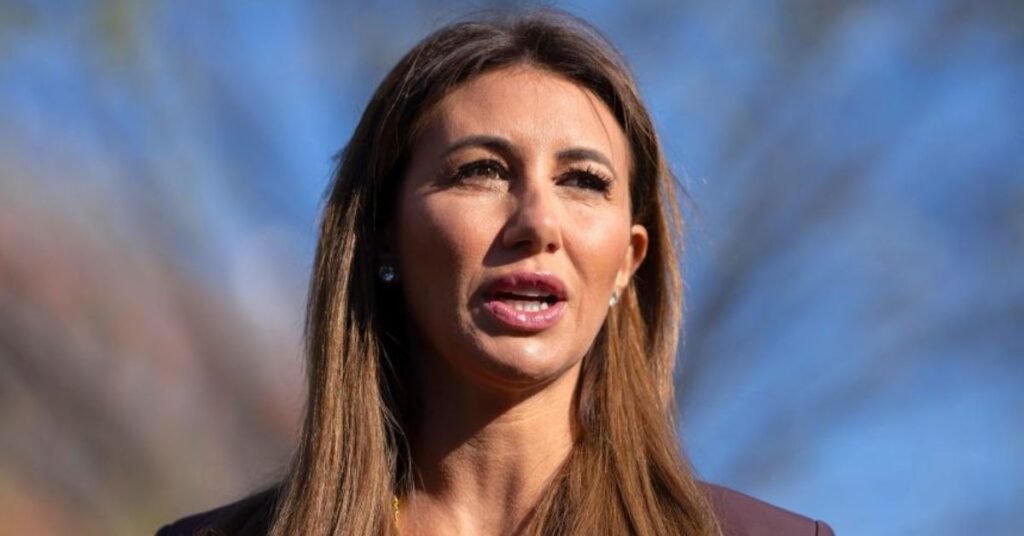
Imagine you’re in a courtroom where the most serious decisions are made: indictments, prosecutions, the balance between government power and individual rights. Now imagine someone enters that courtroom claiming authority — only to have a judge ask, “Who gave you the power?” That’s the real-world drama unfolding around Alina Habba. What may seem like dry legal procedure has, in fact, shaken the foundations of how federal prosecutors are appointed — and why legal norms still matter.
In this post, we’ll unpack who Alina Habba is, why her appointment became so controversial, what the recent court ruling means, and why it matters to all of us.
Who is Alina Habba — in plain English
- Alina Habba is an American lawyer, born 1984, with a background in private practice.
- She worked for years in civil litigation, and in recent times became the personal lawyer for Donald Trump, representing him in high-profile civil cases.
- In 2025, Trump’s administration tapped her first as an interim — then acting — U.S. Attorney for the District of New Jersey, making her the top federal prosecutor in the state.
- Importantly: Habba had no prior experience as a federal prosecutor before this.
So on paper, she was a civil-litigation attorney and political ally of Trump — suddenly placed in a powerful prosecutorial role. That raised eyebrows immediately.

What happened — timeline and controversy
- March 2025 — Trump nominates Habba and appoints her as interim U.S. Attorney for New Jersey. She is sworn in.
- After interim period (120 days) — As required by law, Habba’s interim tenure should end unless Senate confirms her or district court extends her. But the Senate doesn’t act, and New Jersey federal judges pick a career prosecutor, Desiree Leigh Grace, as interim successor.
- Administration pushes back — The Justice Department fires Grace and maneuvers to reinstall Habba as acting U.S. Attorney via a different appointment mechanism that they argue is legal under the Federal Vacancies Reform Act (FVRA).
- Legal challenge and initial judgment — Defendants in two criminal cases challenge Habba’s authority, arguing she had no lawful power to prosecute — and a lower court partly agrees.
- December 1, 2025 — Appeals court ruling — A three-judge panel of the Third U.S. Circuit Court of Appeals unanimously upholds the lower court’s decision. They disqualify Habba, ruling her appointment unlawful and invalid under the FVRA.
In short: the court said — the proper processes for appointing a U.S. Attorney were ignored, and political maneuvering can’t override statutory safeguards.
Why this matters — beyond a single appointment
Upholding the rule of law over political shortcuts
The court’s ruling reinforces that even high-level executive appointments must follow constitutional and statutory norms. Temporary power cannot be extended indefinitely by political tricks. That safeguards the independence of federal prosecutors and prevents abuse of power.
Because Habba was disqualified, the legitimacy of indictments and prosecutions she oversaw is now cast into doubt. That can have ripple effects: defendants might seek dismissal of charges, or appeals that argue any evidence under her authority is invalid.
Sets a precedent — and a warning
This isn’t just about New Jersey. The ruling could affect similar appointments elsewhere, wherever temporary prosecutors have been installed without Senate confirmation or due process. It sends a clear message: bypassing the rulebook will likely not hold up in court.

Example: What went wrong — simplified analogy
Think of the U.S. Attorney’s office like a school principal’s office. Normally, the school board picks the principal. Suppose the board doesn’t act — there’s a temporary principal. But when that term ends, the board picks someone else — a seasoned teacher with experience. Then someone fires that teacher and reinstates the temporary principal using a loophole. Would that feel legitimate to students and parents? Would they trust decisions like promoting or disciplining students?
That’s basically what happened with Habba. The system is designed to prevent someone from being installed outside of checks and balances — and when rules were bypassed, the courts stepped in.
Common Misunderstandings (and Mistakes to Avoid when Interpreting this Case)
- Mistake: Thinking it’s about Habba’s personal views or politics. Actually, the court didn’t rule on whether she was “good” or “bad” — they ruled on whether the appointment process was lawful.
- Misunderstanding: Believing interim = permanent. No — interim/acting appointments are strictly time-limited and need Senate confirmation or lawful extension. Ignoring that undermines the system’s checks.
- Assuming courts always defer to the executive branch. This ruling proves courts can — and will — act as a check when the law is violated.
Real-World Use Cases: Why Everyday Citizens (and Not Just Lawyers) Should Care
- Legal defense: If you or someone you know is indicted federally in New Jersey — and prosecution began under Habba — this ruling might offer a path to challenge the case.
- Public trust and accountability: Knowing that arbitrary political appointments can be struck down reinforces confidence in the justice system’s fairness.
- Media & civic awareness: As citizens, being aware of these procedural safeguards helps us critically evaluate headlines like “Top prosecutor appointed!” — and ask, “Was the process lawful?”
What This Means for the Future — and What to Watch
- The ruling may prompt a new wave of challenges to other controversial interim appointments made under the current administration.
- Prosecutors and defense attorneys alike will need to carefully examine whether appointments were lawful before proceeding.
- Legislators may face renewed pressure to reform or clarify vacancy-and-appointment laws to prevent future ambiguity or misuse.
Conclusion & Takeaway
Alina Habba’s case isn’t just about one woman, one job, or one high-profile political figure. It’s a vivid reminder that how power is conferred matters just as much as who holds it. The recent ruling underscores that even in polarized times, institutions and laws remain — and that courts can act to protect the balance. For democracy, for justice, and for every citizen who depends on the fairness of the legal system — that matters.
Frequently Asked Questions (FAQs)
Q: Does this ruling mean all cases pursued by Habba are automatically dismissed?
Not automatically — but defendants can challenge prosecutions on grounds that she lacked authority. It will depend on individual courts and specific case contexts.
Q: Could she be reappointed lawfully?
Only if the proper process is followed: nomination + Senate confirmation (or a lawful interim extension), or if a lawfully appointed first assistant succeeds in vacancy — not by political maneuvering.
Q: Does this affect all interim prosecutors nationwide?
Not all — but it sets a strong precedent. Similar appointments elsewhere could face legal review if procedures weren’t properly followed.
Q: What does this mean for the balance of power in U.S. government?
It reinforces that executive power has limits, and that statutory and constitutional checks — including the courts — remain vital.

Hannah Price is a digital journalist who covers breaking news, global events, and trending stories with accuracy and speed. She has previously contributed to several online magazines and has built a reputation for verifying facts before publishing. Hannah believes in responsible reporting and aims to present stories in a way that readers can trust.