
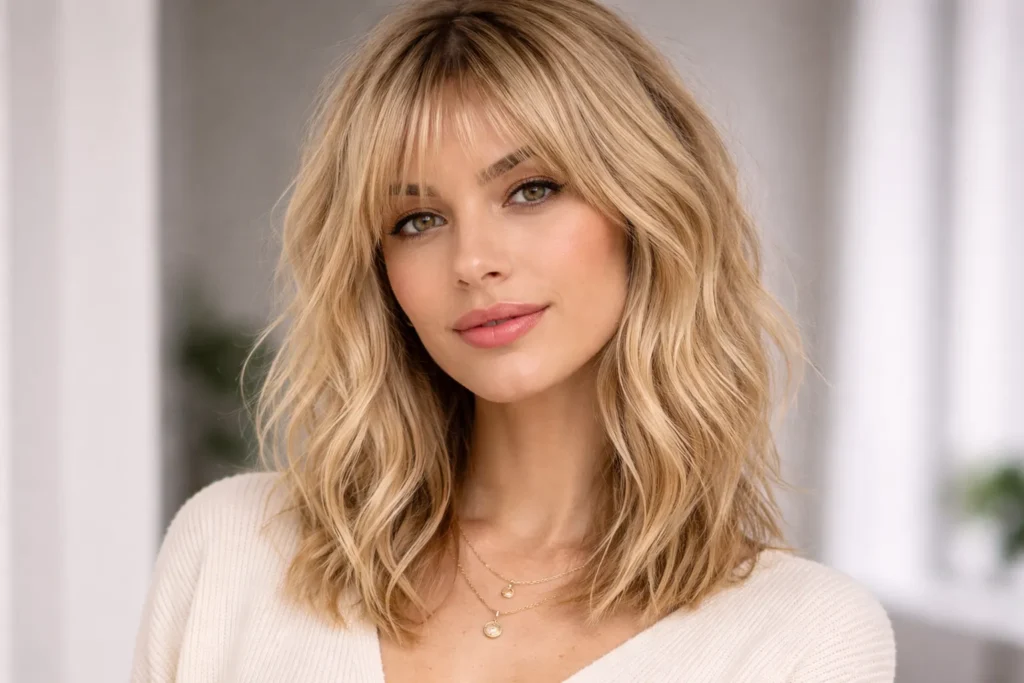
The shag haircut with bangs is more than just a passing trend; it is a hair revolution that has cemented its place in the pantheon of iconic styles. From the rock ‘n’ roll stages of the 1970s to the Instagram feeds of modern influencers, this cut exudes an effortless, “I woke up like this” vibe that few other styles can match. It is the perfect blend of edge and elegance, offering texture, volume, and personality in spades.
But why is this specific cut seeing such a massive resurgence right now? Perhaps it is a reaction to the overly polished, glass-hair trends of previous years. The shag celebrates natural texture and movement. It is forgiving, versatile, and, when done right, incredibly flattering. Whether you have pin-straight strands or wild curls, adding layers and fringe can transform your look entirely.
In this extensive guide, we will dive deep into the world of the shag. We will explore how to choose the right variation for your face shape, how to style it at home, and the best products to keep your layers looking piecey and perfect.
What Defines a Shag Haircut?
Before you sit in the stylist’s chair, it is crucial to understand exactly what you are asking for. A shag is characterized by choppy layers of various lengths.
The Anatomy of the Cut
- Crown Volume: Short layers at the top create height and lift at the crown.
- Feathered Edges: The layers often get thinner towards the ends, creating a feathered, piecey look.
- The Fringe: While you can have a shag without bangs, the quintessential look involves bangs. These can range from heavy, eye-grazing curtains to wispy, micro-bangs.
The beauty of the shag haircut with bangs lies in its disconnect. Unlike a blunt bob where everything meets at one line, the shag is all about movement and removing weight. This makes it an excellent choice for thick hair that needs debulking, but also for fine hair that needs a boost of volume through texture.
Evolution of the Shag: 70s vs. Modern
The shag has a rich history, and understanding its evolution helps in articulating what you want to your stylist.
The 70s Original
Think Farrah Fawcett, Stevie Nicks, or Mick Jagger. The original shag was heavy on the crown layers and often quite mullet-like. It was rebellious, androgynous, and relied heavily on blow-drying to create that signature feathered-back volume.
The Modern Shag (The “Wolf Cut”)
Today’s version is softer and more wearable.
- Softer Transitions: The disconnect between layers is less harsh than its vintage predecessor.
- Natural Texture: The modern shag embraces air-drying and natural waves rather than requiring a round brush blowout.
- Face-Framing: Current styles focus heavily on curtain bangs that blend seamlessly into the side layers, framing the face beautifully.
Choosing the Right Shag for Your Face Shape
One of the biggest myths about shags is that they only work for oval faces. In reality, because the cut is so customizable, it can be tailored to flatter anyone.
Round Faces
If you have a round face, the goal is to elongate and add angles.
- The Cut: Ask for a “long shag.” Keep the layers below the chin to draw the eye downward.
- The Bangs: Opt for curtain bangs that part in the middle and hit at the cheekbones. This opens up the forehead and creates a vertical line down the center of the face, slimming the cheeks. Avoid heavy, straight-across bangs, which can shorten the face.
Square Faces
Square faces have strong jawlines that can be softened with the right layers.
- The Cut: Look for wispy layers that start around the jawline to break up the strong angles.
- The Bangs: Bardot-style bangs are perfect here. Soft, feathery fringe that tapers on the sides will soften the forehead and balance the jaw.
Heart Faces
Heart-shaped faces are wider at the forehead and narrower at the chin.
- The Cut: You want to add volume around the chin to balance the width of the forehead. Layers that flick out at the chin are ideal.
- The Bangs: Side-swept bangs or piecey, see-through bangs work wonders to break up the width of the forehead without hiding it completely.
Long/Oval Faces
If you have a long face, the shag is your best friend because it adds width and volume.
- The Cut: Go for shorter layers that create horizontal volume. A shoulder-length shag is often the sweet spot.
- The Bangs: You can pull off a heavy, straight-across fringe. This shortens the appearance of the face and puts the focus squarely on your eyes.
The Shag for Different Hair Textures
Your hair type will dictate how the shag sits and how much maintenance it requires.
Straight Hair
Straight hair can sometimes fall flat with a shag if not cut correctly.
- The Strategy: Your stylist needs to be aggressive with texturizing shears. They need to carve out weight to encourage movement.
- Styling: You will likely need a texturizing spray or a sea salt spray to give it that “lived-in” grit. A slight bend with a curling iron can also help emphasize the layers.
Wavy Hair (Type 2)
This is the ideal texture for a shag haircut with bangs.
- The Strategy: The layers will naturally enhance your wave pattern.
- Styling: Often, you can just apply a leave-in conditioner or a mousse, scrunch, and go. The cut does 90% of the work for you.
Curly Hair (Type 3)
The “curly shag” is having a major moment. It creates a beautiful, rounded shape (often called a “halo” shape).
- The Strategy: It prevents the dreaded “triangle head” by removing weight from the bottom and adding it to the top.
- Styling: Hydration is key. Use a curl cream to define the ringlets in the bangs and layers. Avoid brushing it when dry, or you will turn the chic shag into a frizz ball.
Coily Hair (Type 4)
Yes, coily hair looks incredible in a shag!
- The Strategy: It’s all about structure. The layers allow coils to spring up and create a gravity-defying shape.
- Styling: Twist-outs or finger coiling the bangs can define the look. Ensure your stylist specializes in dry-cutting curly hair to get the shape right.
Styling Your Shag: A Step-by-Step Guide
The appeal of the shag is its low-maintenance vibe, but “low maintenance” doesn’t mean “no maintenance.” Here is how to style it daily.
The “Air Dry” Method (For Wavy/Curly Hair)
- Wash and Condition: Use a lightweight shampoo that won’t weigh layers down.
- Product Application: While hair is damp, apply a curl cream or mousse.
- The Scrunch: Flip your head upside down and scrunch the hair towards the scalp to encourage volume.
- The Bangs: Even if you air dry the rest, blow dry your bangs. Use a small round brush or just your fingers to manipulate them into place so they don’t dry wonky.
- Finish: Once dry, ruffle the roots with your fingers for extra lift.
The “Textured Blowout” (For Straight Hair)
- Prep: Apply a volumizing mousse to the roots and a heat protectant throughout.
- Rough Dry: Blow dry your hair until it is about 80% dry. Don’t worry about smoothness.
- Add Bend: Use a flat iron or a curling wand to add random bends to the layers. Don’t curl the ends; leave them straight for a modern look.
- Texturize: Spray a dry texture spray or volume powder into the mid-lengths and massage it in. This separates the layers.
Maintenance: Keeping the Edge
A shag is a grow-out friendly cut, but the bangs are the demanding part.
Trims
- The Layers: You can usually go 8-12 weeks between full haircuts because the messy nature of the shag hides split ends well.
- The Bangs: Bangs require maintenance every 3-4 weeks. Many salons offer complimentary bang trims between appointments—utilize this!
Dealing with the “Awkward Phase”
If you decide to grow out your shag haircut with bangs, the transition is relatively painless.
- Bangs: As they grow, part them in the middle to turn them into curtain bangs. Then, as they reach cheekbone length, they become face-framing layers.
- Layers: Simply let the shorter crown layers catch up to the length. The shag naturally evolves into a long-layered cut over time.
Top Products for Shag Styles
Invest in these three hero products to get the most out of your cut.
1. Sea Salt Spray
This is essential for grit. It mimics the texture of hair after a day at the beach.
- Best for: Fine to medium straight/wavy hair.
2. Matte Pomade or Clay
A tiny amount of pomade warmed between your fingers is perfect for defining the ends of your bangs and layers. It prevents fluffiness and gives that piecey separation.
- Best for: Thick or coarse hair.
3. Dry Texture Spray
Think of this as a modern hairspray. It provides hold but also adds airy volume without the crunch.
- Best for: All hair types.
Celebrity Inspiration
If you need a photo to show your stylist, look no further than these icons.
- Miley Cyrus: Her modern mullet-shag was a cultural reset for this hairstyle. It’s punk, edgy, and bleached.
- Billie Eilish: Known for a softer, anime-inspired wolf cut that frames her face heavily.
- Zendaya: Often sports a curly shag that celebrates her natural texture with volume and bounce.
- Alexa Chung: The queen of the indie-sleaze era shag. Her look is softer, wavier, and perfectly undone.
Conclusion
The shag haircut with bangs is a timeless choice for a reason. It is liberating. It frees you from the tyranny of perfect smoothness and allows your hair to move, breathe, and take up space. It is a cut that says you are confident and cool without trying too hard.
Whether you opt for a soft, romantic version or a choppy, rock-and-roll mullet, this style is customizable to you. So, bring those reference photos to your stylist, embrace the layers, and get ready to have the coolest hair in the room.
Frequently Asked Questions (FAQs)
Q: Will a shag haircut make my hair look thinner?
A: Actually, it usually does the opposite. By cutting shorter layers into the crown, you allow the hair to stand up and create volume. However, if your hair is extremely thin, your stylist should be careful not to remove too much weight from the bottom length, or it can look wispy.
Q: Is a shag hard to style?
A: It is considered a low-maintenance cut because it embraces messiness. However, if you are used to a simple ponytail or smooth, one-length hair, learning to work with layers and texture products will be a small learning curve.
Q: Can I get a shag if I have a cowlick in my bangs?
A: Yes, but you need to be strategic. Curtain bangs are usually better for cowlicks than straight-across bangs because the weight of the hair helps pull the cowlick down, or the split allows the cowlick to blend in naturally.
Q: What is the difference between a shag and a mullet?
A: A mullet has a stark disconnect between the very short front/sides and the long back. A shag is more blended. The layers in a shag connect the front to the back more seamlessly, creating a more uniform (though still layered) look.
Q: How do I fix my bangs in the morning without washing my whole head?
A: The “bang bath” is a shag wearer’s secret weapon. Pull your hair back, lean over the sink, and wash just your bangs with a tiny bit of shampoo. Blow dry them immediately, and your whole style will look fresh.

Sofia Bennett is a fashion writer and style observer known for her clean sense of aesthetics and trend analysis. She has covered fashion shows, reviewed designer collections, and interviewed independent creators. Sofia specializes in connecting fashion with real-life lifestyle choices, helping readers understand what looks good — and why.