
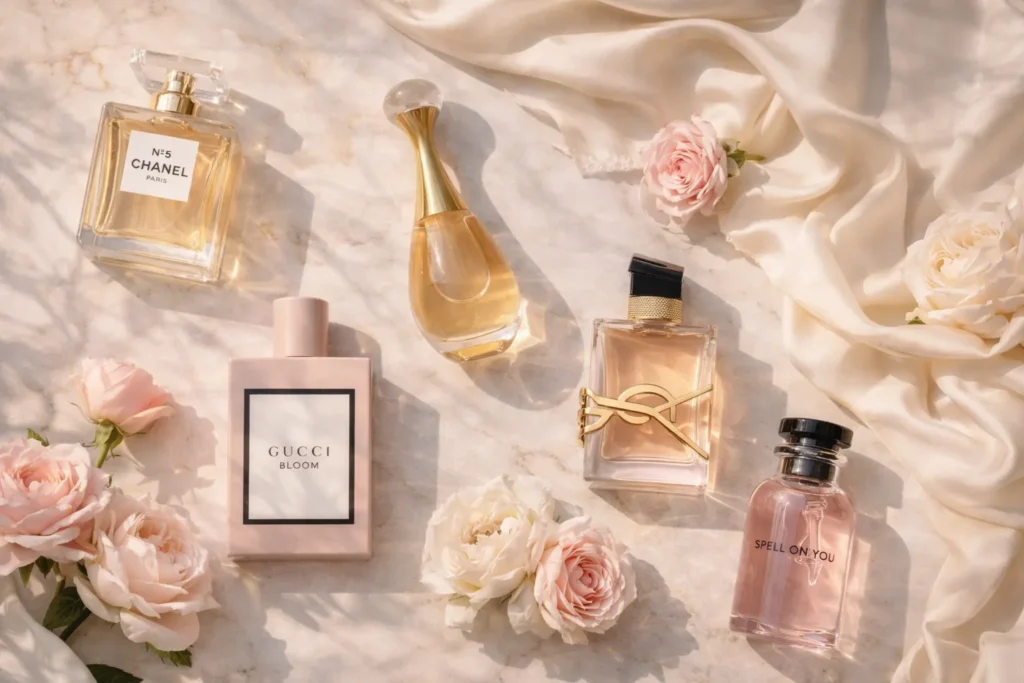
A signature scent is an invisible accessory, a personal statement that leaves a lasting impression long after you have left a room. The world of womens top fragrances is a rich tapestry of art, chemistry, and emotion, offering a scent for every personality, mood, and occasion. From timeless classics that have graced vanity tables for generations to modern creations that capture the spirit of today, finding the perfect perfume is a deeply personal journey.
This definitive guide will navigate you through the enchanting universe of fragrance. We will explore the most iconic scents, decode the language of perfume notes, and provide expert advice on how to select a fragrance that truly feels like you. Whether you are searching for your very first signature scent or looking to add a new classic to your collection, consider this your map to olfactory excellence.
The Power of Scent: Why Fragrance Matters
A perfume is more than just scented alcohol; it’s a powerful tool for self-expression and a trigger for our deepest memories.
The Science of Scent and Memory
The olfactory bulb is directly connected to the limbic system, the part of the brain that houses memory and emotion. This is why a particular smell can instantly transport you back to a specific moment, person, or feeling. Wearing a signature fragrance creates a unique scent memory for those around you, making it a powerful part of your personal identity.
A Boost of Confidence
The simple act of spritzing on your favorite perfume can have a profound effect on your mood and confidence. It’s a finishing touch that makes you feel put-together, polished, and ready to take on the day. The right fragrance can empower you, soothe you, or make you feel irresistibly glamorous.
An Expression of Personal Style
Your choice of fragrance communicates who you are without saying a word. Are you romantic and feminine? Edgy and mysterious? Fresh and energetic? There is a fragrance family that perfectly captures your essence. Building a “fragrance wardrobe” allows you to express different facets of your personality for different occasions.
Decoding the Language of Perfume: Notes and Families
To find your perfect match among the top womens fragrances, you first need to understand their composition. Perfumes are built like a musical pyramid, with three distinct layers of notes that unfold over time.
The Fragrance Pyramid
- Top Notes: This is your first impression of a perfume. They are light, volatile notes that burst forth upon the initial spray but evaporate quickly (within 15-30 minutes). Common top notes include citrus (bergamot, lemon), light fruits (berries), and fresh herbs (mint).
- Heart Notes (Middle Notes): Once the top notes fade, the heart of the fragrance emerges. These notes form the main character of the scent and last for several hours. Floral notes (rose, jasmine, lily), green notes, and spices (cinnamon, cardamom) are often found here.
- Base Notes: These are the rich, deep notes that anchor the fragrance and give it its lasting power. They are the last to develop and can linger on the skin for many hours. Common base notes include musk, amber, vanilla, sandalwood, and patchouli.
The Main Olfactory Families
Most perfumes can be categorized into a few main families. Identifying which family you are drawn to is the key to discovering new favorites.
- Floral: The largest and most popular family. From single-flower scents (soliflores) to complex bouquets, this family ranges from light and fresh (lily-of-the-valley) to intense and opulent (tuberose).
- Oriental (Amber): Warm, spicy, and sensual. This family features notes like vanilla, exotic spices, incense, and amber. These are rich, sophisticated scents perfect for evening wear.
- Woody: Centered on earthy, dry, and smoky scents. Notes like sandalwood, cedarwood, vetiver, and patchouli create fragrances that are grounding and elegant.
- Fresh: This broad category includes citrus, green, and aquatic (oceanic) notes. These perfumes are crisp, clean, and invigorating, perfect for daytime and warm weather. Subfamilies include Fruity and Aromatic.
The Hall of Fame: Iconic Womens Top Fragrances
Certain perfumes have achieved legendary status, transcending trends and remaining bestsellers for decades. These are the undisputed icons of the fragrance world.
Chanel No. 5
- Launched: 1921
- Fragrance Family: Floral-Aldehydic
- Key Notes: Aldehydes, Ylang-Ylang, Iris, Amber, Sandalwood.
- Why It’s an Icon: The first perfume to use aldehydes, synthetic components that give the scent a sparkling, abstract quality. Chanel No. 5 was revolutionary, a complex bouquet that didn’t smell like any single flower. It is the epitome of timeless, sophisticated luxury.
Guerlain Shalimar
- Launched: 1925
- Fragrance Family: Oriental (Amber)
- Key Notes: Bergamot, Iris, Vanilla, Tonka Bean.
- Why It’s an Icon: Widely regarded as the first oriental fragrance, Shalimar was inspired by the love story behind the Taj Mahal. Its smoky vanilla and bright citrus combination is warm, sensual, and unforgettable. It’s a bold, opulent statement of glamour.
Yves Saint Laurent Opium
- Launched: 1977
- Fragrance Family: Spicy Oriental
- Key Notes: Mandarin Orange, Clove, Myrrh, Patchouli.
- Why It’s an Icon: Opium was launched with a controversial name and a powerful, intoxicating scent that defined the opulent and decadent spirit of the late 70s and 80s. Its spicy, resinous character is not for the faint of heart.
Dior J’adore
- Launched: 1999
- Fragrance Family: Floral-Fruity
- Key Notes: Ylang-Ylang, Damascus Rose, Jasmine Sambac.
- Why It’s an Icon: J’adore captured the optimistic, feminine spirit of the new millennium. It’s a luminous, modern floral bouquet that is beautifully balanced and universally appealing. The iconic amphora-shaped bottle is as famous as the scent itself.
Modern Classics: The Top Fragrances of Today
These fragrances may be younger, but they have quickly earned their place as modern icons, beloved by a new generation of perfume lovers.
Maison Francis Kurkdjian Baccarat Rouge 540
- Fragrance Family: Woody-Amber
- Key Notes: Saffron, Jasmine, Cedarwood, Ambergris.
- Why It’s a Modern Classic: This scent went viral for its unique, addictive aroma that smells different on everyone. Its airy, sweet, and mineralic profile is incredibly long-lasting and creates an unforgettable sillage (scent trail).
Le Labo Santal 33
- Fragrance Family: Woody-Aromatic
- Key Notes: Sandalwood, Cardamom, Violet, Leather.
- Why It’s a Modern Classic: The quintessential “cool-girl” scent, Santal 33 is a unisex fragrance that defined the aesthetic of the 2010s. Its smoky, leathery, and creamy woodiness is both comforting and incredibly chic.
Viktor&Rolf Flowerbomb
- Fragrance Family: Floral-Oriental
- Key Notes: Jasmine, Orchid, Rose, Patchouli, Vanilla.
- Why It’s a Modern Classic: As the name suggests, Flowerbomb is an explosion of sweet florals grounded by a warm, gourmand base. It is unabashedly feminine, powerful, and joyful, making it a go-to for those who love sweet, impactful scents.
Byredo Gypsy Water
- Fragrance Family: Woody-Aromatic
- Key Notes: Bergamot, Juniper Berries, Pine Needle, Incense, Sandalwood.
- Why It’s a Modern Classic: Inspired by the myth of the Romani lifestyle, Gypsy Water is a fresh, soulful, and earthy fragrance. It evokes the feeling of a forest floor after the rain—it’s clean, woody, and slightly mystical.
How to Choose Your Signature Scent
Finding “the one” can be overwhelming. Follow these steps to make the process enjoyable and successful.
- Do Your Research: Start by identifying which fragrance family you are most drawn to. Think about scents you enjoy in your daily life—the smell of fresh-cut flowers, the warmth of vanilla, or the crispness of a lemon.
- Test on Your Skin: Perfume smells different on a paper blotter than it does on your skin. Your unique body chemistry will interact with the fragrance oils to create a scent that is unique to you. Spray it on your wrist or inner elbow.
- Don’t Rush the Decision: A perfume’s character unfolds over time. Wait at least 30 minutes for the top notes to settle and the heart notes to emerge. Better yet, wear it for a full day to experience the base notes and see how it lasts.
- Consider the Concentration:
- Eau de Parfum (EDP): Higher concentration of perfume oil (15-20%). Lasts longer (6-8 hours) and is more intense.
- Eau de Toilette (EDT): Lighter concentration (5-15%). Lasts for about 3-5 hours and is often fresher than its EDP counterpart.
- Parfum (Extrait): The highest concentration (20-30%). Very rich and long-lasting, a single drop goes a long way.
Tips for Making Your Fragrance Last Longer
You’ve invested in a beautiful scent; here is how to maximize its performance.
- Moisturize First: Fragrance clings to oil. Applying an unscented body lotion before you spray your perfume will give the scent something to hold onto, dramatically increasing its longevity.
- Target Pulse Points: Apply perfume to warm areas of your body where your pulse is closest to the skin. These points act as natural diffusers. Key spots include the wrists, behind the ears, the base of the throat, and inside the elbows.
- Don’t Rub Your Wrists: A common habit, but rubbing your wrists together after applying perfume crushes the delicate top notes and can alter the scent’s development. Simply spray and let it air dry.
- Store It Properly: Heat, light, and humidity are the enemies of perfume. Store your bottles in a cool, dark place like a drawer or closet—never in the bathroom where steam from the shower can degrade the fragrance oils.
Conclusion: Find the Scent That Tells Your Story
The world of womens top fragrances is a treasure trove of art and history, waiting to be explored. A great perfume is a form of self-care, a confidence booster, and a personal signature. It has the power to define a moment and create a memory that lasts a lifetime.
By understanding the notes, exploring the iconic families, and testing thoughtfully, you can find a scent that doesn’t just smell good, but feels like an extension of your very being. Whether you choose a timeless classic or a modern niche creation, wear it with confidence and let your fragrance tell your unique story.
Frequently Asked Questions (FAQs)
Q1: What is the difference between Eau de Parfum and Eau de Toilette?
A: The main difference is the concentration of perfume oil. Eau de Parfum (EDP) has a higher concentration (15-20%) and is stronger and longer-lasting. Eau de Toilette (EDT) is lighter (5-15%) and is often a fresher, more day-appropriate version of the same scent.
Q2: How can I find a signature scent?
A: Start by identifying what types of smells you naturally love. Then, sample fragrances on your skin and wear them for a full day. A true signature scent is one that you love from the top notes to the dry-down and that makes you feel confident and happy.
Q3: Why can’t I smell my own perfume after a while?
A: This phenomenon is called “olfactory fatigue” or “nose blindness.” Your brain becomes accustomed to the scent and filters it out so it can focus on new smells in your environment. Rest assured, others can still smell your fragrance.
Q4: Should I have a “fragrance wardrobe”?
A: Many people enjoy having a collection of scents, or a “fragrance wardrobe.” This allows you to choose a perfume based on the season, your mood, or the occasion. For example, a light citrus scent for a summer day and a warm, spicy oriental for a winter evening.
Q5: Are expensive perfumes worth it?
A: Price can often correlate with the quality and rarity of the ingredients, the complexity of the blend, and the concentration of perfume oils. However, there are many beautiful and affordable fragrances. The “best” perfume is entirely subjective and is the one that you love the most, regardless of price.

Sofia Bennett is a fashion writer and style observer known for her clean sense of aesthetics and trend analysis. She has covered fashion shows, reviewed designer collections, and interviewed independent creators. Sofia specializes in connecting fashion with real-life lifestyle choices, helping readers understand what looks good — and why.