
Introduction
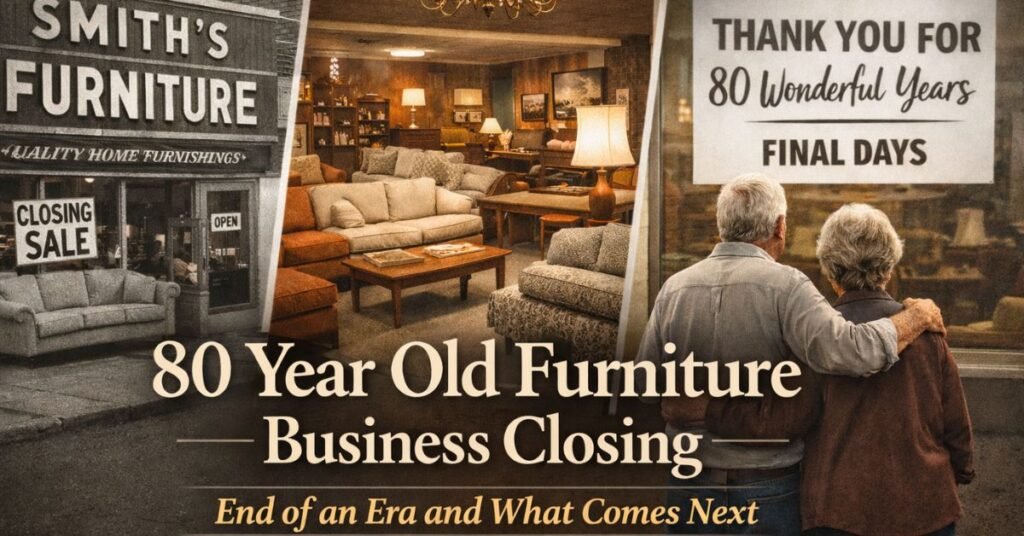
When you hear the phrase “80 year old furniture business closing,” it lands differently than a typical store shutdown. This isn’t just another retail headline scrolling past your feed. It’s the end of a living timeline — decades of craftsmanship, family dinners paid for by paychecks from that shop, couches that survived three generations, and storefront windows that watched a town grow up around them.
In the first 100 words, let’s be clear about why this topic matters. An 80-year-old furniture business closing is rarely about one bad year. It’s usually a slow-burning story involving shifting consumer habits, rising costs, generational transitions, and sometimes painful economic reality. For customers, it means the loss of quality, trust, and personal service. For owners and employees, it can feel like losing a piece of identity.
In this guide, we’re going deep. You’ll learn why long-standing furniture businesses close after decades of success, what signals the end long before the doors shut, how owners and communities can respond, and what practical lessons newer businesses can take from these closures. Whether you’re a business owner, a loyal customer, or someone who simply cares about preserving local legacy, this article is designed to give you clarity — not nostalgia alone.
Understanding what an 80 year old furniture business closing really represents
At a surface level, an 80 year old furniture business closing looks like a single event: a liquidation sale, a final notice, a goodbye post on Facebook. But underneath, it represents layers of economic, cultural, and emotional shifts that don’t happen overnight.
Think of a legacy furniture store like an old oak table. It’s sturdy because it was built slowly, reinforced over time, and repaired when needed. But even the strongest table weakens if the room changes — humidity rises, weight increases, or the floor beneath it shifts. That’s what’s happening to many long-running furniture businesses today.
For decades, these stores thrived on consistent customer loyalty, local manufacturing or sourcing, and a slower pace of retail. People waited weeks for custom pieces. They valued durability over trends. They trusted a store owner’s recommendation. Fast forward to today, and the ground looks different:
• Online-first furniture brands promise delivery in days
• Flat-pack and disposable furniture dominate price-sensitive markets
• Commercial rents rise faster than margins
• Younger buyers prioritize convenience over longevity
An 80 year old furniture business closing often signals a mismatch between how the business was built and how the market now behaves. That doesn’t mean the business failed. In many cases, it means the world outpaced the model.
Understanding this distinction matters because it shifts the conversation from blame to learning — and learning is where real value lives.
Why so many long-standing furniture businesses are closing now
The timing is not a coincidence. The past decade — especially the last five years — created a perfect storm for legacy furniture retailers. While any one factor might be survivable alone, the combination has been devastating.
First, cost pressure has exploded. Raw materials like hardwood, foam, and fabrics have surged in price. Shipping costs remain unpredictable. Labor is harder to find and more expensive to retain. An 80-year-old business built on steady margins suddenly faces razor-thin profits.
Second, consumer behavior changed faster than many owners expected. Customers now research online, compare prices instantly, and expect transparent reviews. Many older furniture businesses relied on in-store experience rather than digital presence. When foot traffic declined, they didn’t always have a backup engine.
Third, generational transition is a quiet killer. Many of these businesses were family-owned. The founders are gone. The second or third generation may not want — or be able — to continue. Running a furniture business today requires tech fluency, marketing savvy, and relentless adaptation. Not every heir signs up for that.
Finally, competition isn’t just local anymore. A family furniture store isn’t competing with the shop across town; it’s competing with global brands, direct-to-consumer startups, and marketplaces with massive ad budgets.
When you see an 80 year old furniture business closing, it’s rarely a sudden collapse. It’s the result of pressure building year after year until staying open no longer makes sense — financially or personally.
The human side of closing a legacy furniture business
Behind every announcement of an 80 year old furniture business closing is a deeply human story. This isn’t venture capital pulling out. It’s often a family making one of the hardest decisions of their lives.
For owners, closing feels like admitting defeat — even when it’s the most rational choice. Many stayed open longer than they should have out of loyalty to employees or fear of disappointing customers. Some kept paying staff during slow months from personal savings. Others delayed retirement because the business was their identity.
Employees experience a different kind of loss. Longtime furniture stores often function like extended families. People worked there for decades, not months. When the doors close, workers don’t just lose jobs; they lose routines, relationships, and a sense of belonging.
Customers feel it too. People mourn the place where they bought their first dining table, where a salesperson remembered their name, where quality didn’t require a gamble. When these stores close, communities lose something irreplaceable.
Acknowledging this emotional reality matters. It explains why closures are often handled with grace — farewell letters, thank-you signs, final sales framed as celebrations rather than fire drills. The business may be ending, but the dignity of its story remains.
What customers should do when an 80 year old furniture business closing is announced
If you’re a customer watching a trusted store shut its doors, your response can actually make a difference — both practically and emotionally.
First, don’t assume liquidation means low quality. Many closing furniture businesses still carry exceptional inventory. Final sales can be opportunities to buy heirloom-quality pieces at reduced prices, especially floor models or remaining custom stock.
Second, ask questions. Reputable legacy stores will be transparent about warranties, repairs, and delivery timelines during closure. Clarify what support exists after the doors close, especially for high-ticket items.
Third, show appreciation. It might sound small, but a kind message, review, or thank-you note matters. For owners ending an 80-year run, knowing they mattered to customers softens the blow more than discounts ever could.
Finally, document and preserve. Photos, stories, and shared memories help keep the legacy alive. Communities often underestimate how valuable this collective memory becomes years later.
While you can’t stop an 80 year old furniture business closing once the decision is made, you can honor what it represented — and that has real value.
Lessons modern businesses can learn from an 80 year old furniture business closing
Every closure is also a case study. For entrepreneurs and small business owners, these moments offer insights you won’t find in glossy startup blogs.
One key lesson is adaptability beats tradition alone. Longevity comes from evolution, not repetition. Businesses that survived decades did so because they adjusted — until adjustment slowed or stopped.
Another lesson is margins matter more than reputation. Many legacy stores relied on goodwill and brand trust, assuming it would carry them through lean years. But goodwill doesn’t pay rent. Sustainable pricing and cost control are not optional.
Third, succession planning isn’t a luxury. If a business depends entirely on one person’s knowledge or passion, its lifespan is limited. Training, documentation, and leadership development must start early — not when retirement looms.
Finally, emotional attachment can delay necessary change. Pride keeps doors open long after profitability disappears. The smartest owners know when to pivot, sell, or close before exhaustion sets in.
An 80 year old furniture business closing isn’t a failure story — it’s a reminder that survival requires constant reinvention, even for the most respected names.
Closing a business after 80 years demands care, planning, and respect for everyone involved. While no guide can remove the pain, structure can reduce chaos.
Start with honest financial assessment. Owners should work with accountants to understand true profitability, not just cash flow. This clarity removes guilt from the decision-making process.
Next, communicate early with employees. Surprise closures damage trust. Even when timelines are uncertain, transparency builds goodwill and allows staff to plan their futures.
Then, plan inventory liquidation strategically. Rather than panic pricing, phased discounts preserve value and prevent brand damage. Longtime customers appreciate thoughtful transitions.
Legal and contractual obligations must be reviewed carefully. Leases, supplier agreements, warranties, and customer deposits require clear resolution.
Finally, document the legacy. Photos, timelines, testimonials, and archives honor the journey. Some owners even publish small retrospectives — not for marketing, but for closure.
Handling an 80 year old furniture business closing responsibly ensures the final chapter reflects the integrity of everything that came before it.
Tools, services, and professional help that make closure smoother
Closing a legacy business isn’t something most owners are trained to do. Fortunately, the right tools and advisors can make a meaningful difference.
Accounting and financial advisors help owners understand tax implications, asset valuation, and retirement planning. This prevents unpleasant surprises after closure.
Legal professionals ensure contracts are resolved properly, reducing the risk of future disputes. This is especially important for businesses with decades of accumulated agreements.
Inventory management and liquidation specialists can structure sales to maximize return without turning the process into a chaotic fire sale.
Digital archiving tools help preserve records, photos, and stories. Cloud storage, simple websites, or even social platforms can house a business’s history permanently.
The goal of these tools isn’t speed — it’s dignity. When an 80 year old furniture business closing is handled with professionalism, everyone involved walks away with fewer regrets.
Common mistakes during legacy furniture business closures — and how to avoid them
Even well-intentioned owners make mistakes during closure, often because emotions cloud judgment.
One common error is waiting too long. Hoping for a turnaround that never comes drains finances and energy. Early action creates options; late action removes them.
Another mistake is poor communication. Silence breeds rumors, resentment, and fear among staff and customers. Clear, compassionate messaging maintains trust even in hard moments.
Some owners over-discount too fast, devaluing inventory and the brand itself. Gradual, thoughtful pricing respects both customers and decades of reputation.
Ignoring legal details is another pitfall. Unresolved warranties, deposits, or lease terms can create problems long after doors close.
Avoiding these mistakes doesn’t make an 80 year old furniture business closing painless — but it does make it cleaner, fairer, and more humane.
What happens to the legacy after the doors close
Closure doesn’t erase impact. Many 80-year-old furniture businesses live on in surprising ways.
Former employees start new shops, carrying skills forward. Customers pass down furniture pieces that outlast the store itself. Buildings are repurposed, but memories remain.
In some cases, brands are revived online, sold to new owners, or transformed into archives. Even when the business ends, its influence continues shaping local culture and craftsmanship.
Understanding this continuity reframes closure. It’s not disappearance — it’s transition.
Conclusion
An 80 year old furniture business closing is never just a business decision. It’s the final chapter of a long, human story written by generations of work, trust, and care. While these closures can feel like losses — and they are — they also offer clarity about change, resilience, and what truly lasts.
For owners, the lesson is courage: knowing when to evolve, when to step away, and how to close with dignity. For customers, it’s appreciation: recognizing the value of quality and community while it’s still here. For future businesses, it’s wisdom: longevity isn’t guaranteed by history alone, but by adaptation and honesty.
If this article resonated with you, share your story, leave a comment, or take a moment to support a local business while it’s still writing its middle chapters.
FAQs
Why are so many 80 year old furniture businesses closing now
Rising costs, online competition, changing consumer behavior, and generational transitions have combined to pressure long-standing furniture retailers.
Does an 80 year old furniture business closing mean it failed
Not necessarily. Many closures reflect strategic decisions, retirement, or market shifts rather than poor management.
Should customers buy furniture during a closing sale
Yes, often. Legacy stores usually carry high-quality inventory, but buyers should clarify warranties and delivery terms.
Can legacy furniture businesses survive in today’s market
Some can, by embracing digital tools, adjusting pricing models, and planning succession early.
What happens to warranties after a furniture store closes
It depends on the manufacturer and agreements in place. Customers should ask before purchasing.

Michael Grant is a business writer with professional experience in small-business consulting and online entrepreneurship. Over the past decade, he has helped brands improve their digital strategy, customer engagement, and revenue planning. Michael simplifies business concepts and gives readers practical insights they can use immediately.