
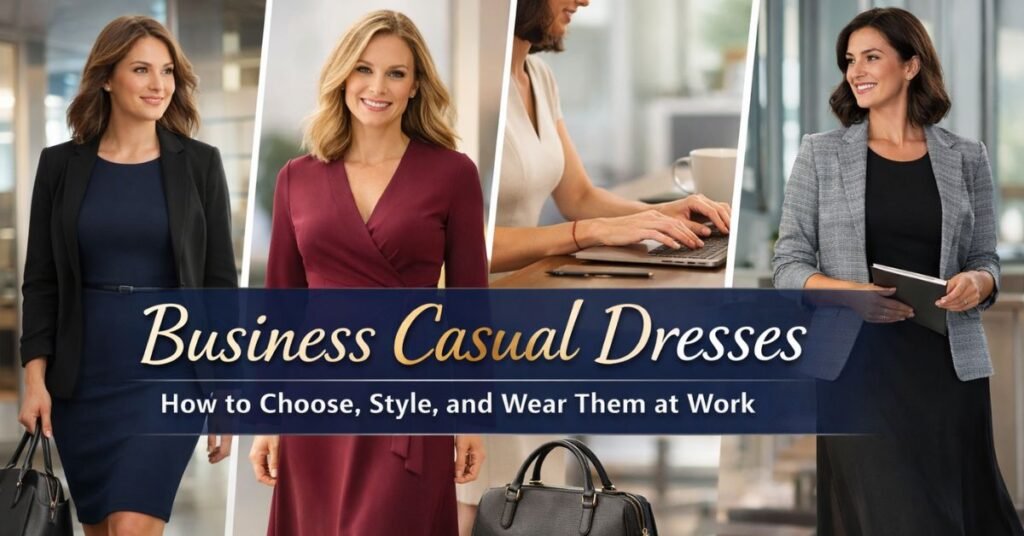
Introduction
If you’ve ever stood in front of your closet at 8:12 a.m., coffee going cold, wondering whether your dress is “too formal” or “not professional enough,” you’re not alone. Business casual dresses live in that famously confusing middle ground between stiff corporate wear and relaxed everyday fashion. They’re meant to look polished without feeling restrictive, stylish without being flashy, and professional without draining your personality.
In today’s workplaces—where meetings happen over Zoom, offices mix generations and cultures, and dress codes are rarely written down—business casual dresses have become a quiet power move. They solve a real problem: how to look competent, confident, and put-together without wearing a full suit or sacrificing comfort. The right dress can help you walk into a room feeling prepared, credible, and calm—before you’ve even said a word.
In this guide, we’ll break down exactly what business casual dresses are, how to choose them, how to style them for different work environments, and how to avoid the mistakes that quietly undermine an otherwise great outfit. This isn’t theory. It’s built on real offices, real people, and real mornings where you need something that just works.
By the end, you’ll know how to build a reliable rotation of business casual dresses that fit your job, your lifestyle, and your personality—without overthinking it every single day.
Understanding Business Casual Dresses (Without the Confusion)
Business casual dresses are best understood as a balance, not a rulebook. They sit between formal office attire—think tailored suits and structured sheath dresses—and casual wear like sundresses or weekend maxi styles. The goal isn’t to look “dressed up.” It’s to look intentional.
A helpful way to think about business casual dresses is to ask one simple question: “Would this look appropriate in a meeting with my manager, a client, or a senior leader?” If the answer is yes, you’re likely on the right track.
In practical terms, business casual dresses usually have:
- Clean, tailored or semi-structured silhouettes
- Modest hemlines (typically around the knee or slightly above/below)
- Sleeves or shoulder coverage, or at least the ability to layer
- Fabrics that hold their shape and don’t cling or wrinkle excessively
They avoid extremes. Not too tight, not too flowy. Not too trendy, not outdated. A knee-length wrap dress in a matte fabric? Perfect. A spaghetti-strap sundress with a plunging neckline? Probably not.
What complicates things is that business casual varies by industry. A creative agency may welcome bold prints and relaxed cuts, while a finance office might expect neutral colors and more structure. That’s why understanding the spirit of business casual matters more than memorizing rules.
At its core, business casual dresses communicate three things: professionalism, approachability, and competence. When those boxes are checked, the outfit works.
Why Business Casual Dresses Matter in Real Work Life
Clothing doesn’t just cover you—it speaks for you before you speak for yourself. Business casual dresses play a unique role in that conversation because they’re often worn in environments where impressions are formed quickly and subtly.
One of the biggest benefits of business casual dresses is decision simplicity. On busy mornings, a single well-chosen dress can replace the mental gymnastics of pairing tops, bottoms, and layers. It’s one piece, one decision, and you’re ready. That ease translates into confidence, which others can sense.
They’re also incredibly versatile. The same dress can:
- Be worn to a team meeting with flats
- Styled with a blazer for a presentation
- Paired with heels for an after-work event
From a practical standpoint, business casual dresses are ideal for:
- Office professionals navigating semi-formal dress codes
- Managers who need to look authoritative yet approachable
- Hybrid workers moving between home, office, and meetings
- Women who want comfort without sacrificing credibility
There’s also a psychological benefit. When you wear a dress that fits well and feels appropriate, you stop thinking about your outfit—and start focusing on your work. That mental freedom matters more than most people realize.
In real offices, business casual dresses often become “signature pieces.” Colleagues remember you as someone who always looks polished, even when deadlines pile up. That consistency quietly builds trust and professionalism over time.
Types of Business Casual Dresses and When to Wear Them
Not all business casual dresses serve the same purpose. Understanding the main types helps you choose wisely and avoid outfits that feel off for the occasion.
The sheath dress is a classic for a reason. Its straight, tailored silhouette works beautifully in structured offices. It signals confidence and competence, especially in neutral tones like navy, gray, or black. It’s ideal for presentations, meetings with leadership, or client-facing roles.
The wrap dress offers a softer, more flexible option. It flatters many body types and allows movement throughout the day. Wrap dresses are excellent for long workdays, networking events, or roles that involve a mix of sitting, standing, and walking.
The A-line dress strikes a balance between structure and comfort. Slightly fitted at the top and looser at the skirt, it works well in creative or business-casual-leaning environments. It’s forgiving, polished, and easy to style.
The shirt dress leans slightly more casual but can absolutely fit business casual when done right. Look for crisp fabrics, defined waists, and knee-length hems. These are great for warmer months or relaxed office cultures.
The midi-length dress has become a modern staple. When paired with the right shoes and layers, it feels contemporary yet professional. The key is structure—avoid overly flowy or sheer fabrics.
Each type serves a different mood and moment. Having a mix allows you to adapt without rebuilding your wardrobe.


How to Choose the Right Business Casual Dress Step by Step
Choosing business casual dresses doesn’t require fashion expertise, but it does require intention. A step-by-step approach makes the process clear and repeatable.
Start with your workplace reality. Observe what respected colleagues wear. Are dresses structured or relaxed? Neutral or colorful? Long or knee-length? Let your environment set the baseline.
Next, prioritize fit. A dress that technically follows the dress code but fits poorly will always look unprofessional. Pay attention to:
- Shoulder seams sitting correctly
- No pulling at the hips or bust
- Comfortable movement when sitting
Fabric choice matters more than most people think. Look for materials that:
- Hold their shape throughout the day
- Don’t wrinkle easily
- Feel breathable and comfortable
Color and pattern should support versatility. Solid colors and subtle prints allow you to wear the same dress in multiple ways. If you love bold patterns, keep the silhouette simple to balance it out.
Then think about layering. Ask yourself if the dress works with:
- A blazer
- A cardigan
- A light jacket
Finally, test it in motion. Sit down. Stand up. Walk around. If you’re constantly adjusting it, it’s not the right choice.
This process may sound detailed, but after a few successful picks, it becomes intuitive. The goal is to build a small, reliable collection you trust.
Styling Business Casual Dresses for Different Work Environments
Styling is where business casual dresses truly shine. The same dress can communicate different messages depending on how you style it.
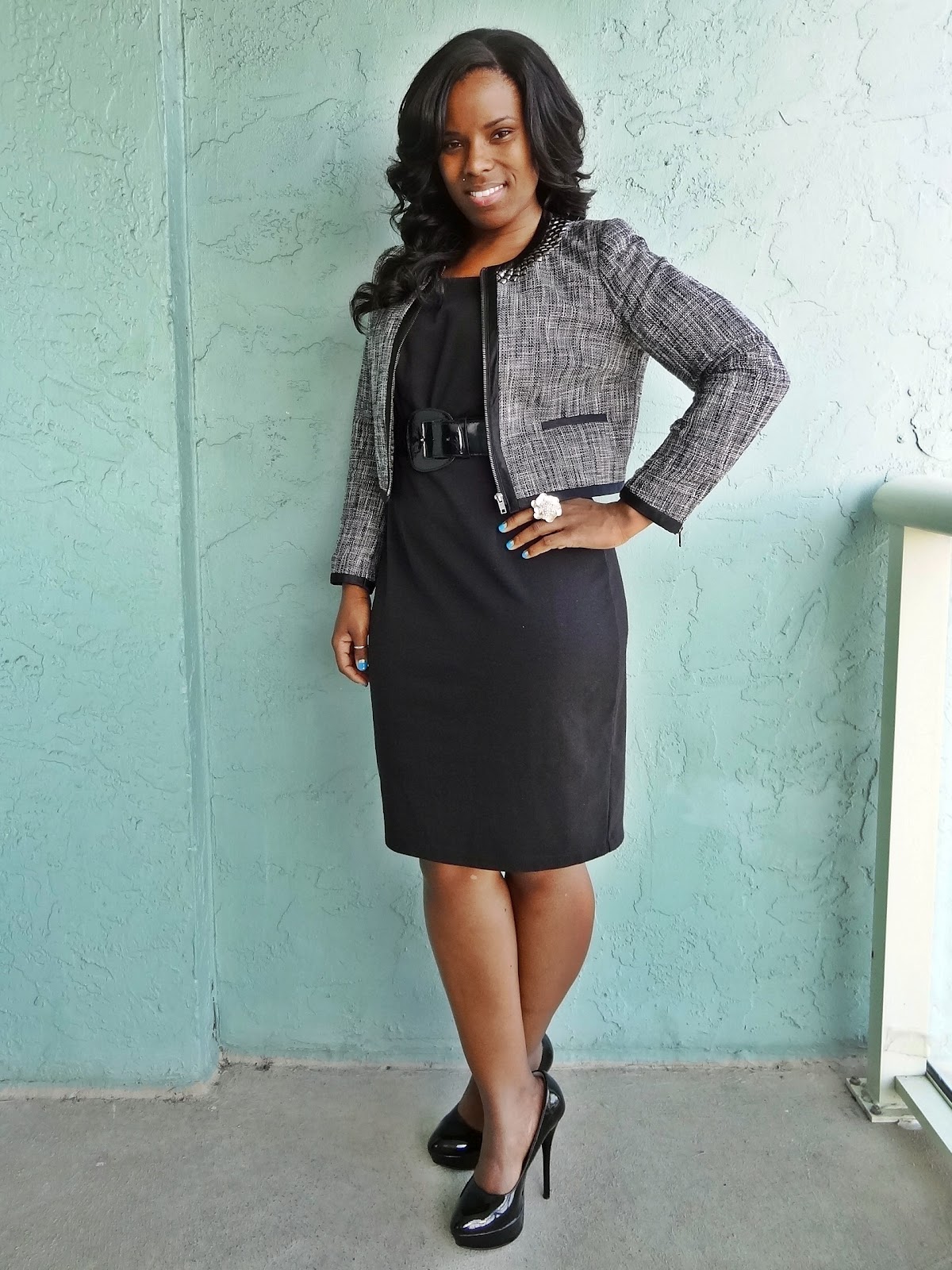
In corporate or conservative offices, structure is your friend. Pair your dress with:
- A tailored blazer
- Closed-toe pumps or loafers
- Minimal jewelry
In creative or relaxed workplaces, you can soften the look. Try:
- Cardigans or cropped jackets
- Ankle boots or ballet flats
- Thoughtful accessories like statement necklaces
For hybrid or remote workers, focus on the upper half. On video calls, a well-fitted dress with a clean neckline instantly elevates your presence. Add a simple necklace or structured layer to frame your face.
Seasonal adjustments matter too. In warmer months, choose lighter fabrics and breathable cuts. In cooler seasons, layer with tights, boots, and heavier knits.
The key is intentionality. Business casual doesn’t mean random—it means relaxed professionalism. When your styling supports that idea, the outfit always feels right.


Tools, Shopping Strategies, and Smart Recommendations
Building a strong collection of business casual dresses doesn’t require endless shopping, but it does benefit from smart strategies.
Start with quality over quantity. A few well-made dresses will outperform a closet full of fast-fashion pieces that lose shape after two washes. Pay attention to stitching, lining, and fabric weight.
Shopping online can be efficient if you:
- Read reviews carefully
- Check fabric composition
- Understand the brand’s sizing
In-store shopping allows you to test fit and comfort immediately. If possible, try on dresses at the end of the day when your body is more relaxed—it’s a more realistic fit test.
Tailoring is an underrated tool. A simple hem adjustment or waist nip can transform a good dress into a great one. Think of tailoring as an investment, not an extra cost.
As for free vs paid options, affordable brands can absolutely work if you’re selective. Higher-priced dresses often last longer and fit better, but smart budget choices are possible with careful inspection.
The most valuable recommendation is this: track what you actually wear. If a dress stays in your closet untouched, analyze why. Comfort? Fit? Confidence? Let that feedback guide future purchases.
Common Business Casual Dress Mistakes and How to Fix Them
Even experienced professionals make mistakes with business casual dresses. The good news is that most are easy to fix once you notice them.
One common issue is confusing casual with business casual. Dresses that are too short, too sheer, or too tight may look great socially but undermine professionalism at work. The fix is simple: add structure or choose a more refined silhouette.
Another mistake is ignoring fabric quality. Thin, clingy fabrics show wear quickly and don’t hold shape. Opt for medium-weight materials that move with you but maintain form.
Over-accessorizing is another trap. Too many bold pieces can overwhelm an otherwise polished dress. If your dress has a pattern, keep accessories minimal. If the dress is simple, let one accessory shine.
Poor fit is perhaps the biggest problem. If you’re constantly adjusting your dress, it’s distracting for you and noticeable to others. Tailoring or sizing up and adjusting can solve this instantly.
Finally, neglecting shoes can ruin the look. Even the best business casual dress looks off with worn-out or overly casual footwear. Keep at least one reliable, comfortable pair of work-appropriate shoes in rotation.
Mistakes happen. What matters is learning from them and refining your approach.
Conclusion
Business casual dresses are more than a dress code solution—they’re a daily confidence tool. When chosen and styled well, they remove friction from your mornings, support your professional image, and allow your focus to stay where it belongs: on your work.
The key takeaway is balance. Structure with comfort. Style with restraint. Personality with professionalism. Once you understand that balance, shopping and styling become easier, faster, and more intuitive.
If you’re building or refining your work wardrobe, start small. Choose one business casual dress that truly fits your life and your workplace. Wear it, observe how you feel, and build from there.
And if you have a favorite style, fabric, or go-to dress that never fails you, share it. Fashion wisdom is always better when it’s shared.
FAQs
What qualifies as a business casual dress
A business casual dress is professional, modest, and polished without being overly formal. It typically features structured or semi-structured design, appropriate length, and office-friendly fabric.
Can sleeveless dresses be business casual
Yes, especially when paired with a blazer or cardigan. The key is a modest neckline and professional fit.
Are patterns acceptable in business casual dresses
Absolutely. Subtle florals, stripes, or geometric prints work well when balanced with clean silhouettes.
How long should a business casual dress be
Knee-length or just above or below the knee is generally safest, though midi lengths also work in many offices.
Can I wear business casual dresses in winter
Yes. Pair them with tights, boots, and warm layers like blazers or sweaters to stay professional and comfortable.

Michael Grant is a business writer with professional experience in small-business consulting and online entrepreneurship. Over the past decade, he has helped brands improve their digital strategy, customer engagement, and revenue planning. Michael simplifies business concepts and gives readers practical insights they can use immediately.