
Introduction
If you run or market a property management business, you already know the uncomfortable truth: good property management advertising is no longer optional. The days when a simple “For Rent” sign and a few referrals could keep your portfolio full are gone. Today, owners compare managers online. Tenants search on their phones. Competitors are bidding on your brand name in Google Ads while you’re still relying on word of mouth.
Property management advertising sits at the crossroads of trust, visibility, and conversion. You’re not just selling a service—you’re asking owners to hand over assets worth hundreds of thousands (sometimes millions) of dollars. That’s a high-stakes decision, and your advertising has to earn that trust before the first call ever happens.
In this guide, we’ll walk through property management advertising from the ground up. You’ll learn what it really is, why it works when done right, and how to build campaigns that attract better owners and tenants—not just more leads, but better ones. We’ll cover practical strategies, real-world examples, tools professionals actually use, common mistakes that drain budgets, and how to fix them. Whether you manage 50 doors or 5,000, this guide is designed to help you grow with confidence.
Understanding Property Management Advertising (Without the Jargon)
Property management advertising is the strategic promotion of your management services and available rentals to the right audience, at the right time, using the right channels. That sounds simple—but in practice, it’s nuanced.
Think of it like matchmaking. Owners want reliability, compliance, and steady income. Tenants want safety, convenience, and fair pricing. Your advertising needs to speak clearly to both groups without confusing or alienating either one.
At its core, property management advertising includes:
- Promoting your services to property owners (B2B-style marketing)
- Advertising rental listings to prospective tenants (B2C-style marketing)
- Building brand authority so both groups trust you
- Generating qualified leads, not tire-kickers
Unlike traditional real estate advertising, property management advertising is ongoing. You’re not selling one house—you’re selling long-term peace of mind. That’s why storytelling, proof, and education matter more here than flashy slogans.
For example, a Facebook ad saying “We Manage Properties” rarely works. But an ad that says “How One Local Landlord Cut Vacancy by 32% in 6 Months” speaks directly to an owner’s pain point. Good advertising meets people where they are emotionally, not just where they are geographically.
Why Property Management Advertising Matters More Than Ever
The property management market has become crowded and increasingly professionalized. New firms pop up every year, franchise brands expand aggressively, and DIY landlords are constantly being targeted by software platforms promising “hands-free management.”
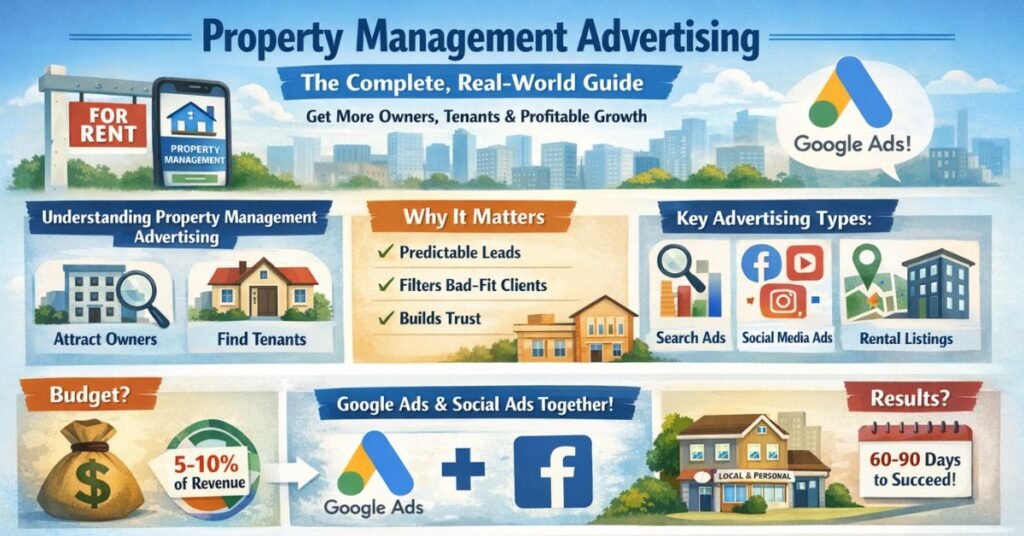
Effective property management advertising helps you stand out in three critical ways.
First, it creates predictable lead flow. Referrals are wonderful, but they’re inconsistent. Advertising gives you control. You decide when to scale, when to slow down, and which services to promote.
Second, it filters your audience. Clear messaging repels bad-fit clients before they ever contact you. If your ads emphasize compliance, long-term strategy, and professional systems, you naturally attract serious owners instead of price shoppers.
Third, it builds trust before the sales call. When owners see your ads, website, reviews, and content aligned, they feel like they already know you. That shortens sales cycles and increases close rates dramatically.
Real-world example: A mid-sized property manager running educational Google Ads (“Landlord Compliance Checklist for 2026”) saw fewer leads—but conversions doubled. The ads pre-qualified owners who valued expertise over price.
Who Property Management Advertising Is For (And When It Makes Sense)
Property management advertising is not one-size-fits-all. It works best when aligned with your growth stage and goals.
It’s ideal for:
- Independent property managers looking to grow beyond referrals
- Established firms entering new markets or property types
- Managers specializing in residential, multifamily, or short-term rentals
- Companies launching premium or full-service management tiers
It may be premature if:
- You lack basic systems (onboarding, leasing, maintenance workflows)
- Your website doesn’t convert or explain your value clearly
- You can’t yet handle additional doors operationally
Advertising amplifies what already exists. If your service is solid, advertising accelerates growth. If your service is broken, advertising accelerates complaints.
The Core Types of Property Management Advertising (Explained Simply)


4
Search Advertising (High Intent, High ROI)
Search ads appear when someone actively looks for solutions. Platforms like Google Ads allow you to target keywords such as “property management company near me” or “manage my rental property.”
These leads are expensive—but highly motivated. Owners searching these terms are often ready to talk.
Social Media Advertising (Awareness + Education)
Platforms like Facebook and Instagram excel at storytelling. Social ads work well for:
- Educational content
- Case studies
- Retargeting website visitors
- Brand-building in competitive markets
Social ads rarely close on first touch—but they warm the audience.
Local SEO and Map Listings (Long-Term Asset)
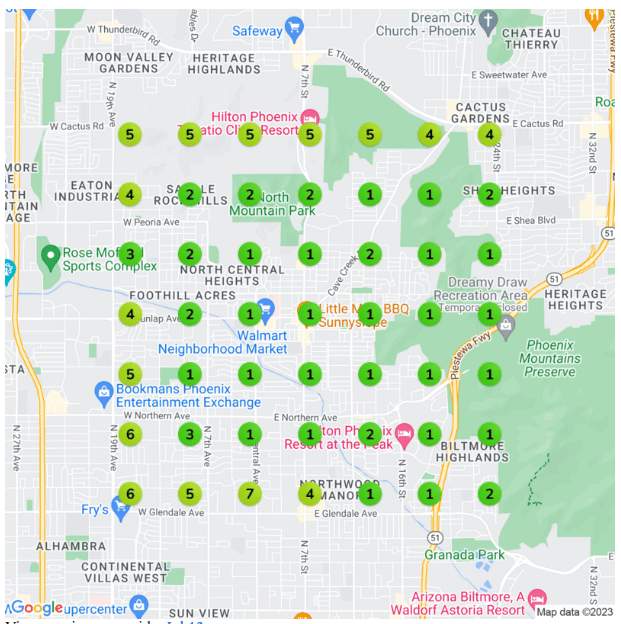
Optimizing your Google Business Profile and local pages helps you appear in map results. This isn’t “ads” in the paid sense, but it’s foundational to any advertising strategy because ads perform better when backed by strong organic presence.
Rental Listing Advertising
Advertising vacancies on platforms like Zillow or Apartments.com attracts tenants. Faster leasing improves owner satisfaction and retention—an indirect but powerful form of advertising.
Step-by-Step: Building a Property Management Advertising System That Works
Step 1: Define Your Ideal Client Clearly
Before spending a dollar, clarify who you want. Single-family landlords? Multifamily investors? Out-of-state owners? Each group responds to different messaging.
Write a simple profile:
- Property type
- Portfolio size
- Primary pain points
- Budget sensitivity
- Decision timeline
Clarity here saves thousands later.
Step 2: Craft One Core Message Per Audience
Avoid trying to say everything at once. One ad, one promise.
For owners:
- Reduce vacancies
- Protect asset value
- Ensure legal compliance
- Increase net returns
For tenants:
- Easy applications
- Responsive maintenance
- Transparent policies
Each campaign should speak to only one group.
Step 3: Build a Conversion-Ready Landing Page
Sending ad traffic to your homepage is a common mistake. Create focused landing pages with:
- A clear headline
- One primary CTA
- Social proof (reviews, stats, logos)
- Simple forms
Remove distractions. One goal per page.
Step 4: Launch, Track, and Optimize
Advertising is not “set and forget.” Monitor:
- Cost per lead
- Lead quality
- Close rates
- Cost per acquisition
Kill what doesn’t work. Double down on what does.
Tools, Platforms, and Software Worth Using
Advertising Platforms
- Google Ads – Best for high-intent owner leads
- Facebook Ads – Best for education and retargeting
Property Management Software (Indirect Advertising Impact)
- Buildium – Strong reporting and owner portals
- AppFolio – Premium UX, great for branding
Good software improves reviews, which improves ad performance.
Free vs Paid Tools
Free tools are fine to start. Paid tools save time and scale better. The key is integration—your CRM, ads, and website should talk to each other.
Common Property Management Advertising Mistakes (And How to Fix Them)
One of the biggest mistakes is chasing cheap leads instead of qualified ones. Low-cost clicks often come from owners who don’t value professional management.
Another mistake is generic messaging. “Full-service property management” means nothing without proof.
Finally, many managers stop campaigns too early. Advertising needs data. Give campaigns time to optimize before judging results.
Fixes include:
- Raising qualification standards
- Using education-based ads
- Tracking real conversions, not just clicks
Measuring Success the Right Way
Good property management advertising is measured beyond lead volume.
Track:
- Lead-to-client conversion rate
- Average revenue per client
- Retention rate
- Lifetime value
A campaign bringing five great owners beats one bringing fifty bad ones.
Conclusion: Turning Property Management Advertising into a Growth Engine
Property management advertising isn’t about tricks or hacks. It’s about clarity, consistency, and credibility. When your message reflects real expertise and your systems back it up, advertising becomes a predictable growth engine instead of a gamble.
Start small. Test intentionally. Learn continuously. Over time, your advertising won’t just bring leads—it will shape the reputation of your business in your market.
If you’re serious about growth, property management advertising is one of the highest-leverage investments you can make.
FAQs
What is property management advertising?
It’s the strategic promotion of property management services and rental listings to attract owners and tenants through digital and traditional channels.
How much should I budget for property management advertising?
Most firms start with 5–10% of projected monthly management revenue and adjust based on ROI.
Which platform works best?
Google Ads for intent-driven leads, social ads for awareness and education. The best results come from using both together.
Can small property managers compete with big brands?
Yes—by focusing on local expertise, niche services, and personalized messaging.
How long does it take to see results?
Paid ads can generate leads within days. Sustainable results usually stabilize within 60–90 days.

Michael Grant is a business writer with professional experience in small-business consulting and online entrepreneurship. Over the past decade, he has helped brands improve their digital strategy, customer engagement, and revenue planning. Michael simplifies business concepts and gives readers practical insights they can use immediately.