
Introduction
If the last name Schlossberg rings a bell, you’re not imagining things. It carries with it echoes of American political history, public service, and cultural influence. But tatiana schlossberg is far more than a recognizable surname. She represents a new generation of thinkers—people who inherit legacy but choose purpose. In an era where climate anxiety is real, media trust is fragile, and public figures are scrutinized more than ever, Tatiana Schlossberg stands out for doing something quietly radical: working thoughtfully, deliberately, and without spectacle.
This article matters because it looks beyond headlines and family trees. It explores who Tatiana Schlossberg really is, what she contributes, and why her approach to environmental storytelling feels especially relevant today. Whether you’re interested in climate journalism, public intellectuals, modern American legacy families, or simply how thoughtful communication can influence change, this guide will give you a clear, grounded understanding of her work and impact.
By the end, you’ll understand her background, her professional journey, the practical lessons her career offers, and how her work fits into the broader conversation around climate, media, and responsibility.
Who Is Tatiana Schlossberg? A Clear, Human-Friendly Explanation
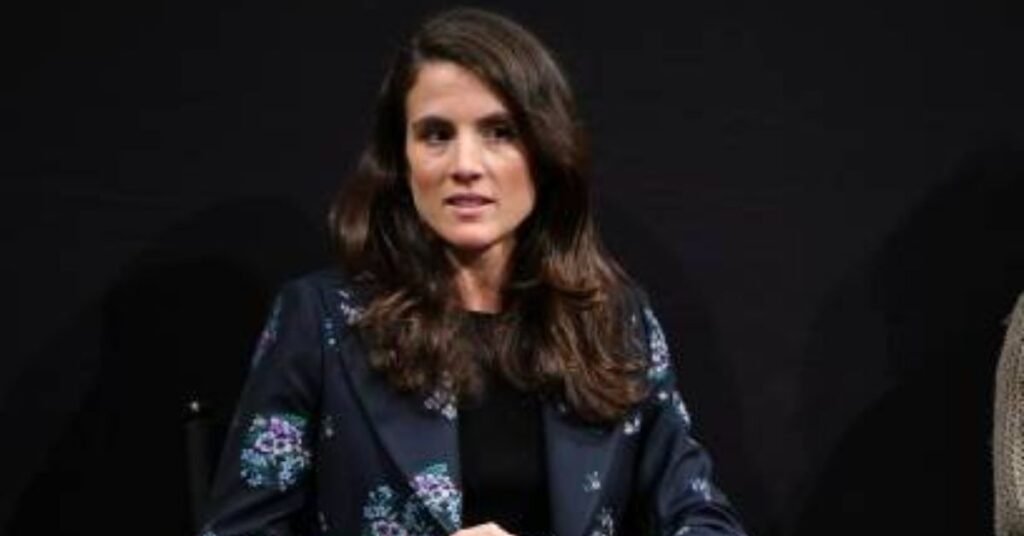
Tatiana Schlossberg is an American journalist and author known primarily for her work on environmental and climate-related issues. She is also widely recognized as the daughter of Caroline Kennedy and the granddaughter of President John F. Kennedy. However, reducing her identity to lineage misses the point—and frankly, so does she.
Think of Tatiana Schlossberg as someone who grew up surrounded by history but chose to focus on the future. Instead of politics or public office, she gravitated toward journalism, research, and long-form storytelling. Her work reflects patience, nuance, and depth—qualities that are increasingly rare in a fast-click media economy.
She studied history and environmental studies, which explains her ability to connect past decisions with present consequences. Rather than framing climate change as abstract doom, she often examines everyday behaviors, systems, and incentives. Her tone is analytical but accessible, informed without being preachy.
In simple terms, Tatiana Schlossberg translates complex environmental realities into narratives people can actually absorb. She doesn’t shout. She explains. And that’s precisely why her voice matters.
Why Tatiana Schlossberg’s Work Matters Today
Climate change is no longer a distant concept—it’s a lived experience. From extreme weather to rising costs of living, the effects are showing up everywhere. What’s missing for many people isn’t information, but clarity and trust. This is where Tatiana Schlossberg’s work becomes especially valuable.
She approaches environmental journalism with restraint and rigor. Instead of sensational headlines, she focuses on systems: consumer habits, policy incentives, energy use, and cultural blind spots. Her writing encourages readers to think critically about their role in the climate equation without triggering defensiveness or guilt fatigue.
Her relevance today stems from three key factors:
• She bridges academic research and public understanding
• She focuses on behavior, not just policy
• She communicates with empathy rather than alarmism
In a media landscape often polarized between denial and panic, her balanced approach offers a third path—one grounded in evidence and realism. For readers overwhelmed by climate discourse, her work feels like a calm, credible guide through a complicated topic.
Benefits and Real-World Use Cases of Following Tatiana Schlossberg’s Approach
Studying tatiana schlossberg isn’t just about knowing a public figure—it’s about learning a method. Her work offers practical benefits for several types of readers.
For journalists and writers, her approach is a masterclass in responsible storytelling. She demonstrates how to handle complex, emotionally charged topics without oversimplification or moral grandstanding.
For educators and students, her work provides examples of how interdisciplinary thinking—history plus science plus sociology—creates richer analysis. Climate change isn’t just an environmental issue; it’s cultural, economic, and behavioral.
For everyday readers, her writing offers clarity. Instead of asking, “Is climate change real?” she explores more useful questions: Why do smart societies make unsustainable choices? Why do individuals struggle to act even when they care?
Real-world scenarios where her perspective applies include:
• Designing climate education programs
• Writing long-form investigative content
• Developing sustainability communication strategies
• Understanding environmental responsibility at a personal level
Her work is especially useful for people who want to engage with climate issues thoughtfully, without falling into performative activism or disengaged apathy.
A Step-by-Step Breakdown of Tatiana Schlossberg’s Writing and Research Process
While Tatiana Schlossberg doesn’t publish a literal “how-to” manual, her body of work reveals a clear process that others can learn from. Think of it as a framework rather than a formula.
The first step is deep research. She grounds her work in data, peer-reviewed studies, and historical context. This creates credibility and prevents oversimplified conclusions.
Next comes human framing. Instead of leading with statistics, she often begins with behavior—how people live, consume, commute, and decide. This makes abstract problems relatable.
Then comes systems thinking. Rather than blaming individuals alone, she examines incentives, infrastructure, and policy gaps. This prevents the common trap of moralizing complex issues.
Finally, she invites reflection instead of prescribing rigid solutions. Her writing encourages readers to think, not just agree.
Best practices inspired by her method include:
• Start with questions, not conclusions
• Use history to explain present behavior
• Avoid false binaries (good vs. bad actors)
• Let evidence guide tone, not emotion
This step-by-step approach is especially valuable for anyone creating content on sensitive, high-stakes topics.
Tools, Comparisons, and Resources That Align With Her Work
Tatiana Schlossberg’s work aligns closely with high-quality research and journalism tools. While she doesn’t endorse products publicly, her methodology suggests certain standards.
For research, peer-reviewed journals and government data sources are essential. These include climate assessments, historical archives, and academic publications.
For writing and analysis, long-form platforms and editorial environments that value depth over speed are key. This contrasts sharply with social media-driven content mills.
Free vs. paid tools comparison in this context looks like:
Free resources offer accessibility but require strong critical evaluation skills. Paid academic databases provide depth but demand time and training.
Pros of her approach:
• High credibility
• Long-term relevance
• Trust-building with readers
Cons:
• Slower publishing pace
• Less viral visibility
Alternatives include advocacy-driven writing or opinion-heavy commentary, but these often sacrifice nuance for reach. Schlossberg’s work proves that depth still has a place—and an audience.
Common Misunderstandings About Tatiana Schlossberg and How to Avoid Them
One frequent mistake is assuming her influence comes primarily from her family name. While her background provides visibility, it does not explain the quality or substance of her work. Dismissing her as “just a Kennedy descendant” overlooks her education, research discipline, and journalistic credibility.
Another misunderstanding is expecting her to be an activist in the traditional sense. She is not a protest figure or a political spokesperson. Her role is analytical, not performative.
A third error is reading her work as prescriptive rather than exploratory. She is more interested in helping readers understand systems than telling them exactly what to do.
To avoid these mistakes:
• Evaluate her work on its own merit
• Read full pieces, not summaries
• Distinguish explanation from advocacy
Understanding these nuances allows readers to engage with her ideas more productively.
Tatiana Schlossberg’s Place in the Broader Climate and Media Landscape
Tatiana Schlossberg occupies a unique space. She sits between academia and mainstream media, between legacy and innovation. Unlike influencers or pundits, she does not chase attention. Her influence grows slowly, through trust and consistency.
In the broader landscape, she represents a model of credibility that many institutions are trying to reclaim. Her work shows that audiences still value careful thinking, especially when the topic affects everyone.
She also demonstrates how public figures can contribute meaningfully without dominating the conversation. In an age of personal branding, her restraint is itself a statement.
Conclusion: Why Tatiana Schlossberg’s Approach Is Worth Studying
Tatiana Schlossberg offers something rare: a calm, credible voice in a noisy world. Her work reminds us that understanding precedes action, and that thoughtful communication can shape how societies respond to complex challenges.
Whether you’re a writer, educator, student, or simply someone trying to make sense of climate conversations, her approach provides a roadmap grounded in research, empathy, and realism.
If there’s one takeaway, it’s this: lasting impact doesn’t always come from loud voices. Sometimes, it comes from those willing to explain patiently, question deeply, and trust readers to think.
FAQs
Who is Tatiana Schlossberg best known for being?
Tatiana Schlossberg is best known as an environmental journalist and author focusing on climate and sustainability issues.
Yes, she is the daughter of Caroline Kennedy and the granddaughter of President John F. Kennedy.
What topics does Tatiana Schlossberg write about?
She primarily writes about climate change, environmental behavior, sustainability, and systems-driven analysis.
Is Tatiana Schlossberg an activist?
She is more accurately described as a journalist and analyst rather than a traditional activist.
Why is Tatiana Schlossberg’s work respected?
Her work is respected for its depth, evidence-based approach, and balanced tone.

Michael Grant is a business writer with professional experience in small-business consulting and online entrepreneurship. Over the past decade, he has helped brands improve their digital strategy, customer engagement, and revenue planning. Michael simplifies business concepts and gives readers practical insights they can use immediately.