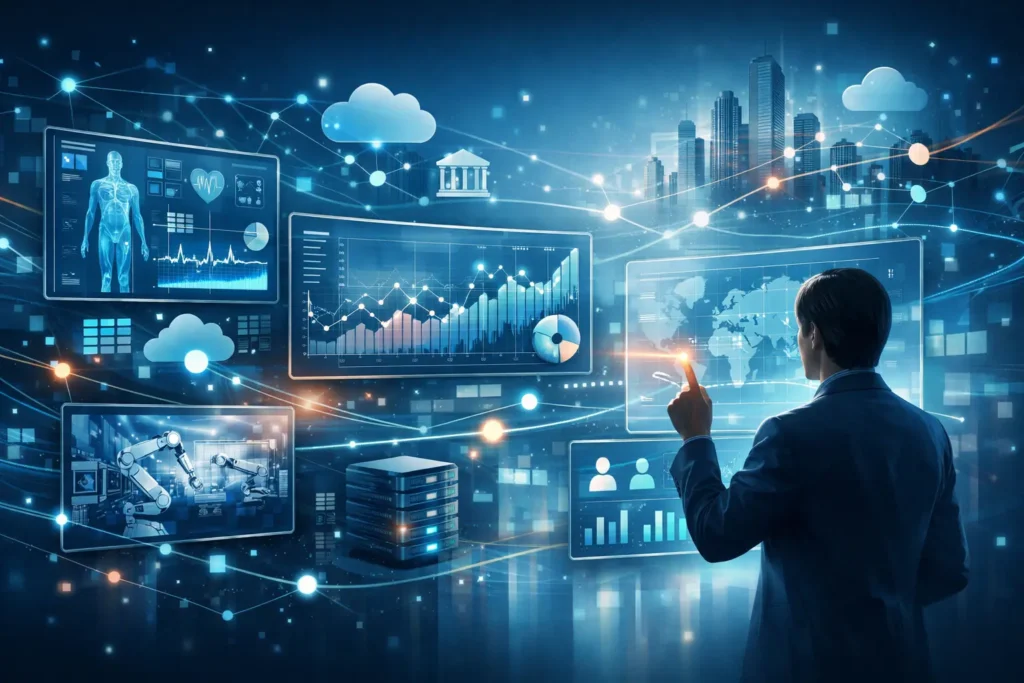
If you’ve ever wondered why some organizations seem to know what’s coming next—while others are constantly reacting—you’re already circling the core value of informatic technology. We’re living in a moment where data is everywhere, but clarity is rare. Companies collect oceans of information, hospitals generate millions of patient records, governments log endless transactions, and yet the real challenge remains the same: turning raw data into decisions that actually improve outcomes.
That’s where informatic technology quietly does its most important work.
This article is for professionals who feel overwhelmed by buzzwords like “digital transformation,” students trying to understand where IT meets data science, decision-makers tired of expensive systems that don’t deliver insights, and business owners who know they’re sitting on valuable data but don’t know how to unlock it. If you’ve ever asked “We have the data… so why aren’t we smarter yet?”—you’re in the right place.
What you’ll get here is not recycled theory or surface-level definitions. This is a practical, experience-driven breakdown of how informatic technology works in the real world: how it’s applied, where it delivers the most value, where it fails, and how to use it intelligently without burning budget or credibility. By the end, you’ll understand not just what informatic technology is, but why it works, who benefits, and how to implement it with confidence.
What Informatic Technology Really Is (And What It Isn’t)
At its core, informatic technology sits at the intersection of information, systems, and decision-making. It’s not just IT infrastructure, and it’s not just data analytics. Think of it as the connective tissue that turns data into usable knowledge—then embeds that knowledge into workflows where people can actually act on it.
A simple analogy helps. Traditional IT is like building roads. Data science is like studying traffic patterns. Informatic technology is the traffic control system that uses real-time data to decide where to add lanes, when to redirect flow, and how to prevent accidents before they happen. It’s applied intelligence, not abstract analysis.
Many people confuse informatic technology with general information technology. The difference is intent. Standard IT focuses on operating systems: servers, networks, databases, uptime. Informatics focuses on outcomes: better decisions, fewer errors, faster responses, and measurable improvements in performance.
This is why informatic technology shows up so strongly in environments where mistakes are expensive—healthcare, finance, logistics, cybersecurity, research, and large-scale enterprises. These fields don’t just need data stored; they need data interpreted, contextualized, and delivered at the right moment to the right person.
Importantly, informatic technology is human-centered by design. A dashboard that no one trusts is a failure. An algorithm that produces insight but doesn’t fit real workflows is wasted. True informatic systems respect human behavior, cognitive load, and organizational realities. That’s why the best implementations feel almost invisible—decisions simply get easier.
How Informatic Technology Works: From Raw Data to Real Decisions
To understand informatic technology in action, it helps to follow the journey of data as it becomes insight. This process is rarely linear, but it consistently follows a few core stages.
First comes data acquisition. This includes structured data like databases and spreadsheets, and unstructured data like notes, images, logs, and sensor readings. Informatic systems are designed to handle both, because real-world information is messy by nature.
Next is normalization and integration. This is where most projects stumble. Data lives in silos, formats don’t match, definitions conflict. Informatics applies rules, standards, and mappings so that “customer,” “patient,” or “transaction” means the same thing across systems. Without this step, analytics becomes guesswork.
Then comes interpretation. This is where algorithms, statistical models, and logic rules transform data into patterns and signals. But here’s the key distinction: informatic technology doesn’t stop at analysis. It embeds interpretation into context—what decision is being made, by whom, and under what constraints.
Finally, insight delivery happens through interfaces, alerts, workflows, and automation. The output might be a recommendation, a risk score, a prioritized task list, or a real-time warning. The best systems don’t overwhelm users; they guide them.
What separates strong informatic technology from failed implementations is feedback. Decisions generate new data. Outcomes are measured. Models are refined. Over time, the system gets smarter—not because it’s “AI-powered,” but because it’s grounded in real operational learning.
The Real Benefits of Informatic Technology (Beyond the Hype)
The true value of informatic technology becomes obvious when you compare before-and-after states. Before informatics, organizations often rely on intuition, delayed reports, and fragmented views of reality. After informatics, decisions are faster, more consistent, and defensible.
One of the biggest benefits is decision confidence. When leaders can trace recommendations back to data sources and logic, debates shift from opinions to evidence. This doesn’t eliminate judgment—it strengthens it.
Efficiency gains are another major win. Informatics reduces manual work by automating data preparation, validation, and analysis. Teams stop spending time arguing about numbers and start acting on them.
Risk reduction is equally important. In healthcare, informatic technology can flag adverse drug interactions. In finance, it can detect fraud patterns early. In manufacturing, it predicts equipment failure before downtime occurs. These are not theoretical benefits; they translate directly into saved lives, money, and reputation.
There’s also a cultural impact that’s often overlooked. Organizations that invest in informatic technology tend to develop a shared language around data. People trust systems more. Collaboration improves. Decisions feel less political and more purposeful.
Real-World Use Cases Across Industries
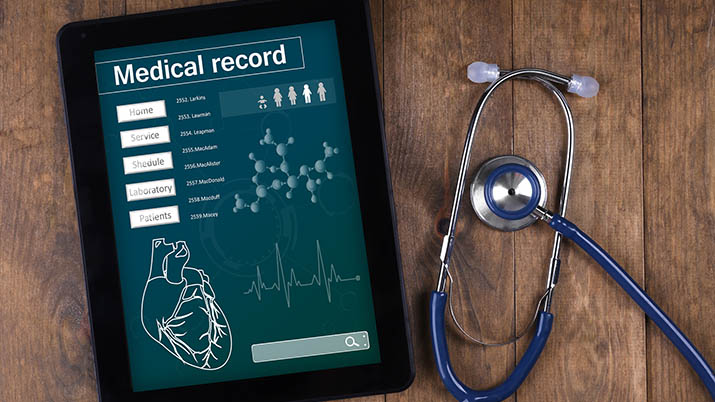
In healthcare, informatic technology supports clinical decision-making by integrating patient records, lab results, and treatment guidelines. Doctors don’t have time to dig through charts; informatics surfaces what matters now.
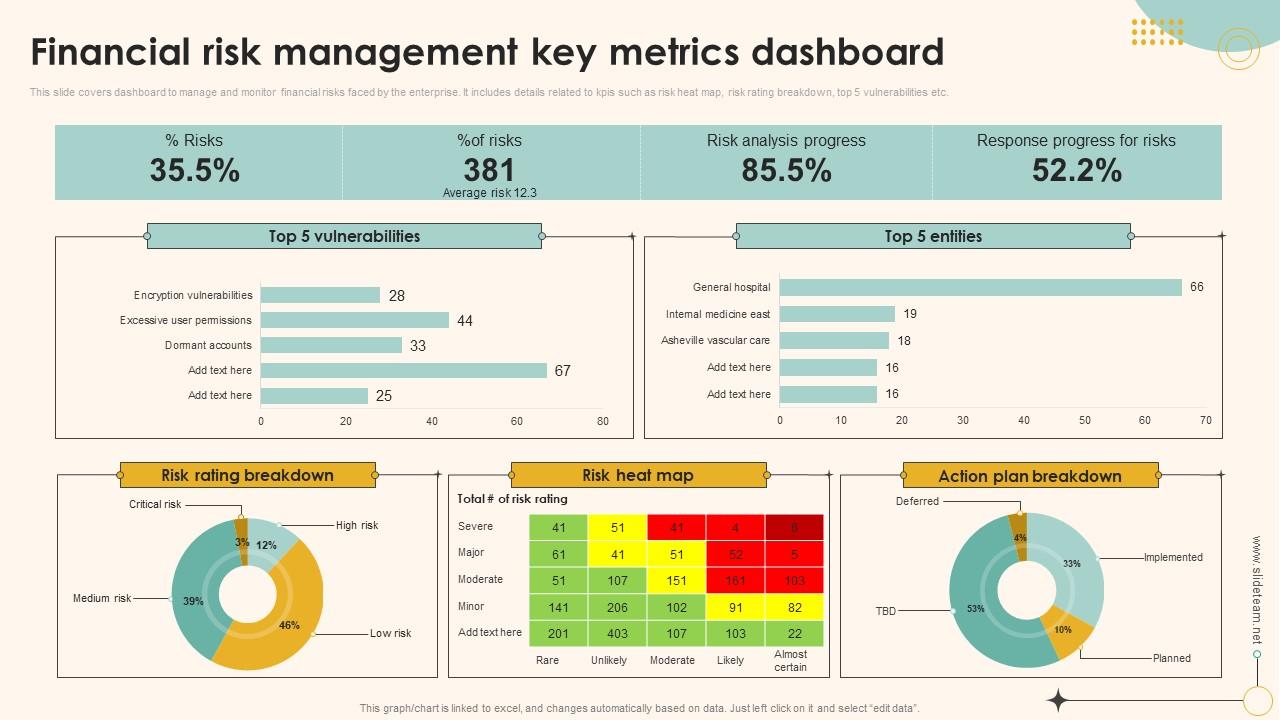
In finance, informatics powers real-time risk assessment, compliance monitoring, and personalized customer insights. Banks and fintech firms use it to balance growth with regulatory demands.
Manufacturing relies on informatic technology for predictive maintenance and supply chain optimization. Sensors generate data continuously, but informatics turns that data into maintenance schedules and inventory decisions.
Retail uses informatics to understand customer behavior across channels. It’s not just about recommendations; it’s about pricing, inventory placement, and demand forecasting.
Even in education and public policy, informatic technology helps institutions measure outcomes, allocate resources, and design interventions based on evidence rather than assumptions.
A Practical Step-by-Step Guide to Implementing Informatic Technology
Successful informatic technology projects don’t start with tools—they start with questions. What decision is broken? Where does uncertainty hurt most? Clear problem framing prevents expensive overengineering.
Next, audit your data reality. Identify sources, owners, quality issues, and gaps. This step is uncomfortable but essential. Informatics amplifies truth; if the data is weak, the insight will be too.
Then design with users, not just stakeholders. Spend time understanding how decisions are actually made. Shadow workflows. Watch where friction appears. This human insight often matters more than technical elegance.
Choose tools that fit maturity level. Overpowered platforms can overwhelm teams. Lightweight solutions often outperform complex systems when adoption matters.
Finally, measure impact relentlessly. Define success metrics upfront—time saved, errors reduced, revenue improved. Informatic technology earns trust when it proves value repeatedly.
Tools, Platforms, and Expert Recommendations
Most informatic technology stacks combine several layers. Data storage and integration tools handle ingestion. Analytics platforms perform modeling. Visualization and workflow tools deliver insight.
Free and open-source tools work well for experimentation and learning. Enterprise platforms offer scalability, governance, and support. The right choice depends on context, not hype.
From experience, the best systems are modular. They allow components to evolve without breaking everything else. Avoid vendor lock-in where possible, and prioritize transparency over black-box solutions.
Common Mistakes (And How to Avoid Them)
The most common mistake is treating informatic technology as a one-time project. Informatics is a capability, not a deliverable. It requires ongoing refinement.
Another pitfall is ignoring data governance. Without clear ownership and standards, systems degrade quickly.
Many teams also underestimate change management. People don’t resist technology—they resist disruption without explanation. Training and communication matter.
Finally, beware of chasing AI for its own sake. Sophisticated models won’t fix unclear questions or broken processes. Start simple, then evolve.
Conclusion: Turning Information Into Advantage
Informatic technology is not about collecting more data—it’s about using what you already have more intelligently. When done right, it transforms uncertainty into clarity and complexity into confidence.
Whether you’re leading a digital transformation, building a data-driven product, or simply trying to make better decisions faster, informatic technology offers a practical path forward. Start with real problems, respect human workflows, and measure what matters. The results compound over time.
FAQs
What is informatic technology in simple terms?
It’s the use of systems and methods that turn data into actionable knowledge embedded in real decision-making.
Is informatic technology the same as data science?
No. Data science focuses on analysis; informatics focuses on applying insights within workflows.
Which industries use informatic technology the most?
Healthcare, finance, manufacturing, retail, logistics, and government all rely heavily on it.
Do small businesses need informatic technology?
Yes—scaled appropriately. Even simple dashboards and alerts can dramatically improve decisions.
How long does implementation take?
Initial value can appear in weeks, but maturity develops over months and years.

Adrian Cole is a technology researcher and AI content specialist with more than seven years of experience studying automation, machine learning models, and digital innovation. He has worked with multiple tech startups as a consultant, helping them adopt smarter tools and build data-driven systems. Adrian writes simple, clear, and practical explanations of complex tech topics so readers can easily understand the future of AI.