
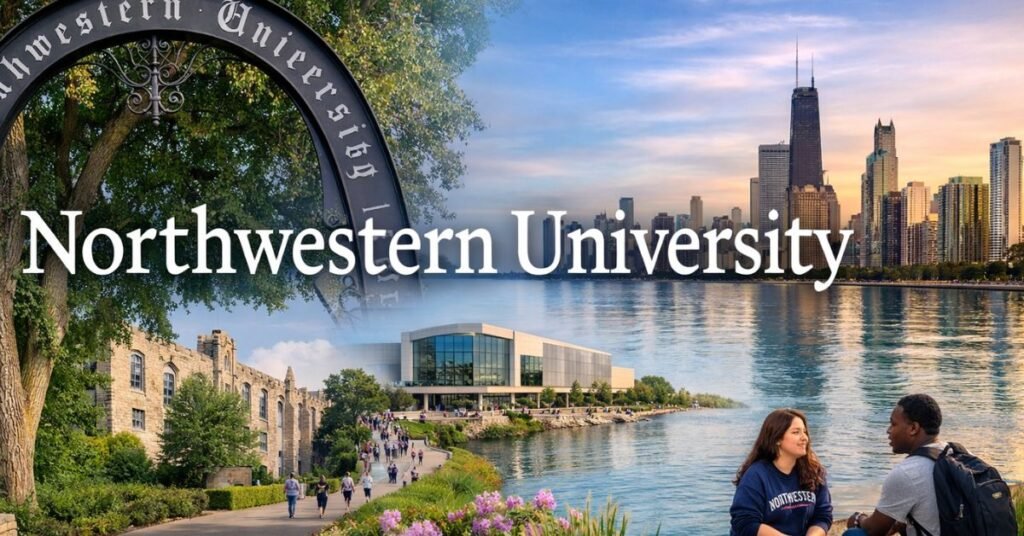
Introduction: Why Northwestern University Keeps Coming Up in Serious Conversations
If you spend enough time researching top U.S. universities, Northwestern University inevitably enters the conversation—and usually with a certain tone of respect. I still remember the first time I walked along the Lakefill on a brisk Evanston morning, watching students move between classes with coffee in hand and purpose in their stride. It didn’t feel like a stereotypical ivory tower. It felt active, demanding, and quietly confident.
That’s exactly why Northwestern University matters today.
In a world where higher education is being questioned—about cost, relevance, and outcomes—Northwestern consistently proves its value through real-world impact, interdisciplinary thinking, and graduates who actually do things. This isn’t just a school with prestige. It’s a place where ideas are tested, debated, and launched into the world.
In this guide, I’ll break down what Northwestern University really is, how it works, who it’s best for, and how to approach it strategically—whether you’re a student, parent, academic, or simply someone trying to understand why this institution carries so much weight.
You’ll walk away with practical insights, honest pros and cons, and a clear sense of whether Northwestern aligns with your goals.
What Is Northwestern University? A Beginner-Friendly Explanation
At its core, Northwestern University is a private research university founded in 1851 and located primarily in Evanston, Illinois, just north of Chicago. But that definition barely scratches the surface.
Think of Northwestern as a bridge university.
It bridges:
- Theory and practice
- Liberal arts and professional education
- Academic depth and industry relevance
- Midwestern values and global ambition
Unlike schools that force you into rigid academic lanes, Northwestern is intentionally interdisciplinary. An engineering student can minor in theater. A journalism major can dive deep into data science. A medical researcher can collaborate with economists and ethicists on the same project.
How Northwestern University Is Structured
Northwestern operates through several highly respected schools, including:
- Weinberg College of Arts and Sciences
- McCormick School of Engineering
- Kellogg School of Management
- Medill School of Journalism
- Feinberg School of Medicine
- Pritzker School of Law
What’s unique is not just the number of schools—but how easily students move between them.
Why Northwestern Exists (Beyond Degrees)
Northwestern was built on the idea that education should prepare people for leadership and service, not just employment. That philosophy still shows up today in:
- Research tied to real-world problems
- Strong civic engagement
- Emphasis on ethics, communication, and collaboration
In short, Northwestern University exists to produce thinkers who can also execute.
Benefits & Real-World Use Cases of Northwestern University
Northwestern’s value becomes most obvious when you look at outcomes rather than rankings.
Practical Benefits That Actually Matter
Here’s what students and professionals gain from Northwestern University in real life:
- Career acceleration
Employers trust Northwestern grads. Consulting firms, tech companies, media organizations, hospitals, and law firms actively recruit here. - Interdisciplinary advantage
Graduates aren’t boxed in. They can pivot across industries because their education trained them to think broadly. - Access to Chicago
Proximity to one of America’s largest economic hubs means internships, networking, and cultural exposure year-round. - Research credibility
Northwestern’s research output carries real authority, especially in medicine, materials science, economics, and journalism.
Common Use Cases
Northwestern University is especially valuable for:
- Students aiming for competitive graduate programs
- Aspiring consultants, journalists, engineers, doctors, and lawyers
- Entrepreneurs who want strong theory and execution skills
- Researchers seeking cross-disciplinary collaboration
Who Should Think Twice?
Northwestern may not be ideal if:
- You prefer a purely vocational or technical-only education
- You want a massive public-university sports culture
- You struggle in fast-paced, high-expectation environments
This is a demanding place. The rewards are real—but so is the workload.
Step-by-Step Guide: How to Approach Northwestern University Strategically
Over the years, I’ve noticed that people who succeed at Northwestern tend to approach it with intention. Here’s a practical, step-by-step framework.
Step 1: Clarify Your Academic Anchor
Before applying or enrolling, define your anchor discipline:
- Your main major or professional focus
- The problem space you care about most
Northwestern rewards clarity—but allows flexibility later.
Step 2: Identify Cross-Disciplinary Opportunities Early
Look for:
- Dual majors or minors
- Certificate programs
- Research labs open to undergraduates
This is where Northwestern’s real edge lives.
Step 3: Leverage Faculty Access
Unlike some elite institutions, professors at Northwestern are accessible.
- Attend office hours
- Join research projects early
- Ask for mentorship—not favors
This often leads to recommendations, publications, and career doors opening.
Step 4: Use Chicago Intentionally
Don’t treat Chicago as a weekend escape.
- Apply for term-time internships
- Attend industry events
- Build professional relationships before graduation
Step 5: Balance Excellence With Sustainability
Burnout is real here. Successful students:
- Use campus mental health resources
- Manage time aggressively
- Say no strategically
Ambition works best when it’s sustainable.
Tools, Comparisons & Expert Recommendations
Northwestern vs Peer Institutions
Northwestern vs Ivy League
- Less tradition-bound
- More interdisciplinary flexibility
- Stronger professional-school integration
Northwestern vs Big Ten Universities
- Smaller classes
- More faculty access
- Higher per-student research investment
Internal Tools Worth Using
- Career Advancement Office (early and often)
- Alumni mentorship networks
- Research grant programs for undergraduates
- Study abroad programs with academic depth
Free vs Paid Opportunities
Free:
- Research assistantships
- Student organizations with real budgets
- Alumni networking platforms
Paid:
- Specialized certificate programs
- Executive education (especially via Kellogg)
Expert Take:
If you’re already at Northwestern, exhaust free resources first. They’re unusually strong.
Common Mistakes Students Make (and How to Fix Them)
Mistake 1: Overloading Too Early
Why it happens: High-achieving students push too hard.
Fix: Build difficulty gradually. Depth beats overload.
Mistake 2: Ignoring Interdisciplinary Options
Why: Fear of “wasting time.”
Fix: Strategic cross-training often improves career outcomes.
Mistake 3: Waiting Too Long to Network
Why: Academic tunnel vision.
Fix: Start relationship-building in year one.
Mistake 4: Treating Northwestern Like Any Other School
Why: Underestimating its ecosystem.
Fix: Engage intentionally—it multiplies returns.
Conclusion: Is Northwestern University Worth It?
Northwestern University isn’t just a prestigious name—it’s a demanding, opportunity-rich environment designed for people who want to think deeply and act decisively.
Its real power lies in:
- Interdisciplinary freedom
- Strong professional pipelines
- Faculty access
- A culture that values execution
If you’re willing to engage fully, Northwestern gives back more than most universities ever will.
Whether you’re applying, attending, or simply evaluating, one thing is clear: Northwestern University doesn’t just educate—it equips.
If you’re exploring next steps, dig deeper, ask better questions, and don’t underestimate what this institution can unlock.
FAQs About Northwestern University
1. Is Northwestern University an Ivy League school?
No, but it’s often considered academically comparable due to its research output and graduate success.
2. What is Northwestern University best known for?
Journalism, business, law, medicine, engineering, and interdisciplinary research.
3. Is Northwestern University hard to get into?
Yes. Admissions are highly selective, especially for competitive programs.
4. Does Northwestern University offer good financial aid?
Yes. It provides strong need-based aid and limited merit scholarships.
5. How is campus life at Northwestern University?
Intellectually intense but socially active, with strong arts, athletics, and student organizations.
6. Is Northwestern University good for research?
Excellent—especially in medicine, engineering, economics, and media studies.
7. How close is Northwestern University to Chicago?
About 12 miles north, with easy public transit access.
8. Can undergraduates do research at Northwestern University?
Yes, and many do—often starting in their first or second year.

Hannah Price is a digital journalist who covers breaking news, global events, and trending stories with accuracy and speed. She has previously contributed to several online magazines and has built a reputation for verifying facts before publishing. Hannah believes in responsible reporting and aims to present stories in a way that readers can trust.