

A few years ago, “AI” felt like a buzzword reserved for Silicon Valley labs and sci-fi movies. Today, it quietly decides what you watch next, helps doctors spot disease earlier, optimizes delivery routes, writes drafts, and even assists small business owners with customer support. That shift is exactly why AI learning matters right now.
If you’ve ever wondered where to start, what skills actually matter, or whether AI is something you can realistically learn, you’re not alone. I’ve had the same conversations with marketers, developers, teachers, founders, and curious professionals who all ask the same thing: Is AI learning for people like me—or only for hardcore engineers?
The short answer: it’s for anyone willing to learn thoughtfully. The longer answer is what this guide is about.
In this in-depth article, we’ll break down AI learning from the ground up—no hype, no jargon overload. You’ll learn what AI learning really means, how it works in the real world, the benefits and use cases that matter, and a step-by-step roadmap you can actually follow. We’ll also look honestly at tools, costs, mistakes beginners make, and how to avoid wasting time.
Whether you’re a beginner, a professional upskilling, or a content creator trying to stay relevant, this guide is designed to feel like advice from someone who’s been in the trenches—not a textbook.
Understanding AI Learning (What It Really Means in Plain English)
When people hear “AI learning,” they often imagine robots teaching themselves or machines suddenly becoming conscious. In reality, AI learning is far more grounded—and far more practical.
At its core, AI learning is the process of teaching machines to recognize patterns, make predictions, and improve decisions by learning from data. Think of it like training a very fast, very literal intern. You don’t give it intuition—you give it examples. Over time, it learns what usually works and what doesn’t.
A helpful analogy:
Teaching AI is like teaching a child to recognize a cat. You don’t explain biology. You show hundreds of pictures and say, “This is a cat.” Eventually, the child gets it. AI learning works the same way—just at scale.
There are three foundational layers most people encounter:
- Artificial Intelligence (AI): The umbrella term for systems that perform tasks requiring human-like intelligence.
- Machine Learning (ML): A subset of AI where systems learn from data instead of explicit rules.
- Deep Learning: A more advanced subset using neural networks inspired by the human brain.
AI learning doesn’t always mean coding complex algorithms. It can also mean learning:
- How AI systems behave
- How to use AI tools responsibly
- How to integrate AI into real workflows
- How to evaluate outputs critically
This broader definition is why AI learning is now relevant to writers, designers, analysts, business owners, and educators—not just engineers.
Why AI Learning Matters More Than Ever
The most important shift happening right now isn’t that AI is replacing jobs—it’s that people who understand AI are becoming more valuable.
In real workplaces, AI learning translates into leverage. Someone who knows how to prompt an AI tool well, interpret its outputs, and apply them strategically can often outperform someone with deeper domain knowledge but no AI literacy.
Here’s why AI learning has become unavoidable:
First, AI is no longer optional infrastructure. Search engines, social platforms, ad systems, CRMs, logistics software—AI runs underneath almost everything. Not understanding it is like using the internet in 2005 without knowing how email works.
Second, AI lowers the barrier to entry. Tasks that once required teams—data analysis, basic design, content drafts—can now be done faster by individuals who know how to guide AI correctly.
Third, AI learning protects you from blind trust. The more powerful AI becomes, the more dangerous uncritical use is. People who learn AI properly understand its limits, biases, and failure modes.
From an E-E-A-T perspective, this matters because expertise today includes AI literacy. Google, employers, and audiences increasingly reward creators and professionals who can explain, use, and contextualize AI responsibly.
Real-World Benefits and Use Cases of AI Learning
AI learning isn’t about theory—it’s about outcomes. Let’s talk about where it actually pays off.
Career and Professional Growth
Professionals who invest in AI learning often experience:
- Faster workflows
- Better decision-making
- Higher earning potential
- Increased job security
For example, marketers who understand AI can automate testing, analyze audience behavior, and personalize campaigns without relying entirely on developers. Analysts can extract insights from messy datasets faster. Writers can scale research and ideation while maintaining human judgment.
Business and Entrepreneurship
Small businesses are quietly winning with AI. Not because they replace people—but because they remove friction.
AI learning helps founders:
- Predict demand
- Improve customer service
- Optimize pricing
- Automate repetitive tasks
- Compete with larger teams
A solo founder who understands AI can operate like a five-person team.
Education and Learning Acceleration
Students and self-learners use AI as:
- A personalized tutor
- A research assistant
- A practice partner
- A feedback engine
Those who learn how to learn with AI progress faster than those who passively consume content.
Creative and Content Fields
AI learning empowers creators to:
- Brainstorm faster
- Analyze trends
- Improve editing and structure
- Test ideas before investing heavily
The creative edge doesn’t disappear—it shifts toward judgment, taste, and storytelling.
A Step-by-Step Roadmap to Start AI Learning
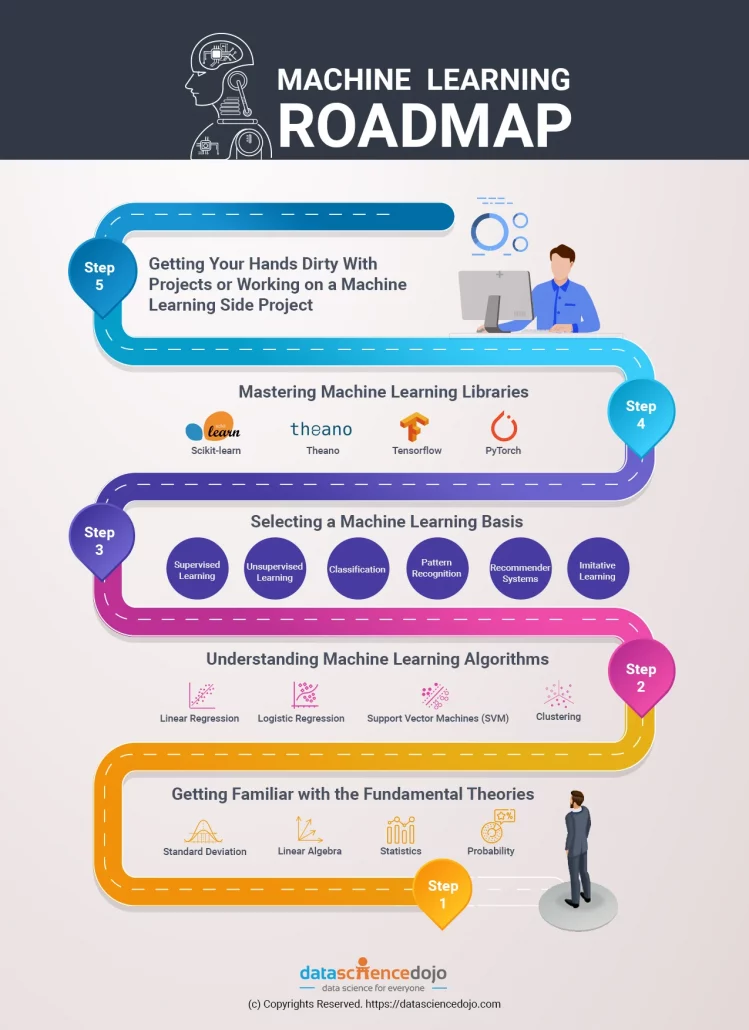
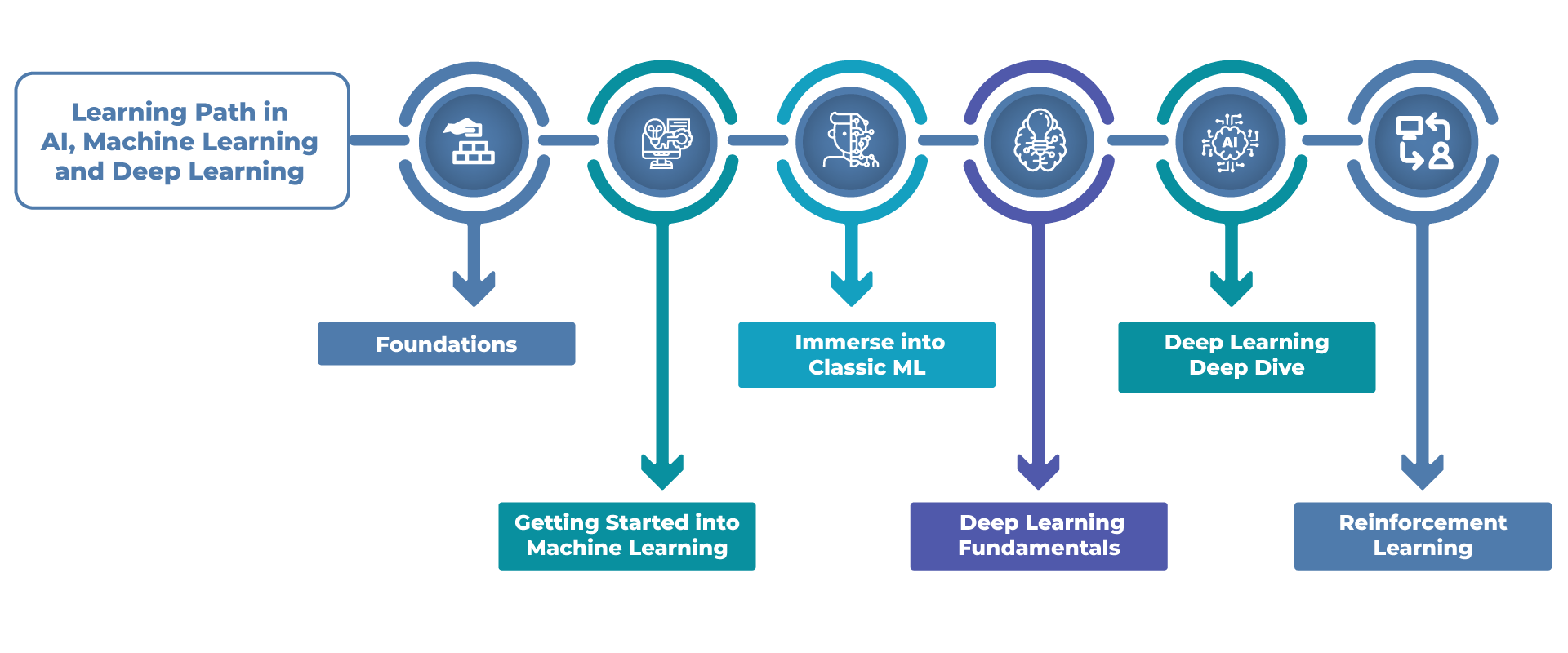
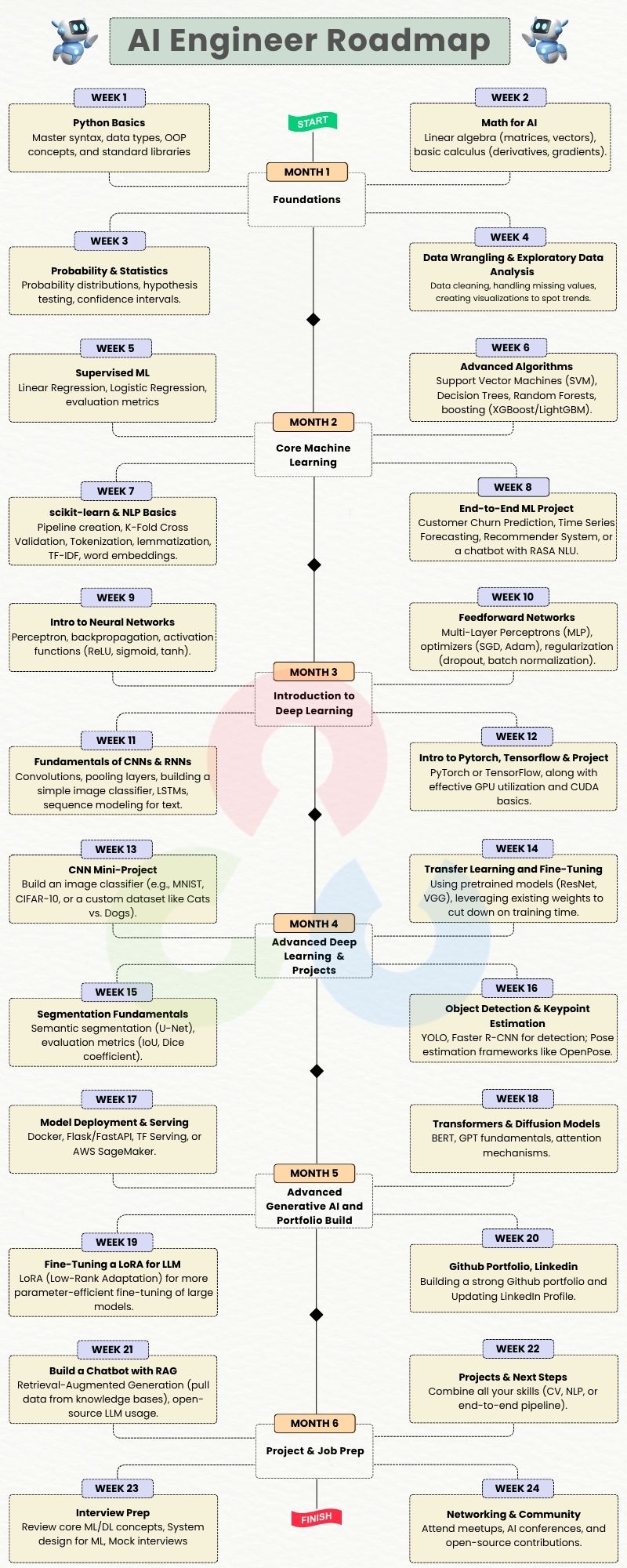
This is where most guides fail—they overwhelm. Let’s keep this practical.
Step 1: Build Conceptual Foundations
Before touching tools, understand:
- What AI can and cannot do
- Difference between AI, ML, and automation
- Why data quality matters more than model complexity
You don’t need equations. You need intuition.
Step 2: Learn Data Basics
AI learning is impossible without data literacy:
- Structured vs unstructured data
- Bias and sampling issues
- Overfitting in simple terms
Think of data as ingredients. Bad ingredients ruin even the best recipe.
Step 3: Choose Your Learning Track
AI learning isn’t one path. Decide early:
- Non-technical user: Focus on tools, prompting, evaluation
- Semi-technical: Learn Python basics + ML concepts
- Technical: Algorithms, model training, deployment
Clarity here saves months.
Step 4: Practice with Real Problems
Don’t build toy projects only. Apply AI to:
- Your job
- Your business
- A real dataset you care about
Learning sticks when stakes exist.
Step 5: Reflect and Iterate
AI learning is iterative:
- Test
- Analyze failures
- Adjust inputs
- Improve judgment
This loop matters more than speed.
Tools, Platforms, and Learning Resources (Honest Comparison)
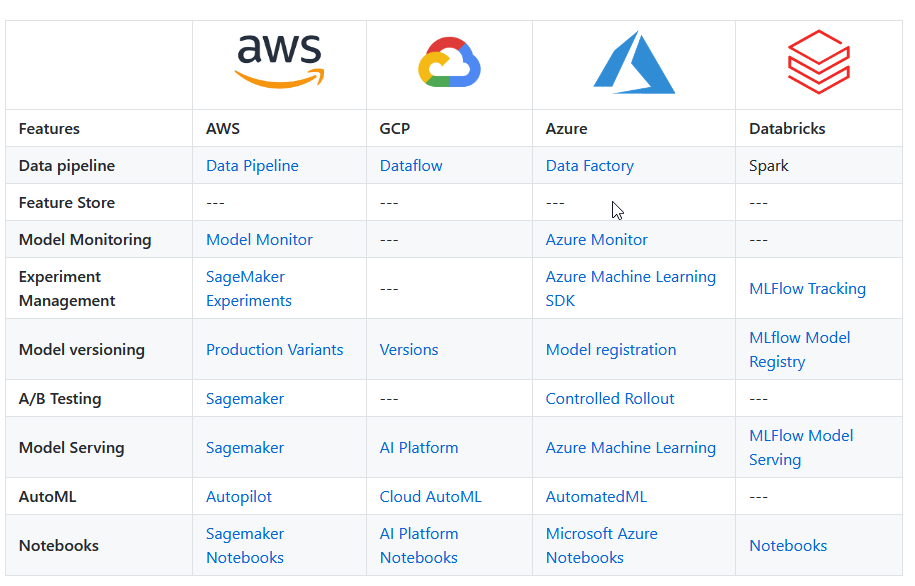
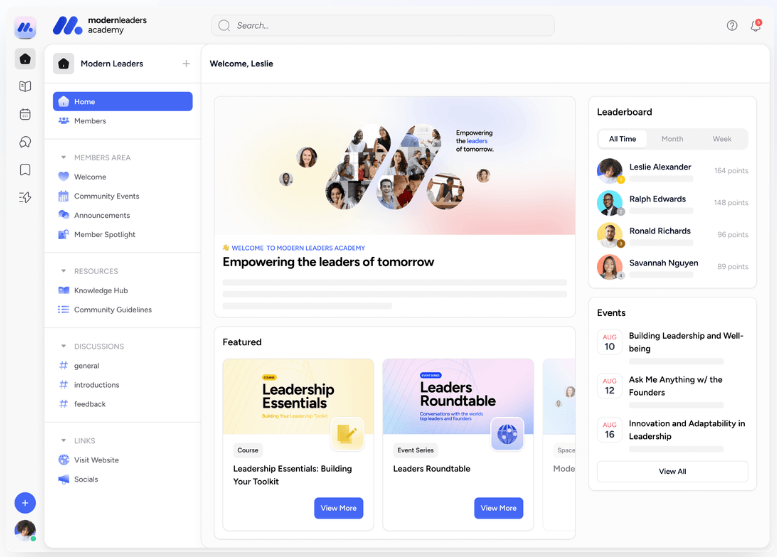
Learning Platforms
- Coursera
Structured, academic, trusted. Best for foundations. - Udemy
Practical and affordable. Quality varies—choose carefully. - Kaggle
Excellent for hands-on ML practice with real data.
AI Tools for Practical Learning
- OpenAI tools
Great for learning prompting, reasoning limits, and application design. - Google AI tools
Strong ecosystem for applied AI and data workflows.
Free vs Paid: What’s Worth Paying For?
Free resources are great for exploration. Paid resources are worth it when they offer:
- Structured progression
- Real assignments
- Feedback loops
- Community support
Avoid paying for hype. Pay for clarity.
Common AI Learning Mistakes (and How to Fix Them)
Most people don’t fail at AI learning because it’s hard—they fail because they learn the wrong way.
Mistake 1: Tool Obsession Without Understanding
Fix: Learn concepts first. Tools change fast; fundamentals don’t.
Mistake 2: Skipping Data Literacy
Fix: Spend time understanding data bias, quality, and context.
Mistake 3: Expecting AI to Be “Right”
Fix: Treat AI outputs as drafts, not truths.
Mistake 4: Learning in Isolation
Fix: Join communities, discuss failures, compare approaches.
Mistake 5: Chasing Trends Instead of Skills
Fix: Focus on transferable skills—problem framing, evaluation, ethics.
The Ethical Side of AI Learning (Often Ignored, Always Important)
AI learning isn’t just technical—it’s moral.
Every AI system reflects:
- Data choices
- Human assumptions
- Design incentives
Responsible AI learners understand:
- Bias isn’t accidental
- Transparency matters
- Automation shifts accountability
Ethical literacy isn’t optional anymore. It’s part of trustworthiness—and Google increasingly rewards content and creators who demonstrate it.
The Future of AI Learning (What to Expect)
AI learning is moving toward:
- More no-code tools
- More human-AI collaboration
- More emphasis on judgment and oversight
- Less emphasis on raw coding for many roles
The winners won’t be those who memorize algorithms—but those who understand systems, context, and consequences.
Conclusion: AI Learning Is a Skill, Not a Shortcut
AI learning isn’t about becoming a machine expert overnight. It’s about becoming AI-literate—someone who can think clearly, work faster, and make better decisions in an AI-powered world.
If you take one thing from this guide, let it be this:
AI doesn’t replace thinking. It amplifies it.
Start small. Stay curious. Learn responsibly. And treat AI as a powerful assistant—not a magic answer machine.
If you’re already experimenting, keep going. If you’re just starting, you’re early enough to matter.
FAQs
What is AI learning in simple terms?
AI learning is teaching machines to recognize patterns and improve decisions using data and examples instead of fixed rules.
Do I need coding to learn AI?
Not always. Many AI learning paths focus on tools, logic, and application rather than programming.
How long does AI learning take?
Basic literacy can take weeks. Practical confidence usually takes months of consistent practice.
Is AI learning worth it for non-technical people?
Yes. Many roles benefit from AI understanding without deep technical skills.
Can AI learning help freelancers?
Absolutely. It increases speed, quality, and competitiveness.

Adrian Cole is a technology researcher and AI content specialist with more than seven years of experience studying automation, machine learning models, and digital innovation. He has worked with multiple tech startups as a consultant, helping them adopt smarter tools and build data-driven systems. Adrian writes simple, clear, and practical explanations of complex tech topics so readers can easily understand the future of AI.





Your words have a way of resonating deeply with your readers Thank you for always being encouraging and uplifting